Roof surveys, repairs and replacements for churches and houses of worship in Manhattan, NY, covering flat sections, metal work, gutters and landmark review.
A plaster stain on a sanctuary wall can trace to a valley gutter at the junction of the nave roof and a lower parish hall, a long way from where the stain shows. That gap between the mark and the source is the usual finding on a house of worship in Manhattan, NY, where a tall pitched roof meets flat sections, a bell tower base and a patchwork of additions made over decades. The consequence for the congregation is a repair that fixes the wall twice if the source is missed. Our survey traces the water to its entry, rates each roof area and writes the condition rating so the trustees, as with government building roofing boards, can fund the work in order.
What does a survey find on a roof with a nave, a tower and a hall?
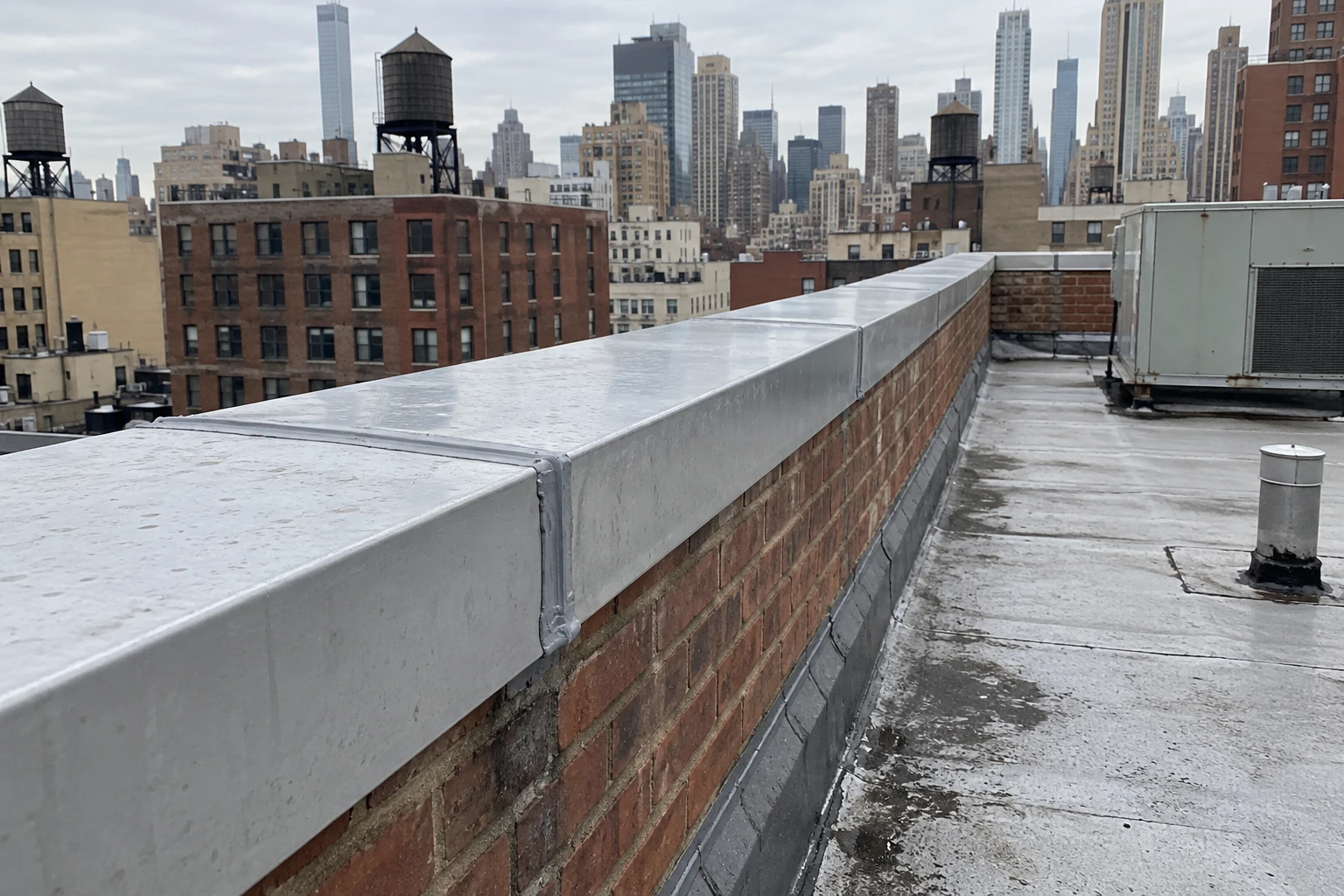
We divide a church roof into the parts that behave differently: the steep nave and transept roofs, the flat or low-slope roofs over halls and offices, the tower or steeple base, the gutters and valleys, and the mechanical curbs. Each part is walked, photographed and probed. Flat sections get an infrared scan and core cuts. Metal valleys and edge metal and gutters get a close visual check for open seams, nail pull-through and pinholes.
The result is a rating for each part and a ranked list of repairs. A small hole in a copper valley and a wet corner of a hall roof appear on the same list, with different costs and different urgency. The trustees see which items protect the sanctuary first and which can wait for a fundraising cycle.
Gutters built into the cornice, called box gutters, deserve a measurement of their own. We run a tape along the bottom, record the pitch toward each leader and photograph the lining. A box gutter lined in lead-coated copper or an old membrane can crack at a joint without any sign from the street, and the water it releases runs down a masonry wall for months.
How do crews reach and protect a high roof over a sanctuary?
Access is the first constraint. A church roof may have no roof hatch, and the only way up can be a tower stair or a ladder from a lower roof. We plan the route, set fall protection and check what the interior below can bear. Tarps and temporary protection hang over the sanctuary side of the work so that water or debris cannot fall onto pews, an organ or art.
Services and events set the calendar. Weddings, funerals and holy days cannot be moved, so we agree on quiet days and keep noisy work away from them. A written daily note tells the sexton or the building manager what is open, what is covered and when the crew will leave. The roof is closed to weather at the end of each shift.
The calendar logic resembles school roofing: a fixed set of dates that cannot move, with the quiet periods used for the loudest work. Bells, amplified music and a choir rehearsal each add a constraint, and we ask the music director and the sexton for their weekly schedule before the first day.
What do landmark districts add to a roof project?
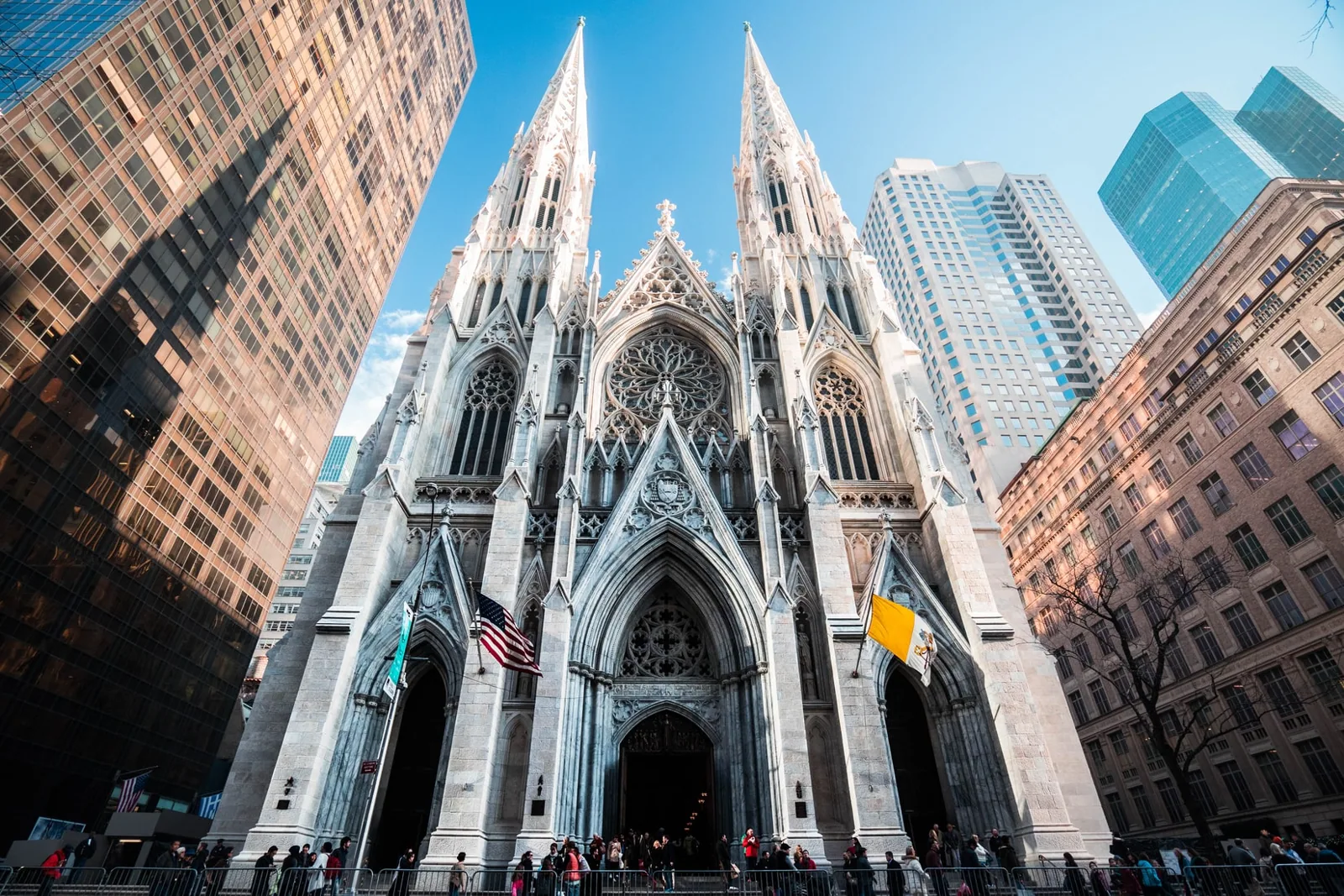
Many churches stand inside historic districts, and visible roofs fall under review. Renovation inside the Greenwich Village Historic District, which spans more than 50 northern and western blocks, has to keep the main facade and the overall aesthetics of each building. Harlem has five named historic districts, including Mount Morris Park and St. Nicholas, and the SoHo-Cast Iron district covers about 500 buildings.
We prepare the drawings and photographs a landmark review asks for, showing what is visible from the street and what is not, and we match slate, copper and painted metal to the existing profile. A landmark review can add weeks, so the schedule shows where the approval sits relative to the dry months of the year.
Tower work needs a closer look. Louvers, finials, bell frames and copper cladding each belong to a different trade, and a survey that covers only the roof leaves the tower base unrated. We list the tower as its own zone and note which parts need a specialist before the congregation commits to a scope.
How do gutters, valleys and flat sections cope with extreme rain?
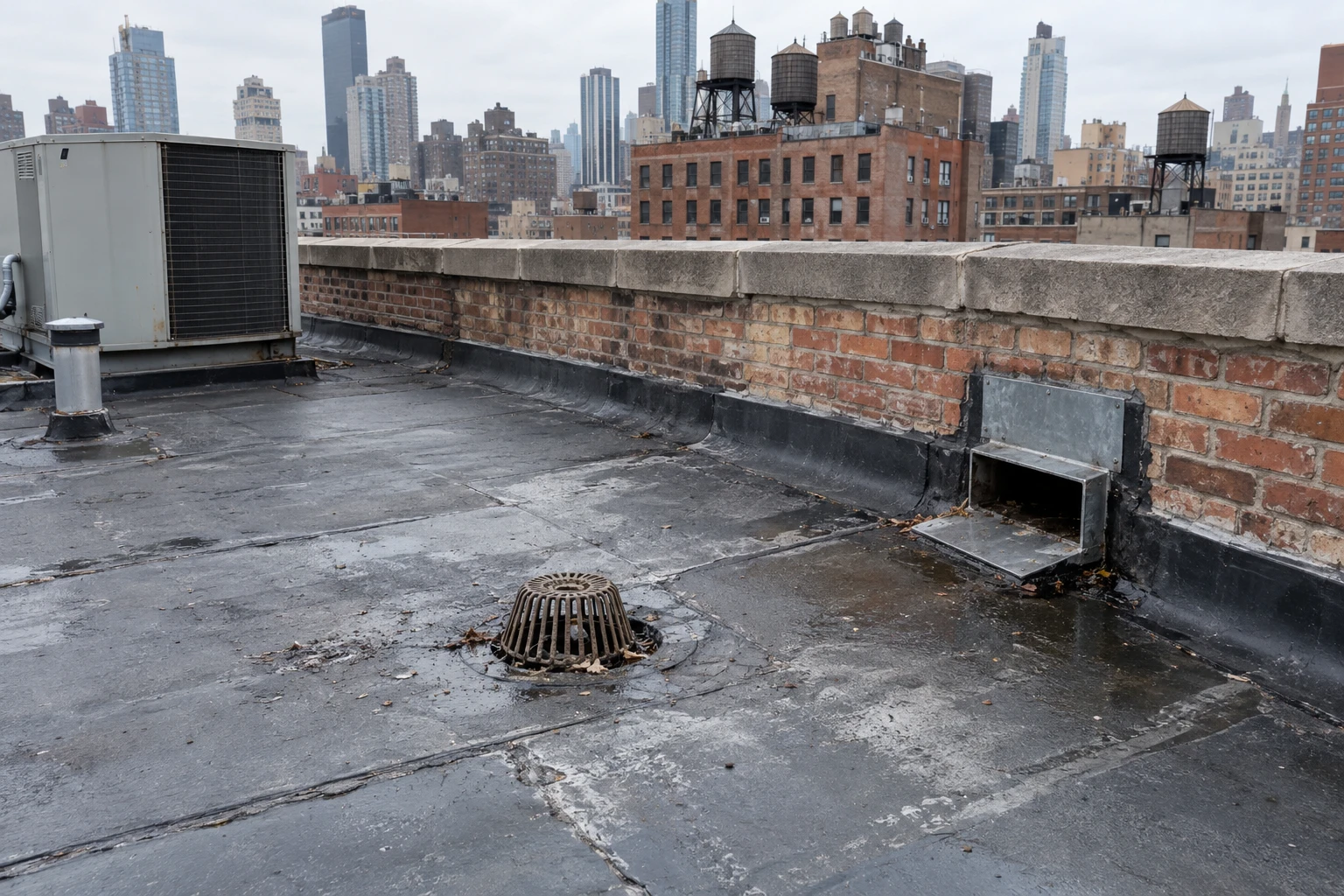
Ida's rain in 2021 reached 3.15 inches in a single hour, and Central Park collected 7.13 inches that day. A valley gutter that is two inches wide and half full of leaves overflows into the wall long before the roof drains do. We measure the capacity of every gutter and leader, in the same way as for roof drains and scuppers on a flat roof, clear and flush them, and note any that are undersized or pitched wrongly.
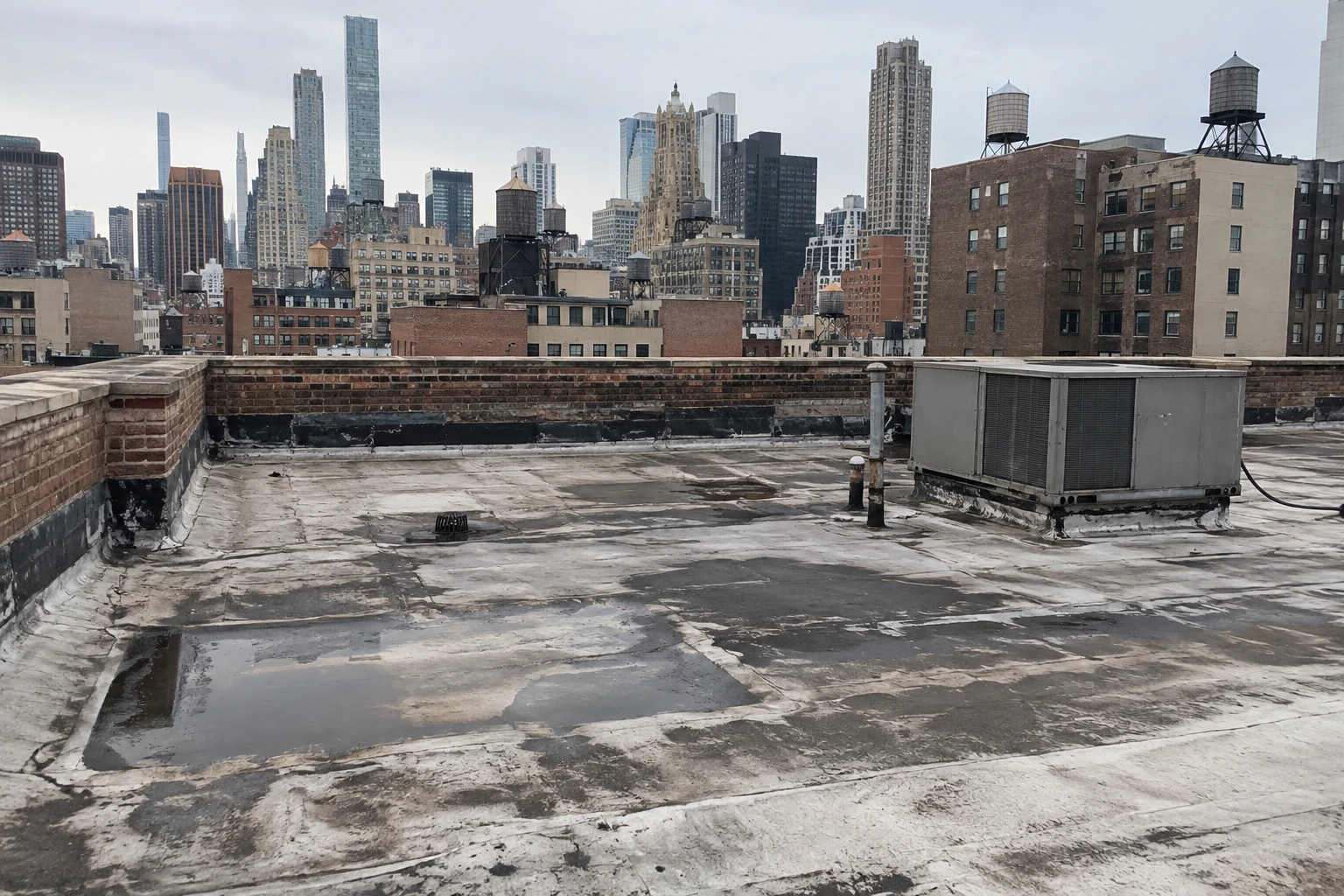
Flat sections need a different check. Ponding depth above half an inch after two dry days marks a slope or a drain problem, and we record it on the plan. Snow adds weight, since 29.8 inches falls in an average year in Central Park and a drift against a tower base can load a low roof for days. Strainers and leader heads are cleaned before each winter.
Sandy raised another question in 2012: the surge at The Battery reached 14.06 feet, and East River water flooded parts of the East Village. The lesson for the roof is that mechanical equipment moved up to a roof must be flashed and drained to a higher standard than in the past.
How can a congregation plan, fund and sequence the work?
A congregation that funds a roof through donations or grants needs a staged plan. We rank repairs into three groups: urgent items that protect the interior this year, planned items for the next fundraising cycle and long-range items that go into a reserve study. A rating for each roof part lets the trustees show donors, a diocese or a grant program exactly what the money buys.
Local Laws 92 and 94 of 2019 require that the sustainable roofing zone on a full roof replacement be fully covered by solar, a green roof or both, and the drawings for a flat-roof replacement must show how the zone is met. A pitched slate or metal roof falls under different rules, and we confirm which apply before a number is set. The staged ratings feed roof capital planning, so the sequence survives a change of trustees.
Commercial Roofing Questions
A stain keeps returning on the sanctuary wall. What is the first step?
Photograph it with a ruler and the date, then call. We trace the path with a moisture meter and an infrared scan, starting at the valleys, flashings and gutters above. Repainting before the source is fixed only covers the evidence.
Can slate or copper be repaired, or must it be replaced?
Often repaired. Individual slates can be replaced and copper seams can be re-soldered or patched, provided the base metal has not thinned. We count the failing pieces and compare the repair cost with a section replacement.
Who inspects the work for a landmarked church?
The Landmarks Preservation Commission reviews visible work, and the Department of Buildings inspects permits. We prepare both filings and keep copies of every approval with the roof file.
How do we protect the organ and the interior during the work?
We hang temporary protection beneath the open area, seal gaps at the ceiling plane and monitor humidity if the organ requires it. A daily inspection of the interior side catches any leak the same day.
What if the congregation cannot fund a full project at once?
We phase the work, starting with the areas that put the sanctuary at risk. Each phase leaves the building watertight, and the plan records what is deferred and when it should be revisited.