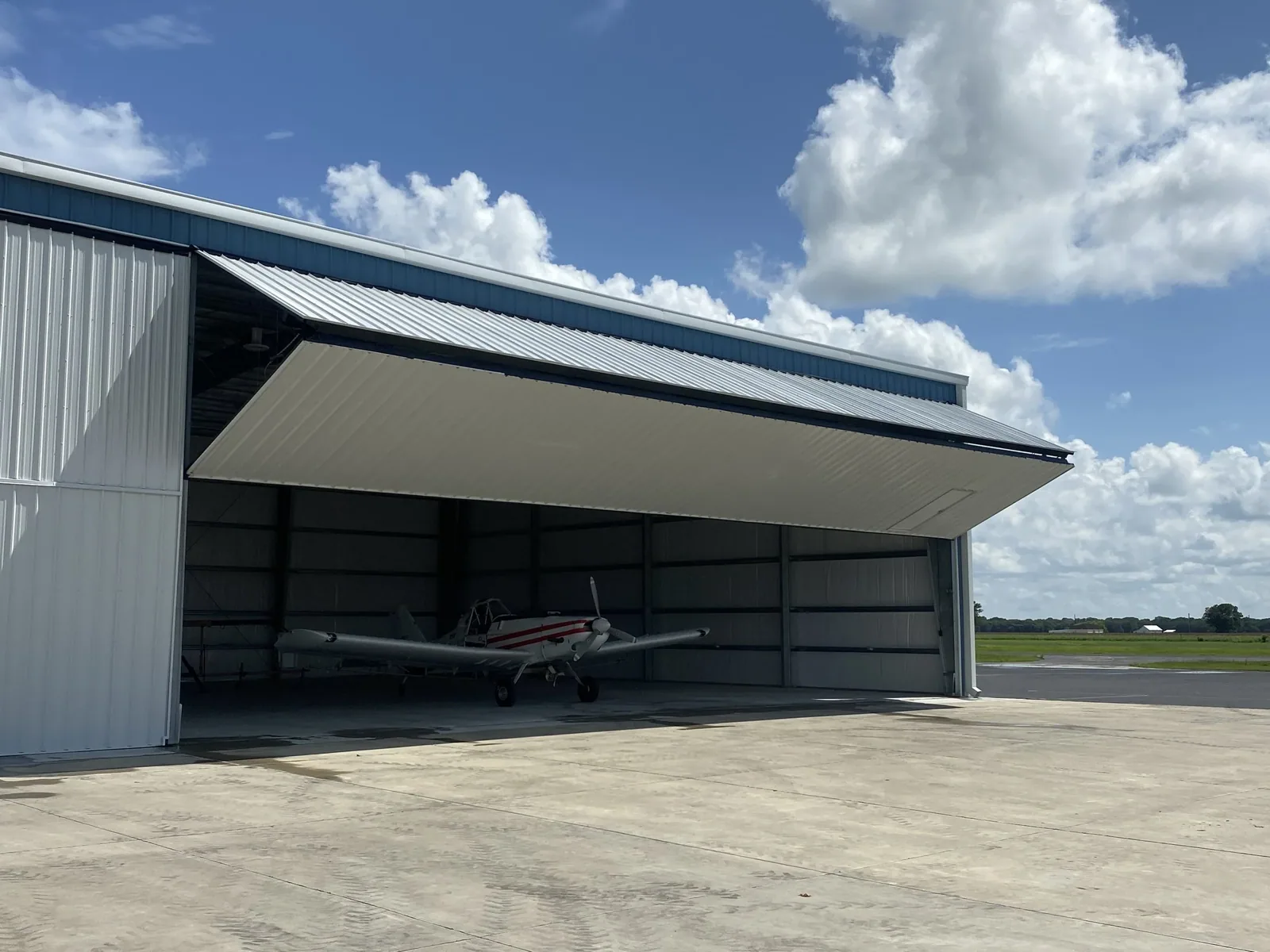
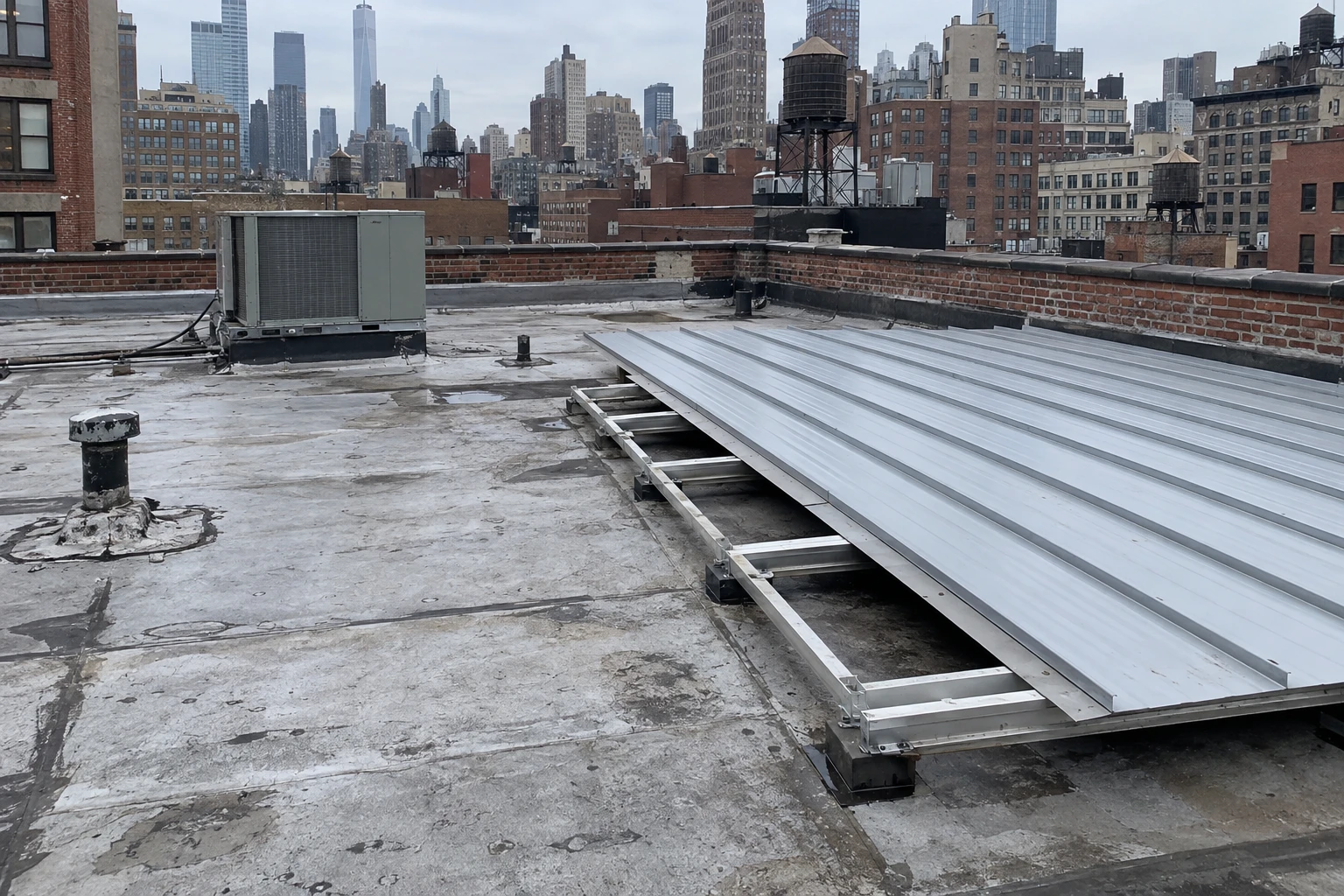
Roof surveys, repairs and replacements for aircraft hangars and aviation buildings serving the Manhattan, NY region, for wind, rain and long spans.
A fastener pull test on a hangar roof can show screws on the windward edge backing out at far less than the load the roof will see in a gale, and a laser scan of the long span can show sag at midspan. Each reading is a measurement of remaining capacity. For a hangar or aviation building serving the Manhattan, NY region, a roof is a wide metal or membrane lid over aircraft and equipment, so the consequence of a failed edge in a storm is not a repair line but a claim. Our survey reads the span, the fasteners and the drainage and rates each zone so the owner can decide what to fix first.
What does a survey of a long-span roof measure?
A long-span roof has two jobs that conflict with one another: it must be light enough for the frame and strong enough for wind. We walk the whole surface, scan it for moisture where the system allows and measure panel or membrane attachment at the edges and corners. Fasteners are pulled at sample points, and the results go on a plan that shows where the roof is strongest and where it is weakest.
A laser scan of the interior ceiling plane or the deck shows deflection along the span. We compare it with the drawings, if they exist, and flag any area where the sag has grown since the last survey. Ratings come by zone, and a table lists the cost of each repair path against the remaining life of the system.
Translucent panels and skylights are common on long-span buildings, and each is a penetration that ages in the sun. We check gaskets, fasteners and the panel surface, and we rate each panel group separately so a failing set does not hide inside an average.
How do gusts and wide doors load the roof?
Central Park recorded a 78 mph gust on December 2, 1974, and hurricane winds drive harder at the edges and at corners of a wide, low building. A hangar has doors that may be opened or closed in a storm, and an open door lets pressure into the building and pushes up on the roof from below. The attachment must resist both suction from above and pressure from inside.
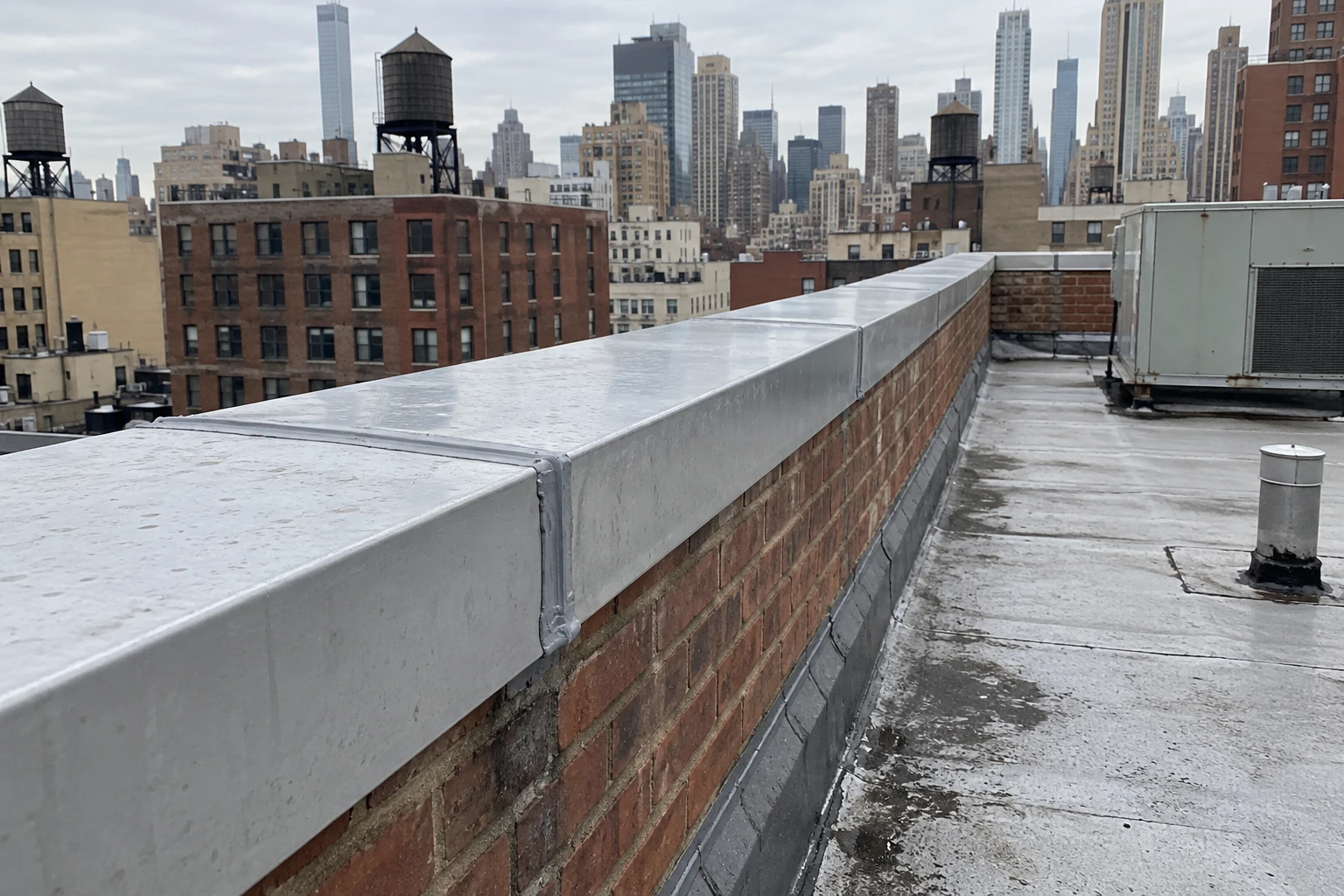
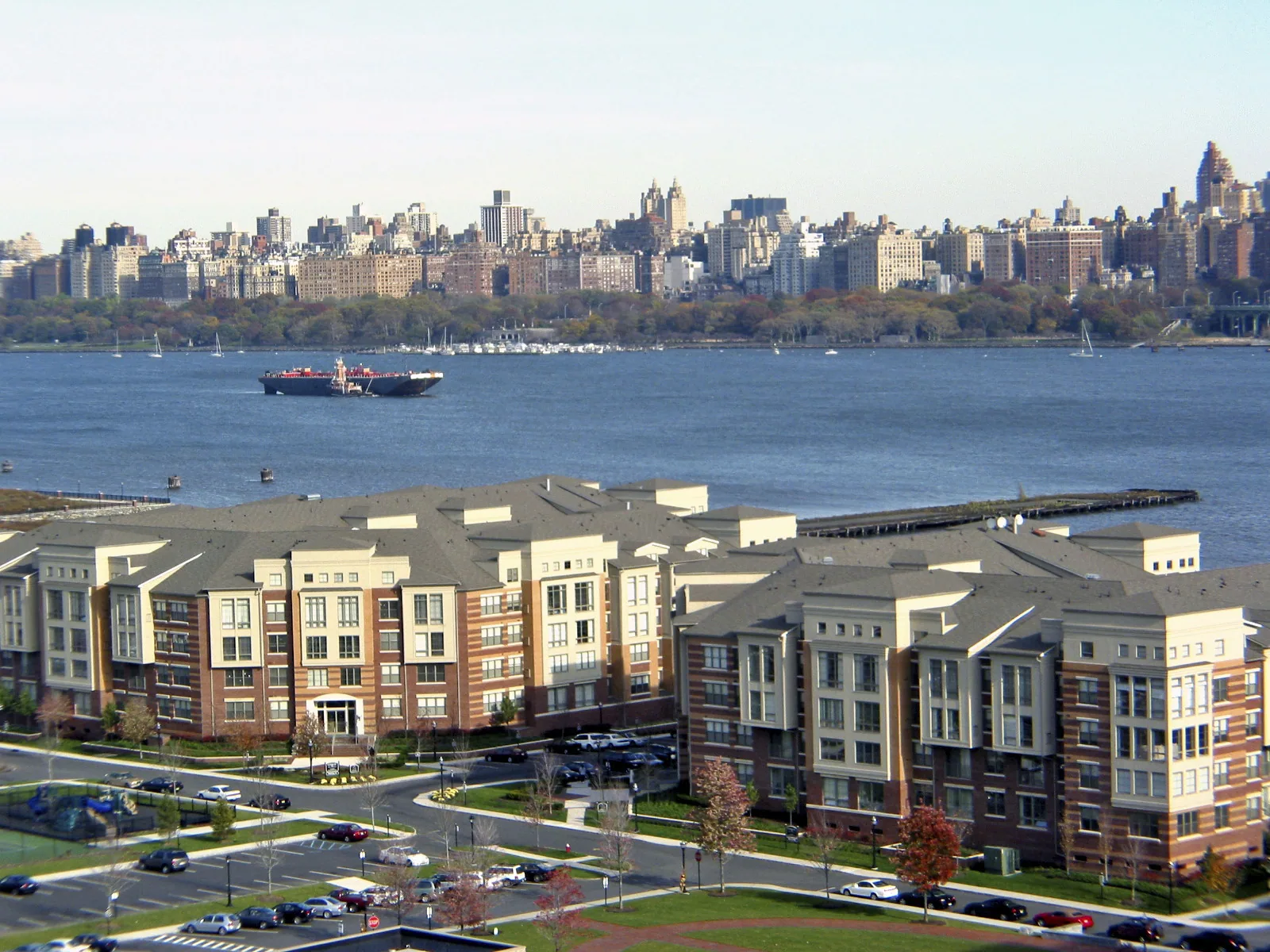
We check edge metal, fasteners, clips and sealant at every perimeter and at each door head, and we confirm that panel laps are tight. Repairs add fasteners at the edge rows, replace weak clips and reset coping, and we document the pattern so a later inspector sees what was done. On the Hudson side, where Weehawken covers 1.47 square miles and about 46.69 percent of it is water, a building meets open air and water on one side.
Door heads and corners carry the highest loads. Where a hangar door track attaches to the wall, the roof edge above it sees concentrated movement, and cracked sealant at that joint is a leak that reaches the aircraft bay. The repair resets the cap and rebuilds the flashing at the head.
What does an extreme rain hour do to a wide hangar roof?
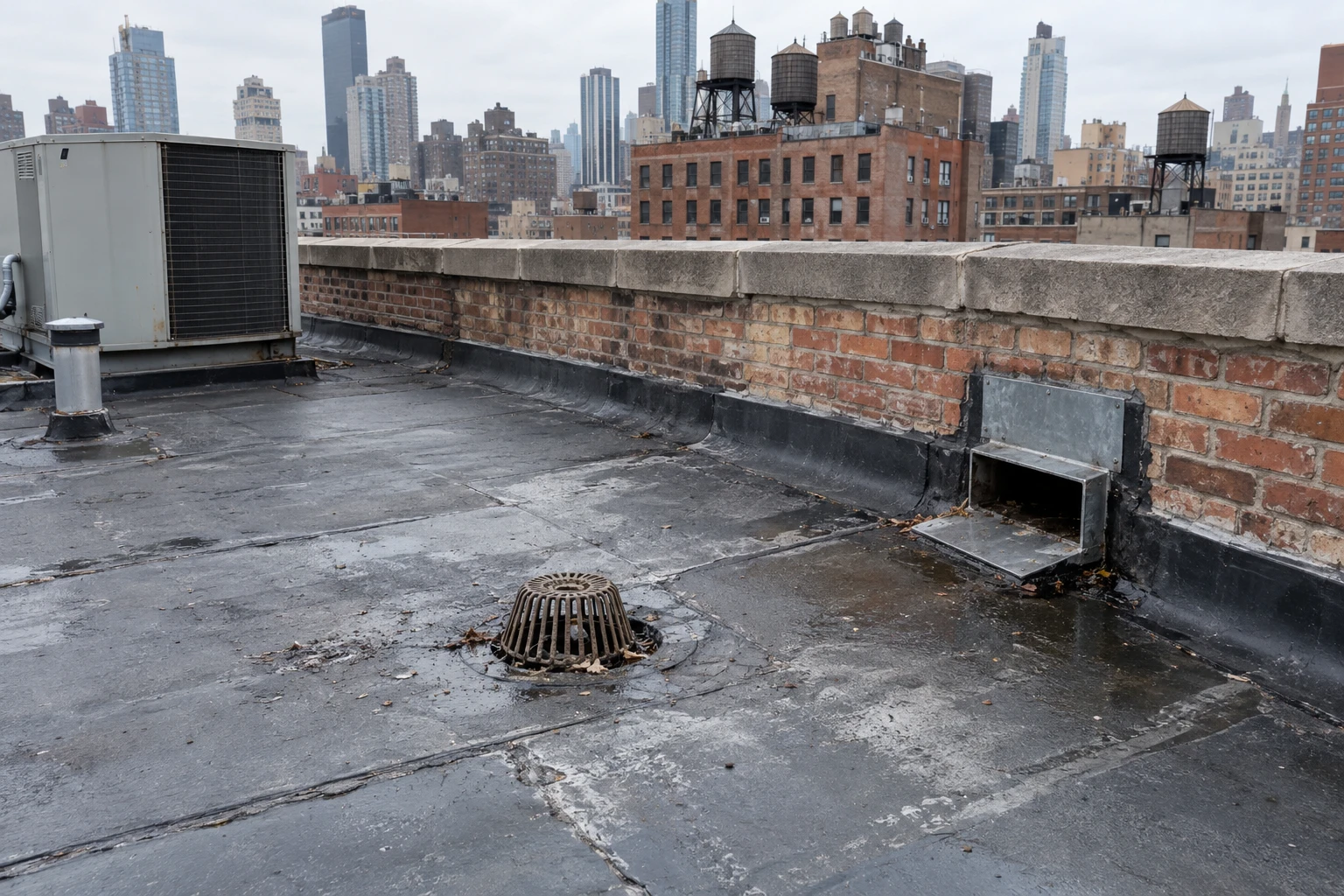
Ida's peak of 3.15 inches in an hour on September 1, 2021 shows how much water a wide roof collects in a short time. A gutter or leader sized for an ordinary storm overflows against the wall or onto a door track. Scuppers set at the edge can pass more than internal drains if the parapet allows it, and our roof drains and scuppers work checks the capacity of each outlet.
Low sites add flood exposure. Secaucus sits at an elevation of 7 feet, and drainage and flood exposure matter for roofs there. For a hangar on low ground, we also locate fuel, electrical and fire-suppression penetrations and flash them to a high standard. A leaking foam or sprinkler line penetration near the aircraft is a risk in its own right.
Condensation is the other water problem under a metal lid. Warm air reaching a cold deck forms drips that look like a leak, so we check the vapor path and the insulation before we repair the roof. A mistaken diagnosis wastes a repair and leaves the real problem in place.
How does airside access shape the schedule?
Work at an aviation facility follows access rules set by the airport or the operator: escorts, badges, vehicle inspections and limits on cranes and lifts near active surfaces. Tall equipment near a flight path needs approval. We ask for the procedures before we price, and we build the access time into the plan.
Aircraft are the second constraint. They stay inside during most work, so the roof opens in small sections with temporary protection below, and debris never falls onto a wing or a tail. A fire watch accompanies any hot work, and we use cold-applied or mechanically attached systems where the building allows. The facility's safety officer reviews the plan before the first day.
Fall protection on a wide, low-slope metal roof needs thought. Skylights and translucent panels do not carry a person, so we mark them, install guardrails or covers and brief every worker. Slick metal and wet frost add to the hazard on cold mornings, and we stage work for dry, warm hours.
Which options fit a hangar roof, and what do the codes add?
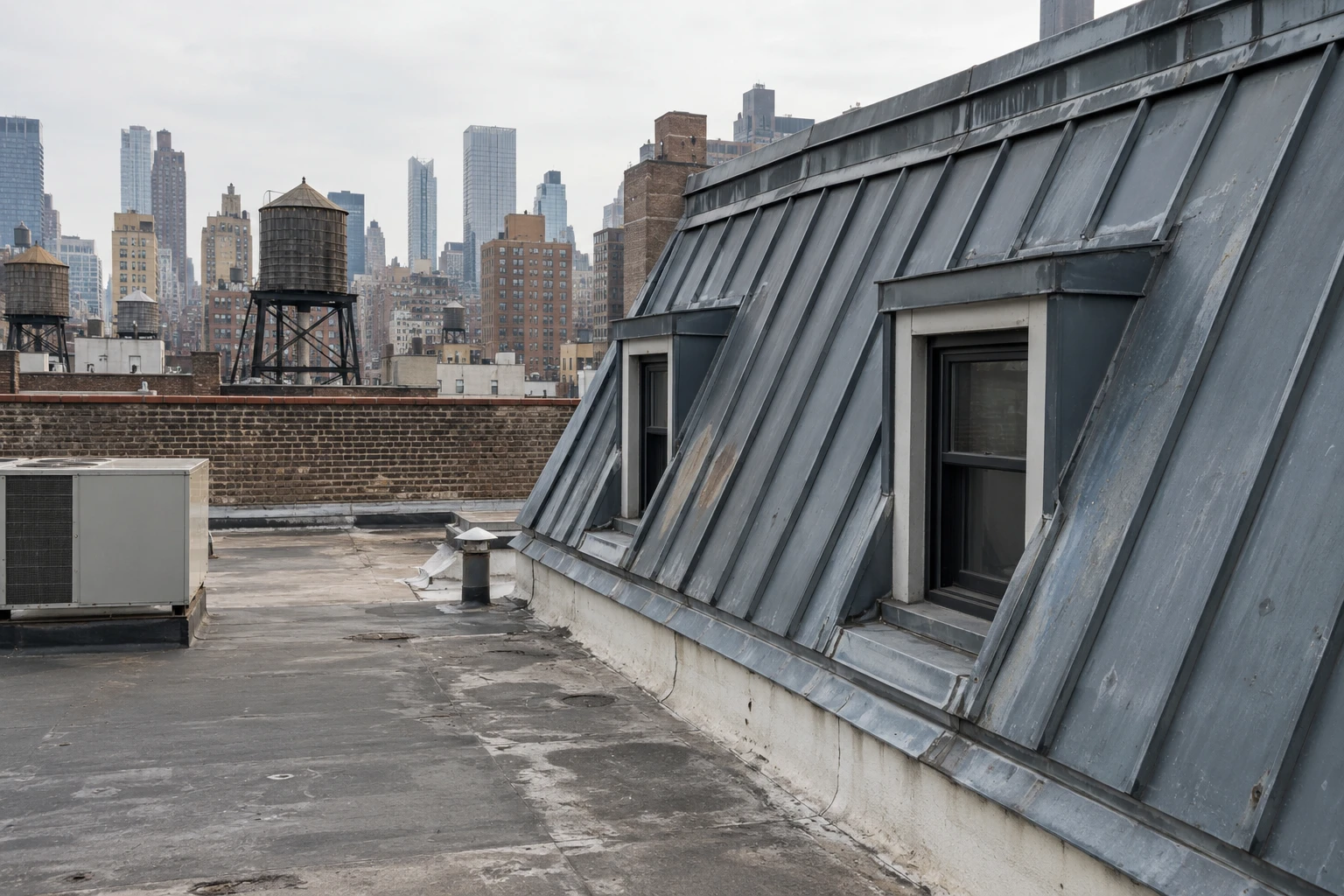
Standing seam metal panels, a metal roof retrofit over an existing roof and single-ply membranes all appear on long-span buildings. A retrofit adds framing and a new surface without removing the old, which keeps the interior in use. The survey compares the options on weight, wind rating, remaining life and cost.
The NYC Department of Buildings publishes the 2022 NYC Construction Codes, which include a Building Code, an Existing Building Code and an Energy Code. A building in the region follows the code of its own jurisdiction, and we confirm which applies. Within the city, Local Laws 92 and 94 of 2019 send the sustainable roofing zone of new buildings, enlargements and full replacements to solar, a green roof or both, and a hangar roof, with few obstructions, is a natural place to meet that requirement. A warehouse roof and a flex industrial roof pose similar questions. Long spans make attachment records valuable, so every fastener pattern and purlin spacing the survey touches is written down for the next inspector.
Commercial Roofing Questions
Can the roof be replaced with aircraft inside the hangar?
Often, if the work is phased and protected. We open small sections, hang protection below, and keep debris and water off the aircraft. The operator can also move aircraft for the loudest or riskiest tasks.
What is the main cause of hangar roof leaks?
Edges, penetrations and panel laps. Fasteners back out under wind flutter and sealant dries. The survey maps the leaks to those details and repairs them in order of risk.
How is hot work managed near fuel and suppression systems?
We avoid hot work where cold-applied or mechanical methods will do. When heat is unavoidable, we follow the facility's permit process with a fire watch, extinguishers and shutdown steps agreed in advance.
Do skylights or translucent panels need special care?
Yes. Translucent panels age in the sun and their fasteners and gaskets fail. We rate them as their own zone and replace those at the end of life with a flashing method suited to the panel.
What should the owner send before a survey?
The last roof report, the building age, any open violations, drawings of the span and the access procedures. With those, the scope and rating can be set before a price is discussed.