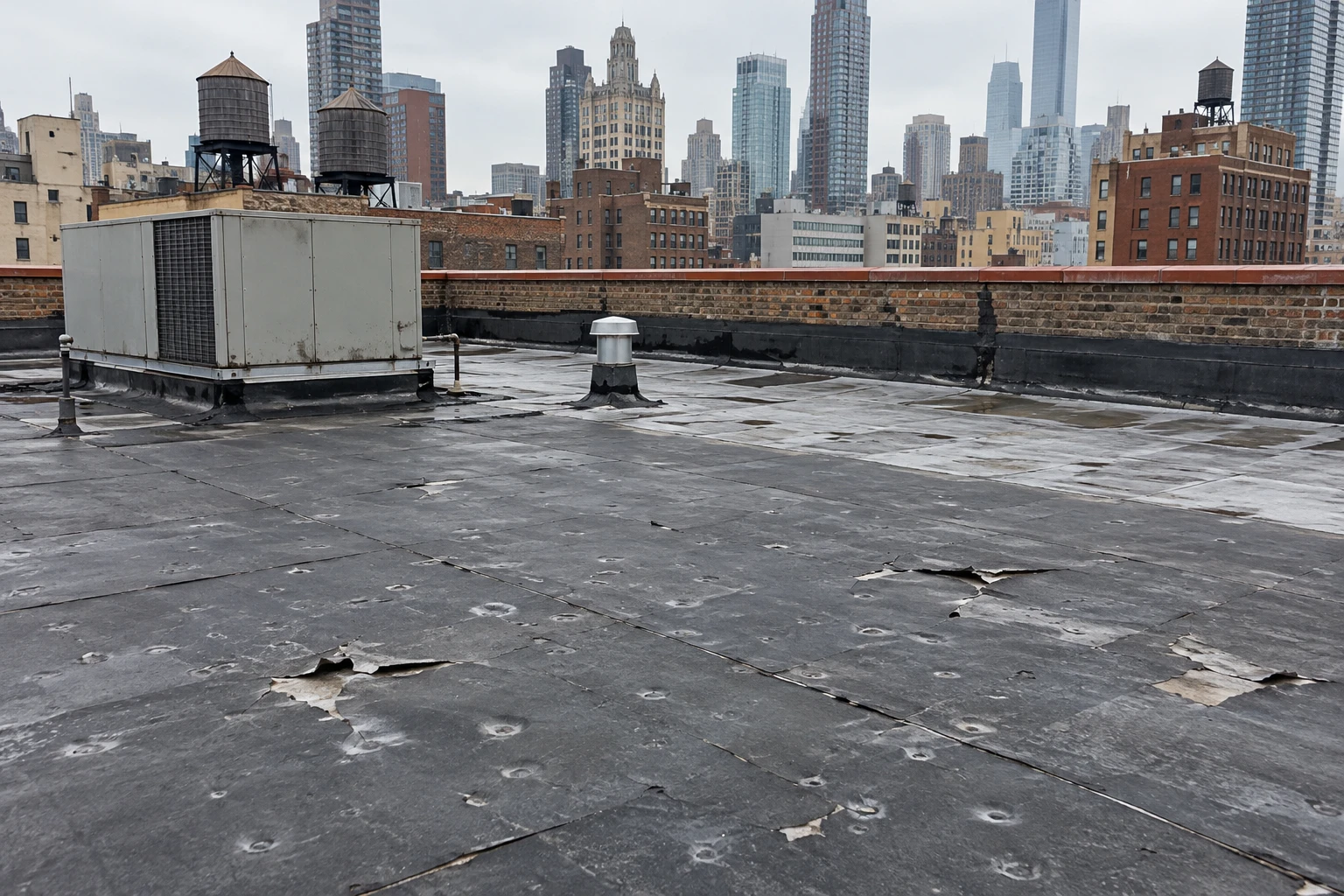
Roof loss surveys, scope of repair and dry-in for insurance adjusters and restoration firms working Manhattan, NY storm, fire and water claims.
Three records tell an adjuster most of what a Manhattan roof loss file needs: a thermal image taken the day after the rain, a core cut at the suspect spot and a dated photograph of the edge. They show where the water entered and what the roof was before the event, and a scope by line item supplies the cost of restoring it. The roof is small, the access is poor and the building below is occupied, so the loss grows by the day. Include the claim number, the loss date and any earlier survey in the first request.
Roof losses are documented, temporary repairs made and permanent restoration carried out for carriers, adjusters and restoration firms.
What does a loss survey record for an adjuster?
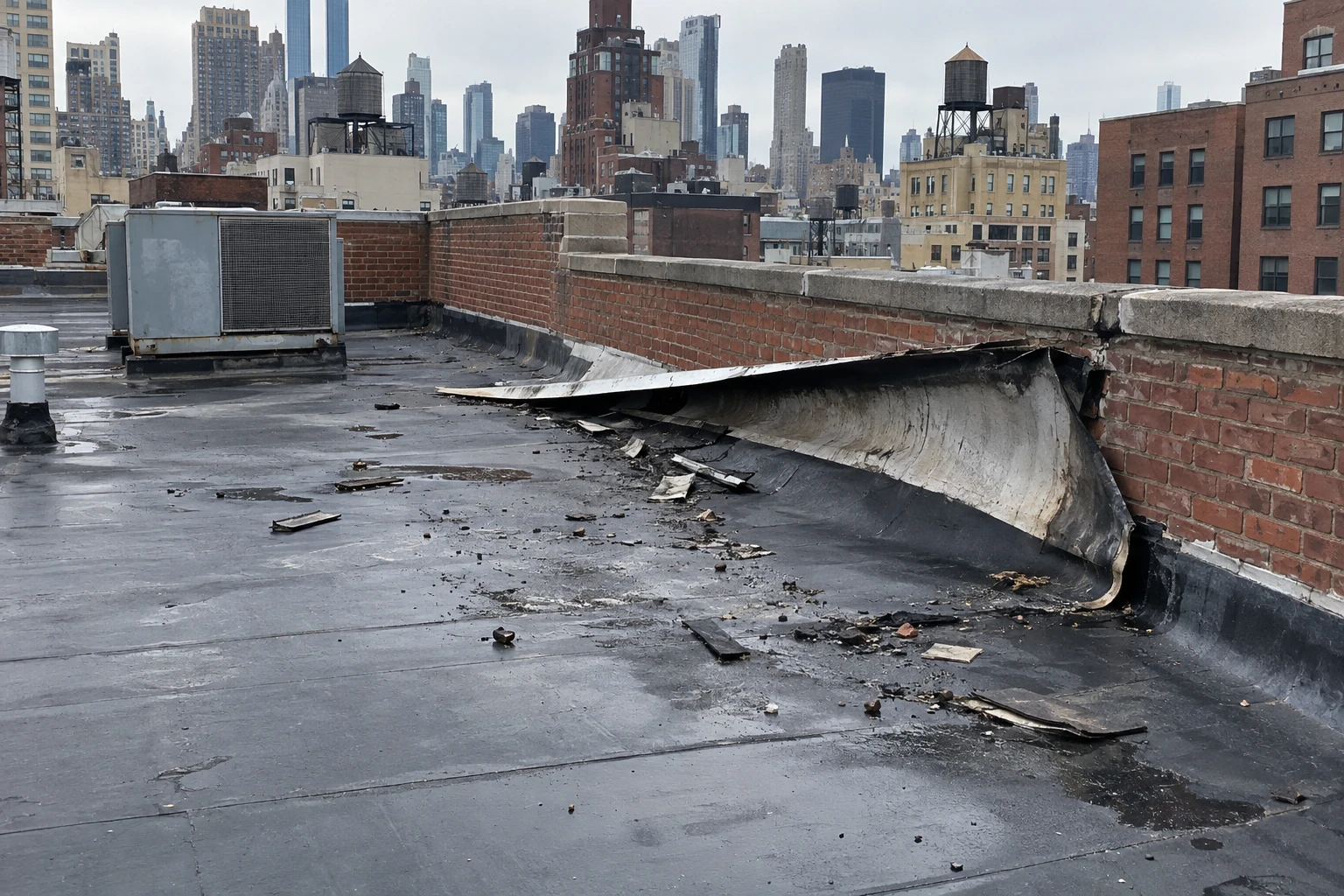
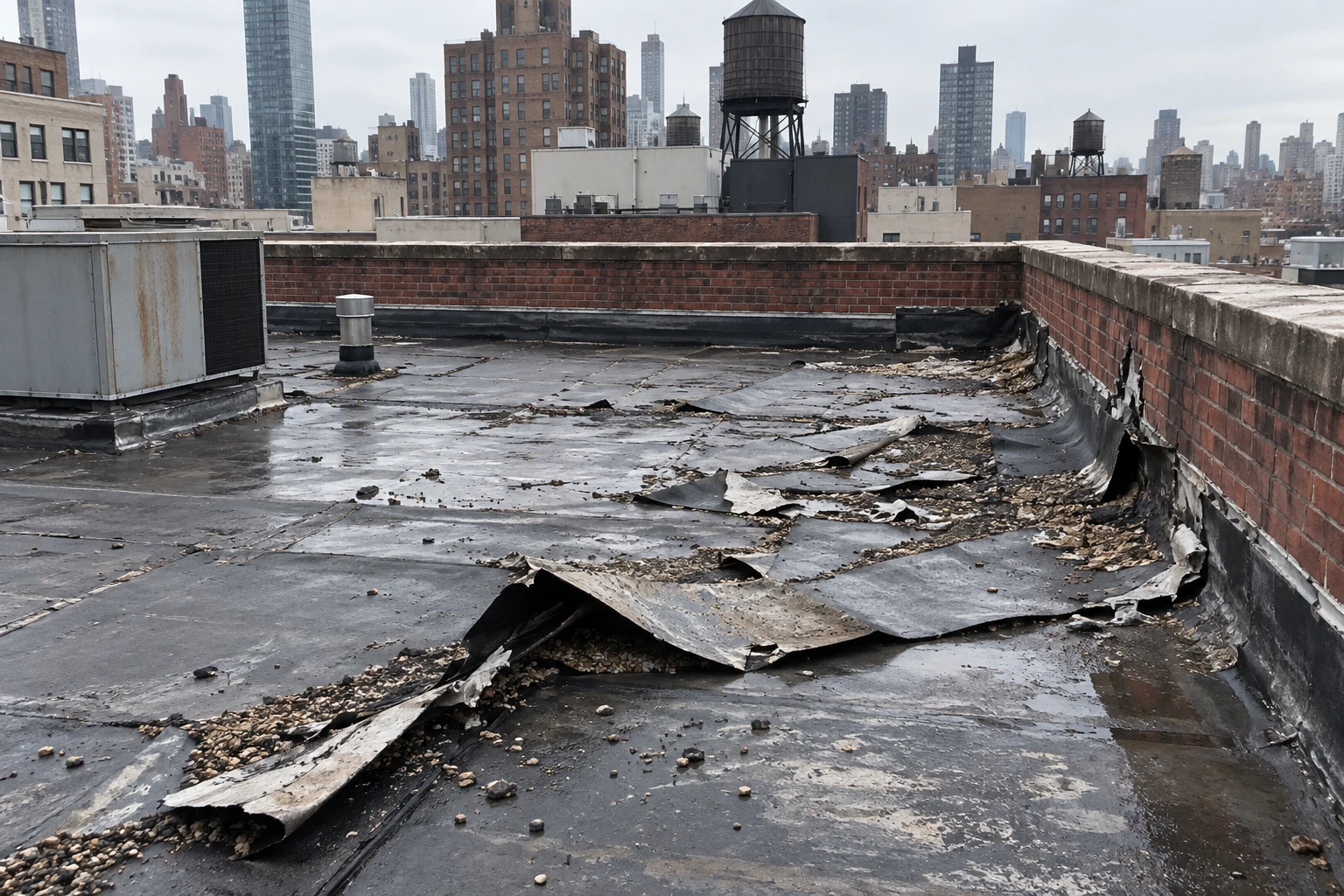
The loss survey marks every damaged area on a roof plan and pairs it with a photograph, a measurement and a probable cause. Event damage is sorted from age and wear: ponding that opened a seam after heavy rain, ice that tore a flashing, debris that punctured the membrane or a gust that lifted an edge. An infrared scan and cores document moisture, and the report names the roof system, its age if known and the service life it has left.
Drainage gets its own entry after a storm. Ida set the city's hourly record of 3.15 inches on September 1, 2021, and Central Park measured 7.13 inches that day. Water that ponded behind a blocked drain is a maintenance issue, while water that entered through a storm-torn flashing is damage, and the survey keeps the two apart. A storm damage roof repair scope follows. Ordering the survey in the first few days after the loss gives the cleanest evidence.
Getting onto the roof safely is part of the evidence. A Manhattan roof is reached by a bulkhead stair, a hatch or a ladder, and some roofs are shared with neighbors or locked behind building security. The route and the safety setup are confirmed before the visit, open edges get fall protection and foot traffic on damaged membrane is kept to a minimum. If the roof is unsafe to walk, a drone pass records the surface from above and coring waits until the area is secured. Each finding in the report is tagged with the method that produced it.
How is the building protected before the claim is settled?
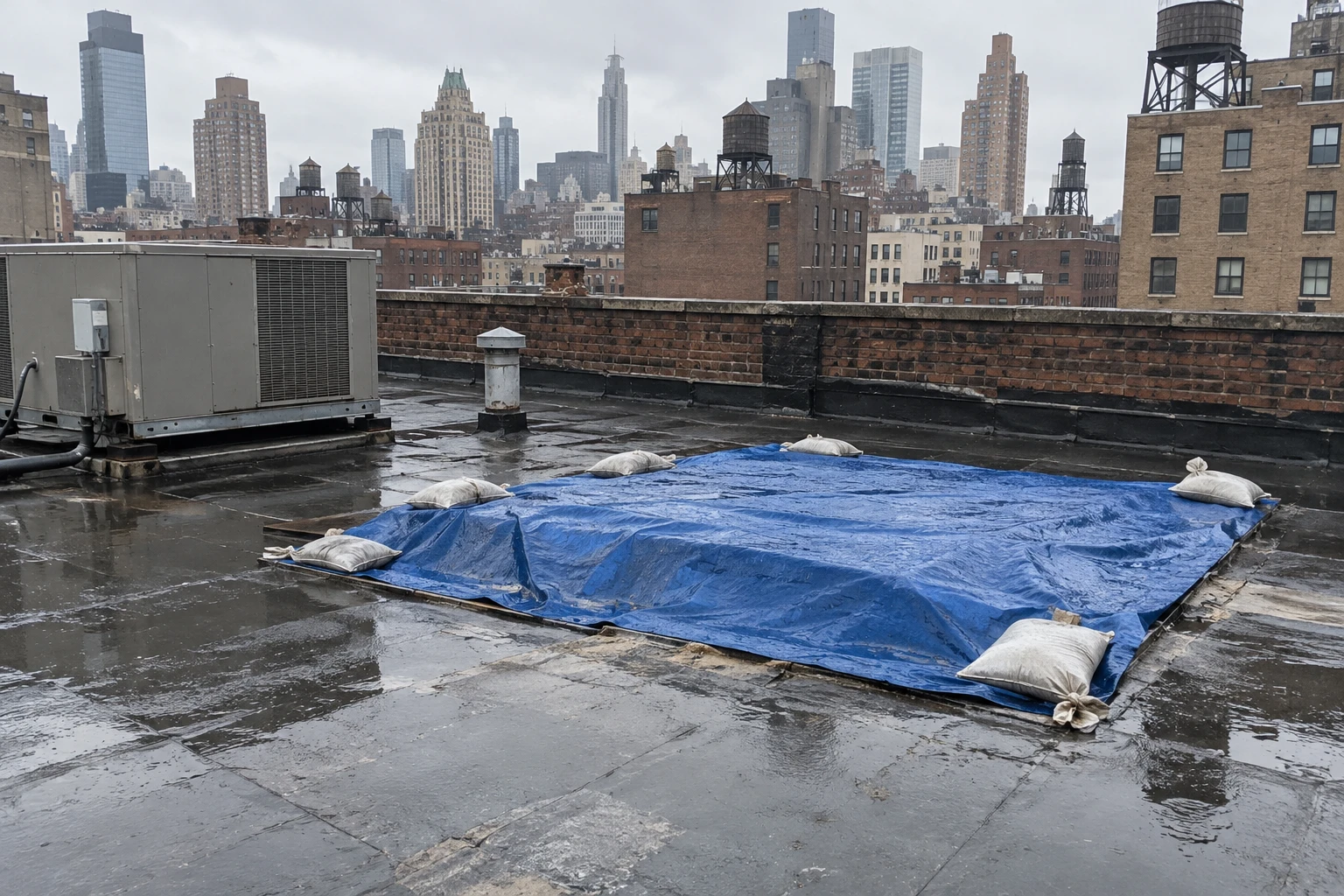
Policies expect the owner to prevent further damage, so emergency dry-in comes first: tarps secured to the deck rather than to loose edge metal, temporary membrane patches at the entry point, plugged drains and sealed penetrations. The work is photographed before, during and after, and materials and hours are logged.
Our emergency roof repair response runs around the clock. On arrival the crew assesses safety, photographs the roof, dries in the most exposed area and writes down the observed cause. Where tenants are sensitive to disturbance, the space below is protected too. Material that was damaged is kept for the adjuster's inspection unless it creates a hazard. Whatever is installed as a stopgap is meant to last until the permanent work, which is scheduled once the scope is agreed.
Which storm events leave their mark on Manhattan roofs?
Wind, rain, snow, flood and fire each leave a signature. Wind losses show lifted edges and displaced coping, and Central Park's peak gust of 78 mph arrived on December 2, 1974. Sandy, on October 29, 2012, sent a surge 14.06 feet above average low tide to The Battery, flooded about 17 percent of the city and cut power south of 39th Street, so losses from that event may combine roof damage with basement and equipment loss. Snow adds drift loads and ice damage, and Central Park averages 29.8 inches a year, with a record fall of 27.3 inches on January 23, 2016.
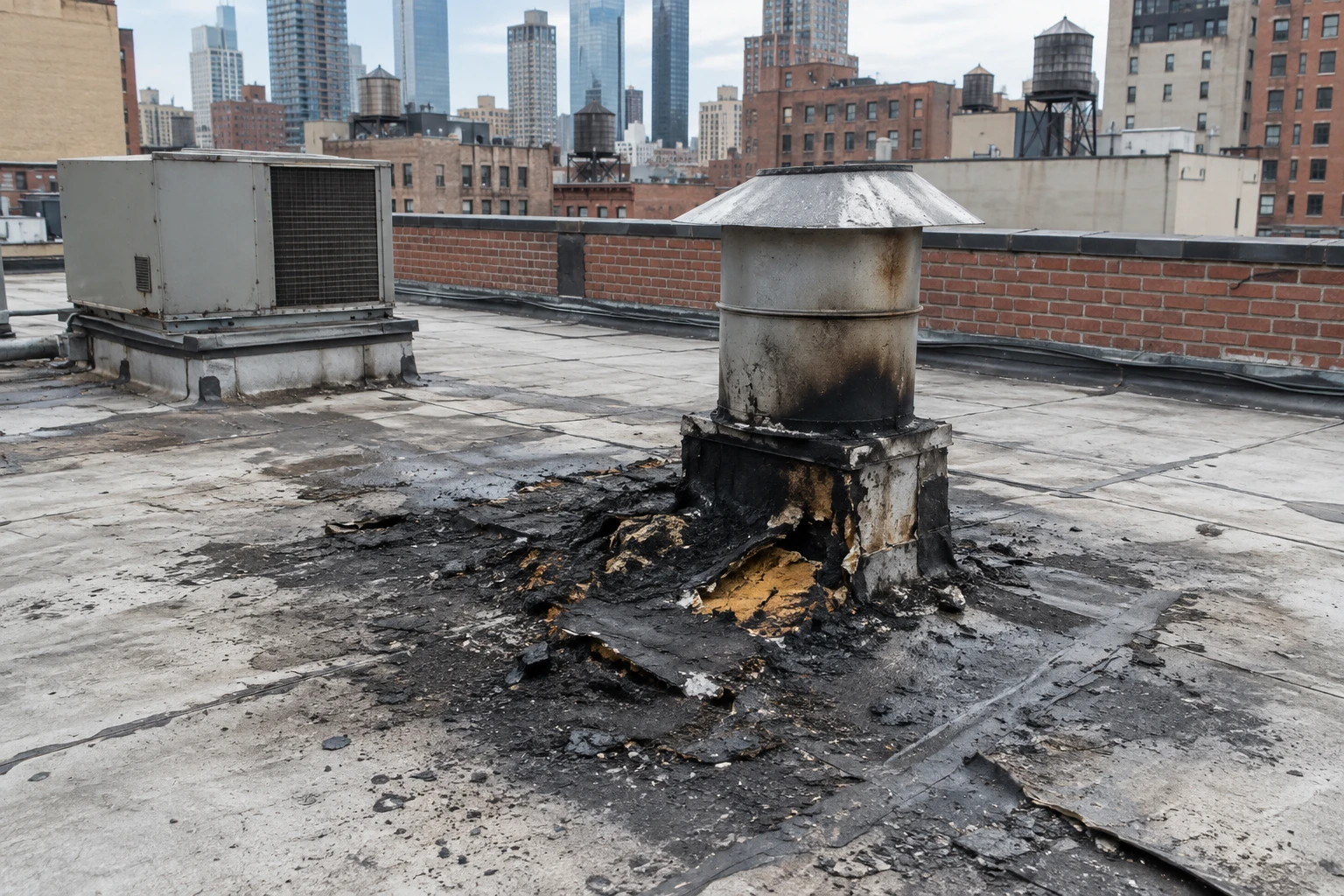
Fire and smoke call for a separate survey, because heat harms the membrane, the insulation and the deck alike. Those perils are handled in fire damage roof repair and hurricane damage roof repair scopes. Naming the peril in the first message sends the right surveyor.
Fire losses bring further questions. Heat may shrink the sheet, melt flashing, char a wood deck or warp a steel one, and smoke can reach insulation that shows no scorching at all. The survey measures how far each effect extends, tests deck strength wherever heat reached it and marks the point where the structural engineer takes over. Water used to fight the fire adds moisture to the assembly, which is why the infrared scan and cores used after a storm loss serve here as well. The fire department report goes into the roof file.
How is the scope of repair written for a claim file?
Every scope item states where it is, how much of it there is, how it will be done and what drives its price, and emergency work sits in its own list apart from permanent work. Code items triggered by the loss are flagged for discussion between carrier and owner; the clearest case is Local Laws 92 and 94 of 2019 and their sustainable roofing zone, which a full replacement must cover with solar, a green roof or both.
Landmarked buildings add a review step for visible repairs, and the scope says so. Unit pricing is used wherever possible so that partial approvals apply cleanly. When carrier and owner disagree, the dated survey and the cores give both sides one set of facts to argue from, and roof insurance claim assistance prepares the file for that conversation. Each supplement request is saved with its photographs.
Depreciation and age come up regularly in roof claims, and the core log is the strongest answer. It shows the layers, the thickness and the condition, and it dates the roof by how it was built; invoices add to it when they exist. Where the age is truly unknown, the report says so and estimates remaining life from the membrane's condition, so the number under discussion rests on evidence both sides can see.
How do restoration firms and roofers work together?
Interior drying, demolition and rebuild belong to the restoration firm, while stopping the source and restoring the roof belong to the roofer. The schedules interlock: drying inside cannot succeed while water keeps entering, and the roof cannot be closed out until wet insulation has been removed. Moisture readings and timing are coordinated with the firm's project manager.
Owners who hire through property management companies have the roof scope routed to the manager. Where a general contractor leads the rebuild, the general contractors on that project receive the roof lookahead. A loss in the Lower East Side or any other older district is documented in the same format, and moisture readings pass between roof and interior as they change.
Closeout completes the loop with final photographs, material data, test results and a condition rating for the restored roof. With that proof of completion the adjuster can close the file, and the owner is left holding a baseline for the next event. The repair warranty, if any, is logged with its start date, and a maintenance schedule keeps the roof from sliding back to the condition that preceded the loss. East Village claims follow suit.
Commercial Roofing Questions
How does a survey tell storm damage from wear?
Through the pattern of the damage. A fresh edge lift, a torn flashing or a debris puncture on one side points to an event, while widespread cracking, alligatoring or blistering points to age. Both are recorded, and each item is assigned to one or the other.
How quickly can a surveyor reach the roof after a loss?
Emergency response runs around the clock, and the survey follows once access is safe. The address, the date of loss and photographs help set priorities, with active leaks first.
Can the estimate follow the carrier's template?
Line items carry quantities and unit costs, and the layout can match what the carrier requests. The template should come along with the claim.
Is a stopgap ever good enough to stay?
Occasionally, if it satisfies the system's requirements and the rest of the roof tests sound. Otherwise it is replaced, and the decision goes in the record.
What if more damage appears after the work starts?
Work stops, the new condition is photographed and a supplement with measurements goes to the adjuster, who can inspect before the repair continues.