Fire and smoke damage assessment and roof repair for Manhattan, NY buildings: deck testing, insulation replacement, dry-in and records for the carrier.
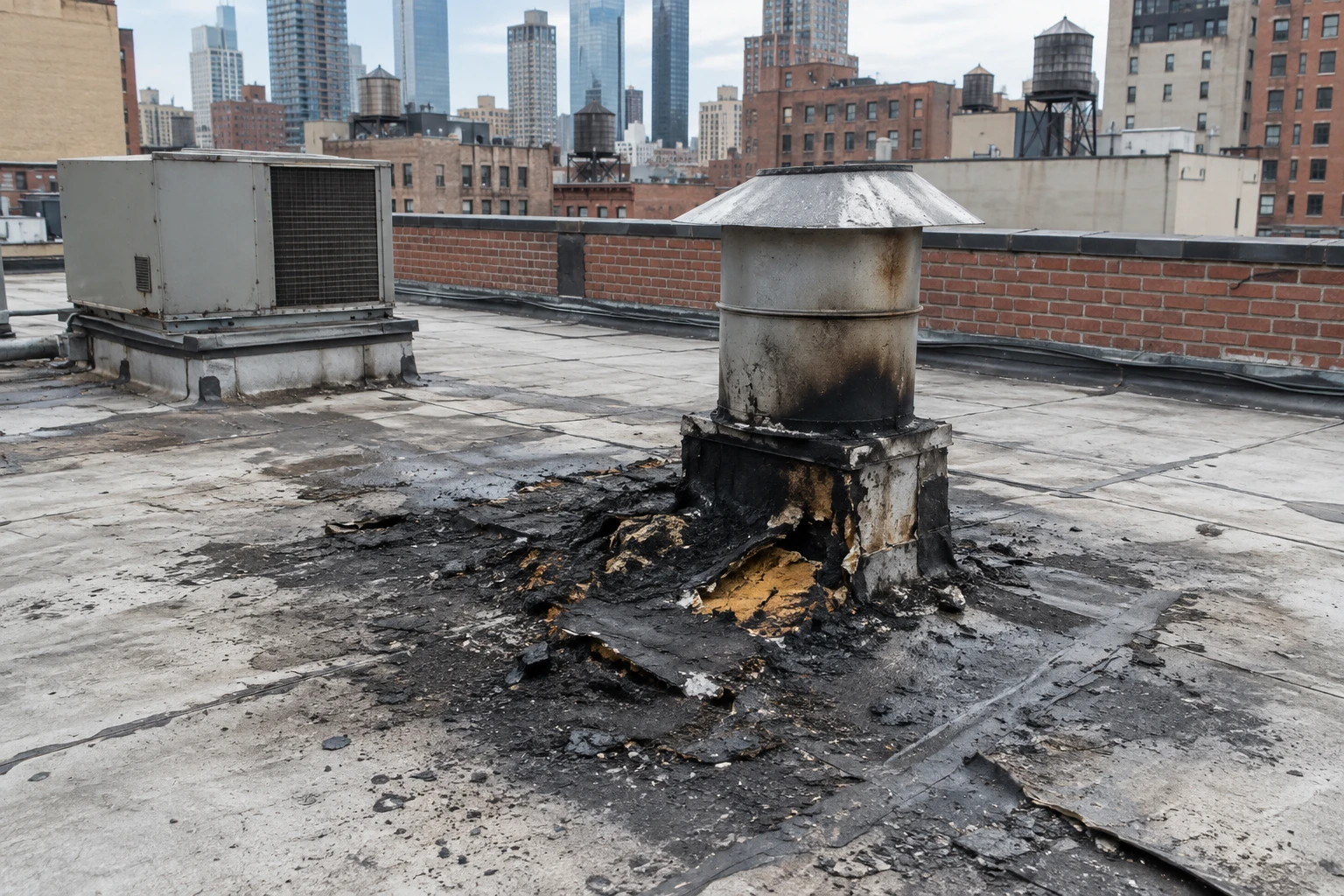
Before the membrane is examined, the deck gives the first verdict after a fire: a steel panel with a blue heat tint on its underside, or a wood board charred to a measurable depth, shows how far the heat traveled. A roof can look intact from above while the layers beneath have shrunk, melted or taken on smoke. On a Manhattan building the fire may have burned a floor below, with the roof acting as the cap on a damaged structure, so the first job is deciding what is safe to walk on. Stay off the roof until the fire department and the engineer clear it.
Fire and smoke damage to roofs is assessed and repaired, and the building is protected in the meantime.
What has to happen before anyone walks the roof?
Safety comes first, and it has an order. Release by the fire department comes first, then a structural engineer's review of the deck and its supports, with notice to the owner's insurer. Heat can weaken steel decks and joists, char wood, spall concrete and crack masonry parapets, so nobody steps onto a deck that has not been cleared.
Where access is unsafe, a drone pass records the surface from above and photographs from inside show the underside. The first inspection looks for sagging, open penetrations, hot spots and exposed insulation. Temporary protection goes on once the engineer approves, since a rainstorm on a fire-damaged building finds its defenses already gone, and the emergency roof repair response runs around the clock. Photographs of the roof from the street, taken before anything is moved, are worth keeping.
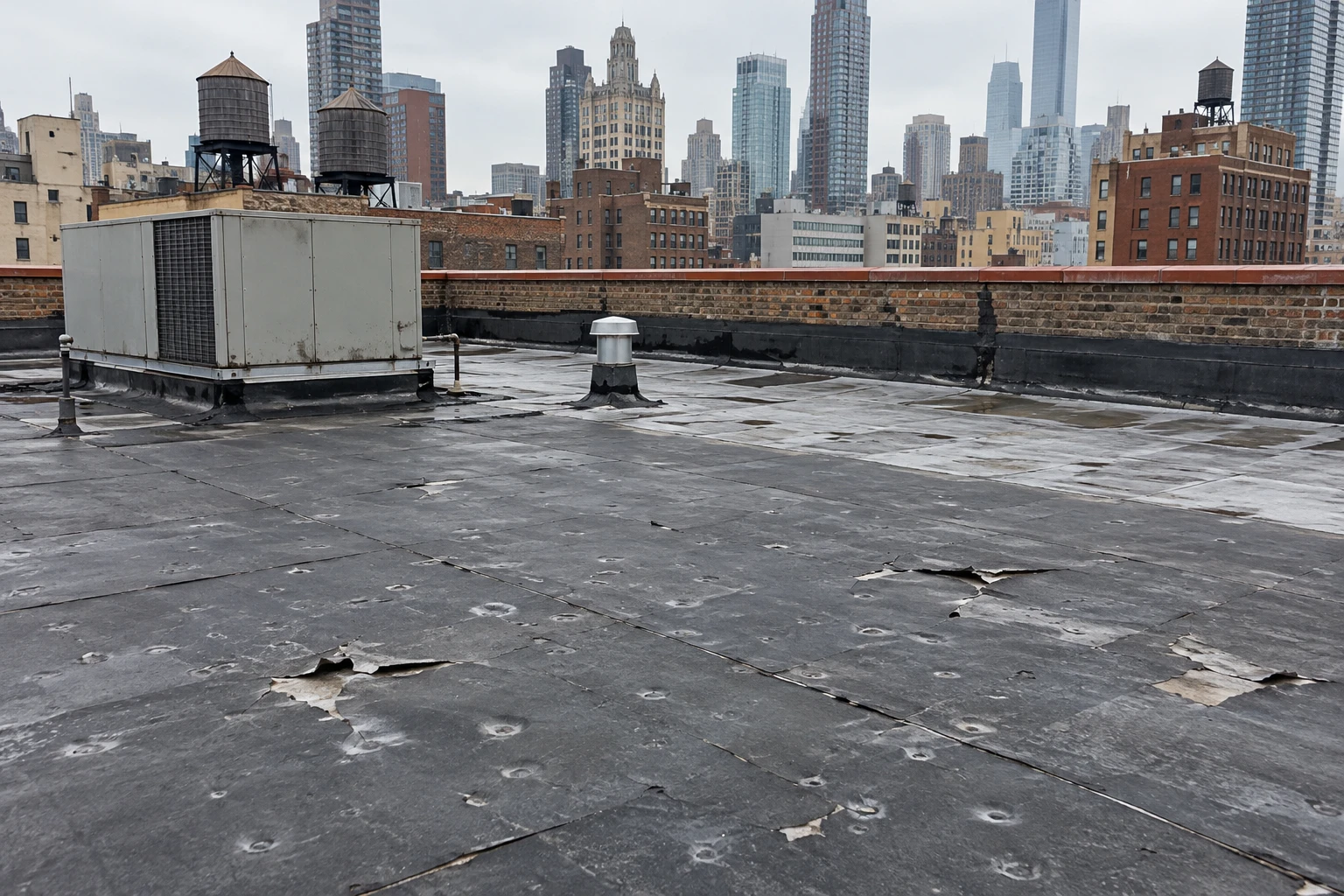
Firefighting leaves marks of its own. Crews may cut vent openings through the membrane and into the deck to release heat and smoke, and hoses and tools scuff the surface. Those openings are the first thing to protect, and they belong in the loss. Each opening and cut is mapped apart from the thermal damage around it, and smaller tears and gouges from equipment and debris, handled under membrane puncture repair, are listed as a separate group so the scope stays accurate.
How does fire damage each layer of a roof differently?
The membrane is the most visible layer and the least informative. Thermoplastic sheets shrink and curl near heat, bituminous membranes blister and run, and EPDM chars. Insulation answers differently: polyisocyanurate and polystyrene shrink, melt or burn, and insulation soaked by firefighting water loses its value. The deck may be steel, concrete or wood, and each material reacts to heat in its own way.
Smoke adds a record of its own. It contaminates insulation, can corrode metal and leaves odors that travel through the building. The survey notes the extent of each effect and tests the deck where heat reached it, while an infrared scan and cores find the wet insulation that firefighting water almost certainly left behind. Damaged sections are usually replaced, with the new work tied into sound roof around it. The firefighters' report belongs in the roof file.
Why does water from firefighting matter to the roof?
Firefighting water works its way through the structure and saturates the insulation inside a few hours. A roof already damaged by fire cannot take much more, and and Central Park alone receives about 49.5 inches of precipitation across a year, with Ida's 3.15 inches in one hour on September 1, 2021 as the heaviest hour on record, an open roof will see rain.
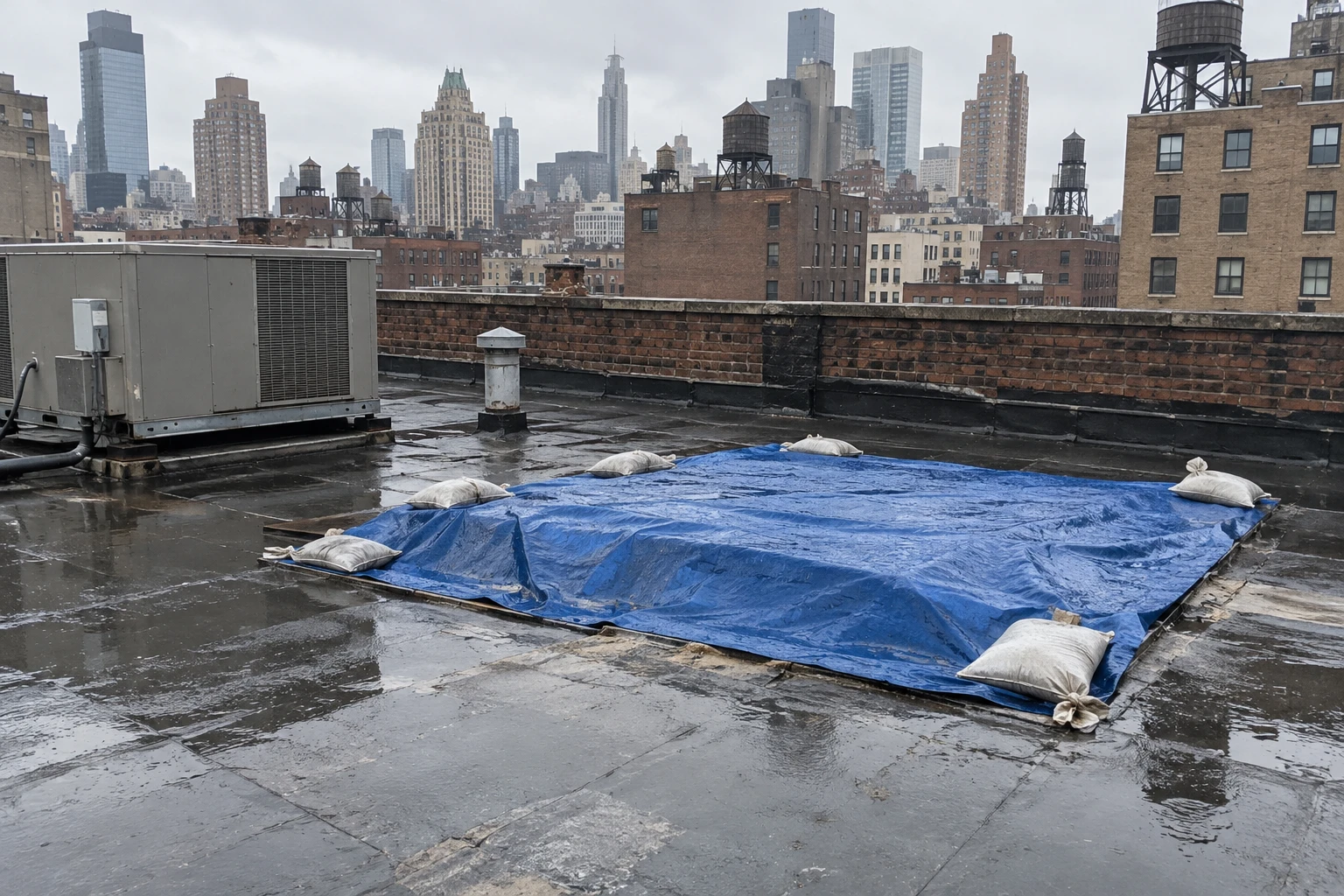
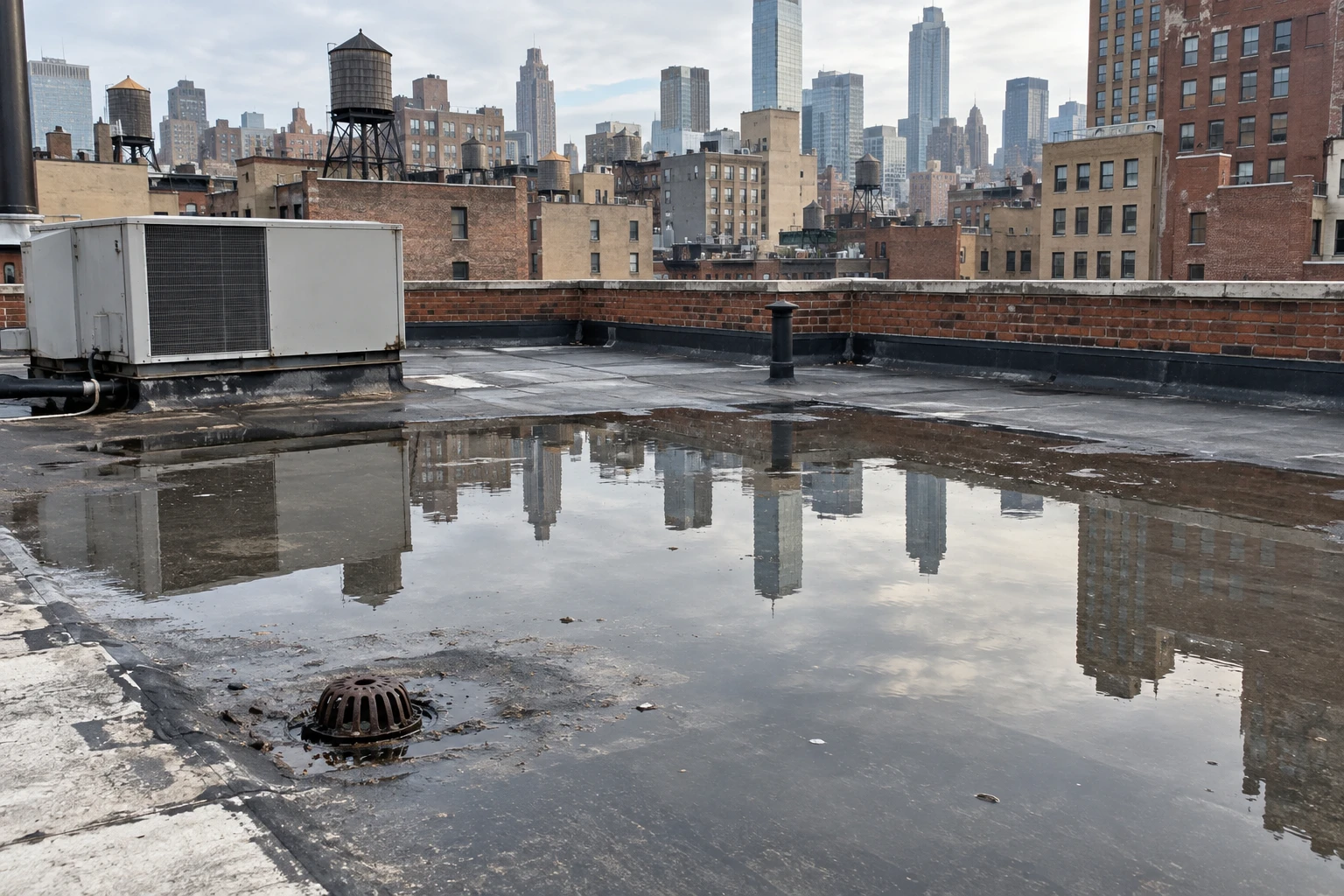
Dry-in comes first: a temporary membrane or tarp goes over the opening, fastened to the deck, and the drains are cleared. Moisture in the insulation and the deck is measured next, because wet material left in place breeds mold and corrodes metal. It is removed, the deck is dried and the layers are rebuilt. An owner who delays faces a second loss, since a ponding water repair becomes necessary on a roof left open. The date of the temporary dry-in goes in the record.
What does the permanent repair involve?
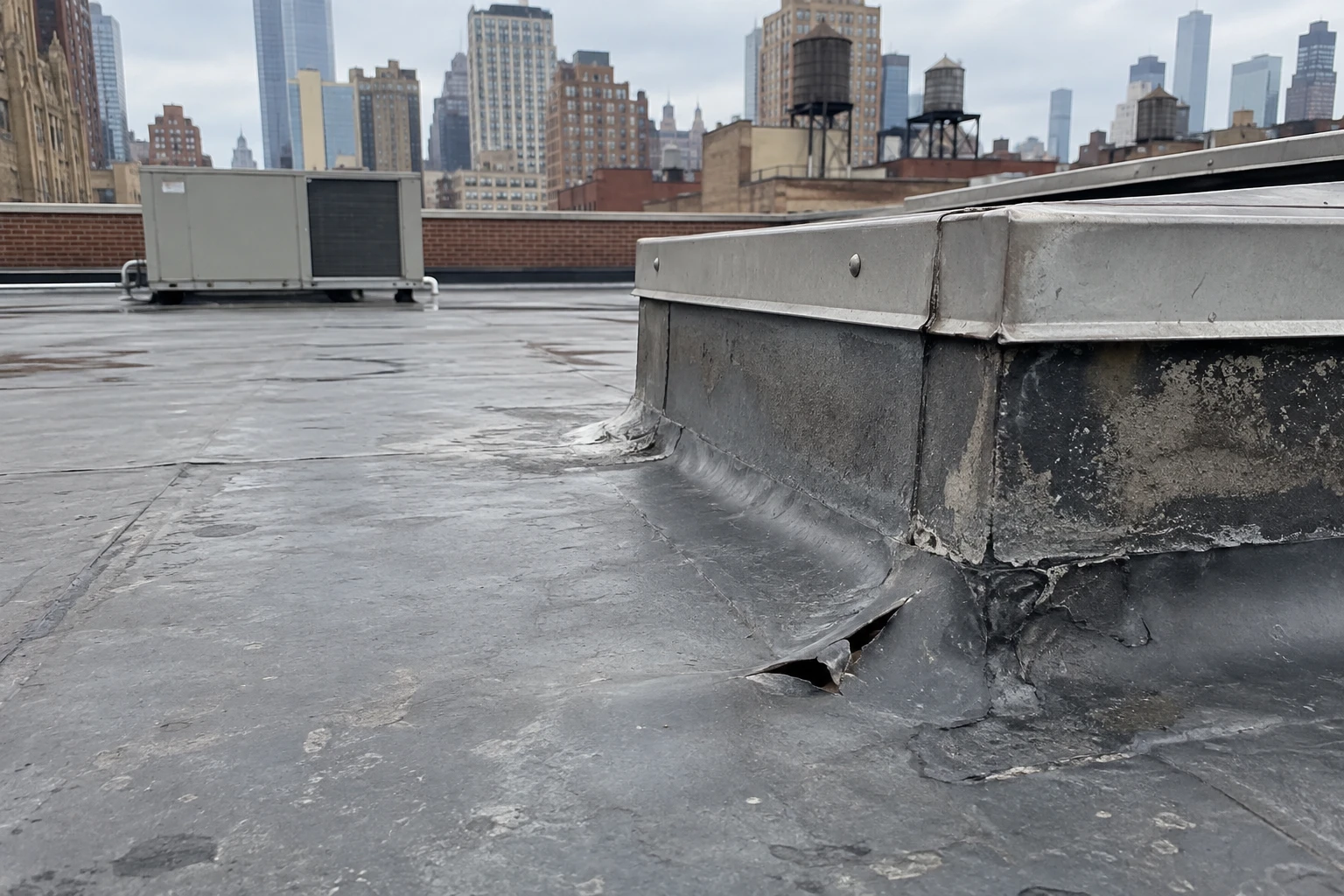
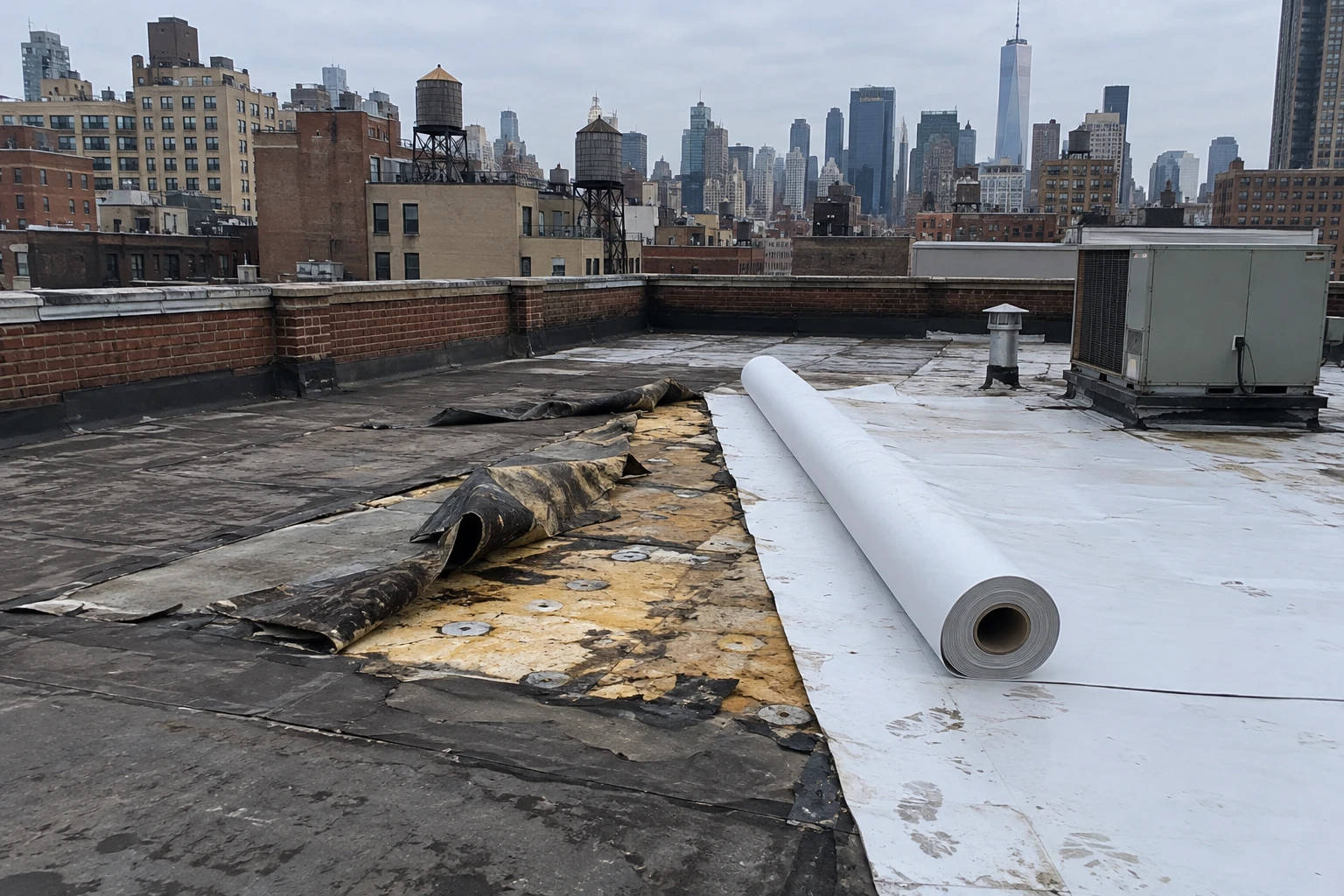
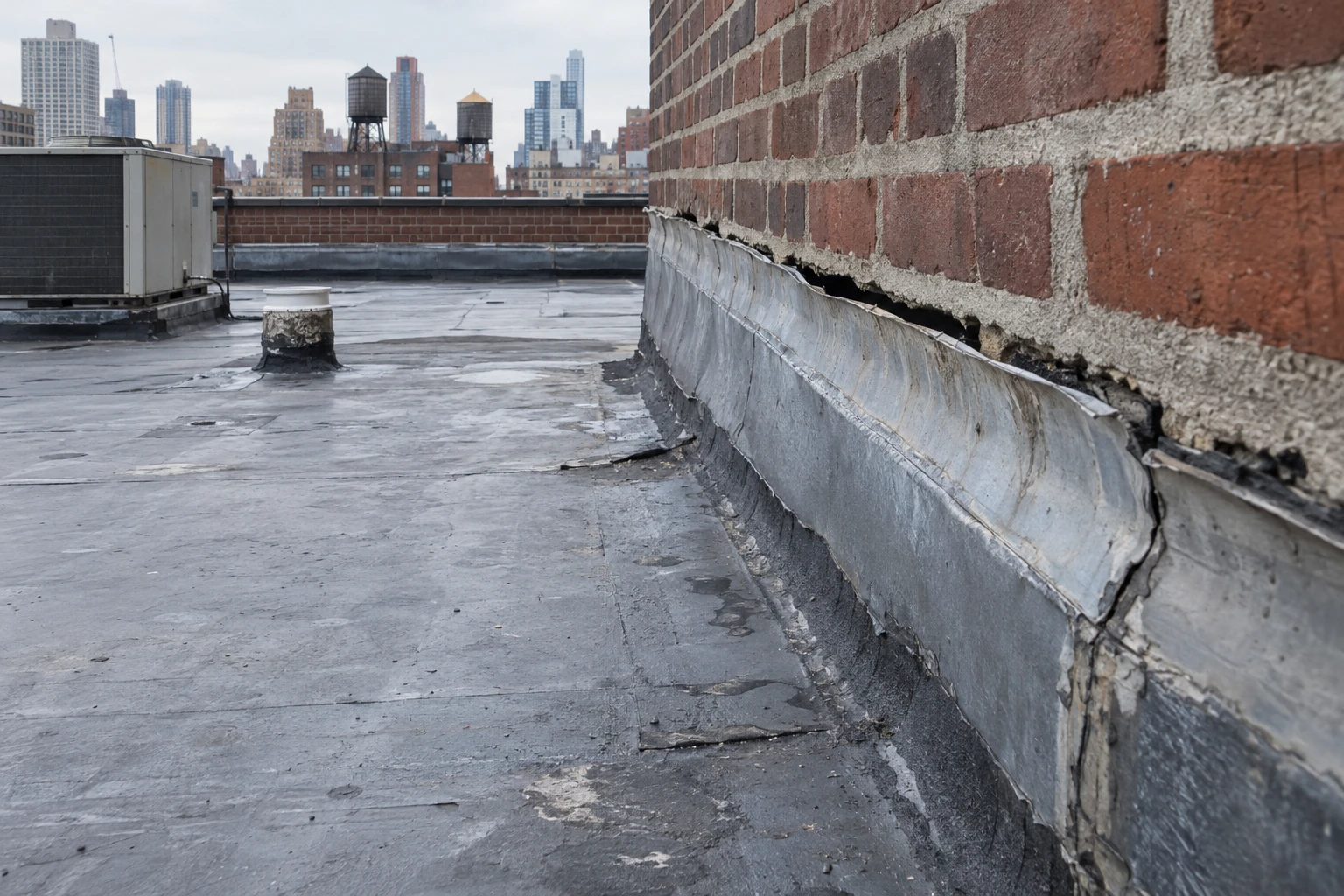
The permanent repair cuts back to sound substrate, restores the deck to the engineer's direction, lays new insulation and membrane, and then rebuilds the flashings, curbs and edge metal. If the fire reached equipment, the supports and penetrations are replaced as well.
The scope may cover a section or the whole roof. Where the whole roof is replaced, Local Laws 92 and 94 of 2019 apply to the sustainable roofing zone and the 2022 NYC Construction Codes govern the assembly, and the designer may specify a fire-rated assembly. In the SoHo-Cast Iron district, which covers about 500 buildings, visible repairs get landmark review. When the loss is large, the commercial roof replacement process applies, and wind or flashing damage found alongside it, treated under flashing failure repair, folds into the same scope. The rating of the replacement assembly should be confirmed before ordering.
Equipment and utilities need their own clearance. Rooftop units, gas lines, electrical conduit and antennas may be damaged or unsafe after a fire, and the trades that own them inspect and release them before roofing resumes. A curb that was heated can lose strength while looking sound, and flashing around it may be charred. The mechanical and electrical contractors are sequenced so no unit is set on a damaged curb and the new flashing is in place before the equipment returns.
What documentation does a fire claim need from the roofer?
Four things interest the carrier: how far the loss extends, what caused each item of damage, what restoration costs and in what sequence the work will run. The answers come as a survey with photographs and measurements, a moisture map, a schedule of damaged and sound areas and a line-item scope, with emergency measures kept apart from permanent work.
The file also records what was found before the fire when the owner holds earlier surveys. Roof insurance claim assistance turns these documents into a form the adjuster uses. The Financial District saw nearly 200 conversions to residential use between 2013 and 2021, so older roofs there can hold earlier repairs that complicate the estimate. Receipts for temporary measures should all be saved.
Smoke and odor deserve a line in the claim. Smoke contamination can persist in insulation after the visible damage is repaired, and a building may keep a smell that tenants notice. The survey tests suspect insulation and recommends removal where contamination is found, with the area marked on the plan. Removal costs more than leaving the material, but leaving it can mean a second round of work once tenants complain, and the carrier needs the test results to approve the added scope. Odor complaints should be logged with dates.
Commercial Roofing Questions
What decides whether the roof can be kept or must be replaced after a fire?
Deck condition and the extent of heat and water damage decide it. A sound deck with local damage means a section is replaced; heat across large areas or a compromised deck may lead the engineer to require a full replacement.
Can smoke damage be seen on the roof?
Occasionally, as soot staining or corroded metal. More often it sits in the insulation, and only cores and odor checks bring it out.
How soon must the roof be covered?
The moment the engineer clears access. Prompt protection is a policy expectation, and every rain on an open roof enlarges the loss.
Is a permit needed for repairs after a fire?
Usually, and structural work may need filed drawings. The scope is coordinated with the owner's expediter and the engineer so it matches the filing.
Which records should the owner keep?
Keep the fire department report, the engineer's letters, the survey, photographs, receipts and the scope of work; they back up the claim and the next sale.