Roofing scopes, sequencing and closeout documents for general contractors on Manhattan, NY projects, from conversions to setbacks and occupied renovations.
The number that moves a roofing bid most is not a unit price. It is the thickness of the existing assembly, read from a core cut before the bid, because it fixes how much has to come off, how many trips the hoist makes and how long the deck stays open. A general contractor on a Manhattan project then has to fit that work between the crane window, the sidewalk shed, the mechanical contractor's curbs and the facade crew's staging, all inside a small footprint. Send the project schedule, the logistics plan and the roof drawings before pricing, because the sequence decides the cost.
We work as a trade partner or subcontractor to general contractors, and the scope is written to fit the project schedule rather than the other way around.
What should a roofing scope say so the bid is complete?
A bid is complete when the scope names the existing conditions, the new system, how much insulation is replaced, the flashing and edge details, the drains, the penetrations, the testing and the closeout. Exclusions belong in plain terms: structural deck repair beyond a stated quantity, hazardous material abatement and work by other trades.
On a project with a full roof replacement, the scope also has to state the sustainable roofing zone. Under Local Laws 92 and 94 of 2019, new buildings, enlargements and complete replacements must cover that zone with solar panels, a green roof or both. The 2022 NYC Construction Codes, which include the Building Code, the Existing Building Code and the Energy Code, set the remaining requirements. Carrying that scope from the start avoids a change order in month three. Have the roof drawings checked against the survey before the bid goes out.
Storm-driven work is scoped differently. When a claim funds the project, the general contractor usually works beside insurance and restoration professionals, and the roofing scope has to match the line items the carrier approved. We break ours out the same way, with quantities, and attach the damage documentation so the contractor can bill from it. Settle early which party holds the claim relationship.
How does the roof fit among the other trades?
Roof work passes through a fixed relay of trades: structure, deck, vapor retarder, insulation, membrane, flashings, equipment curbs and finish trades. Where a Financial District office building is converted to residential use, the mechanical and facade work overlaps the roof. Nearly 200 buildings in that district were converted from 2013 to 2021, and each conversion brings roof and envelope work on older office stock.
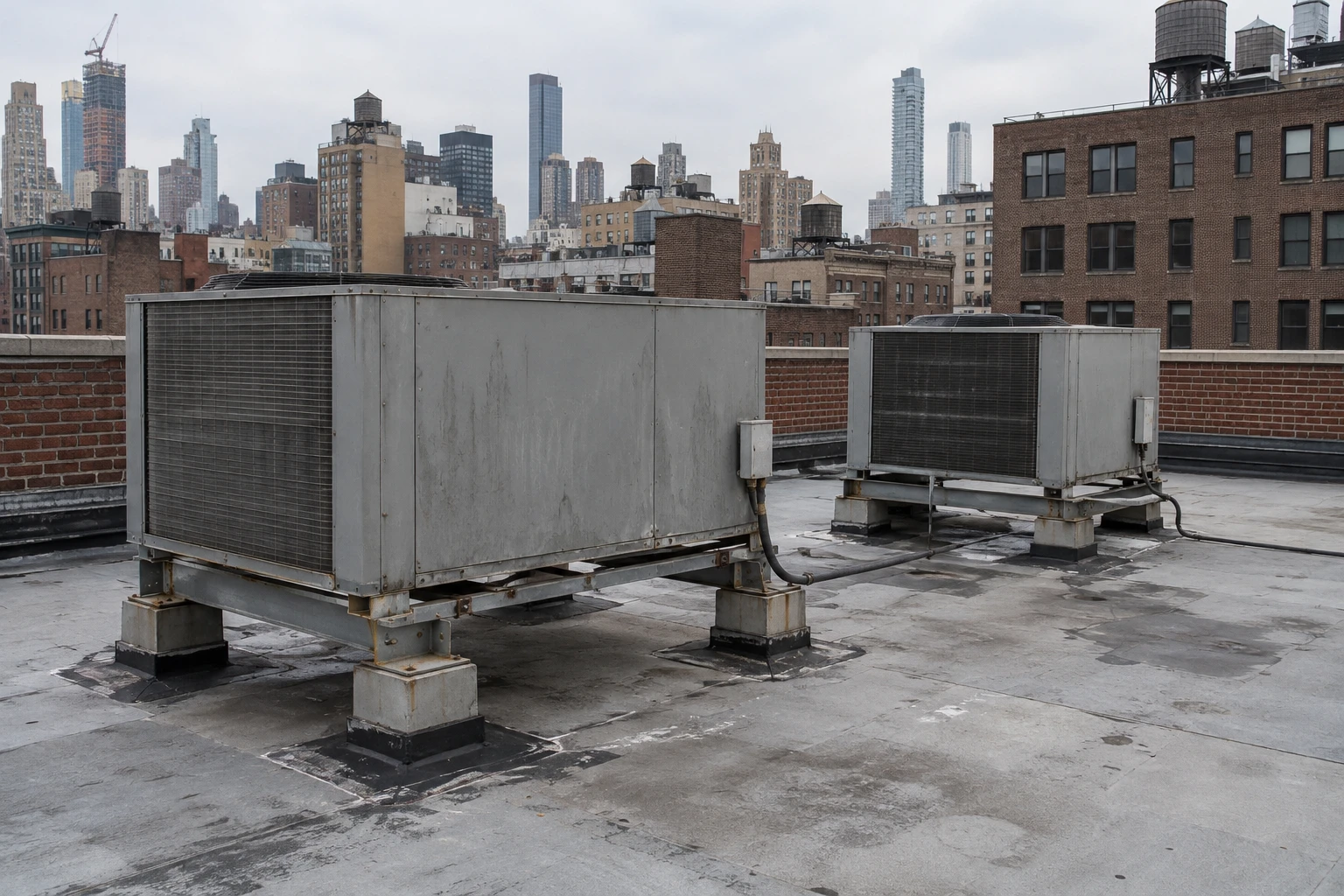
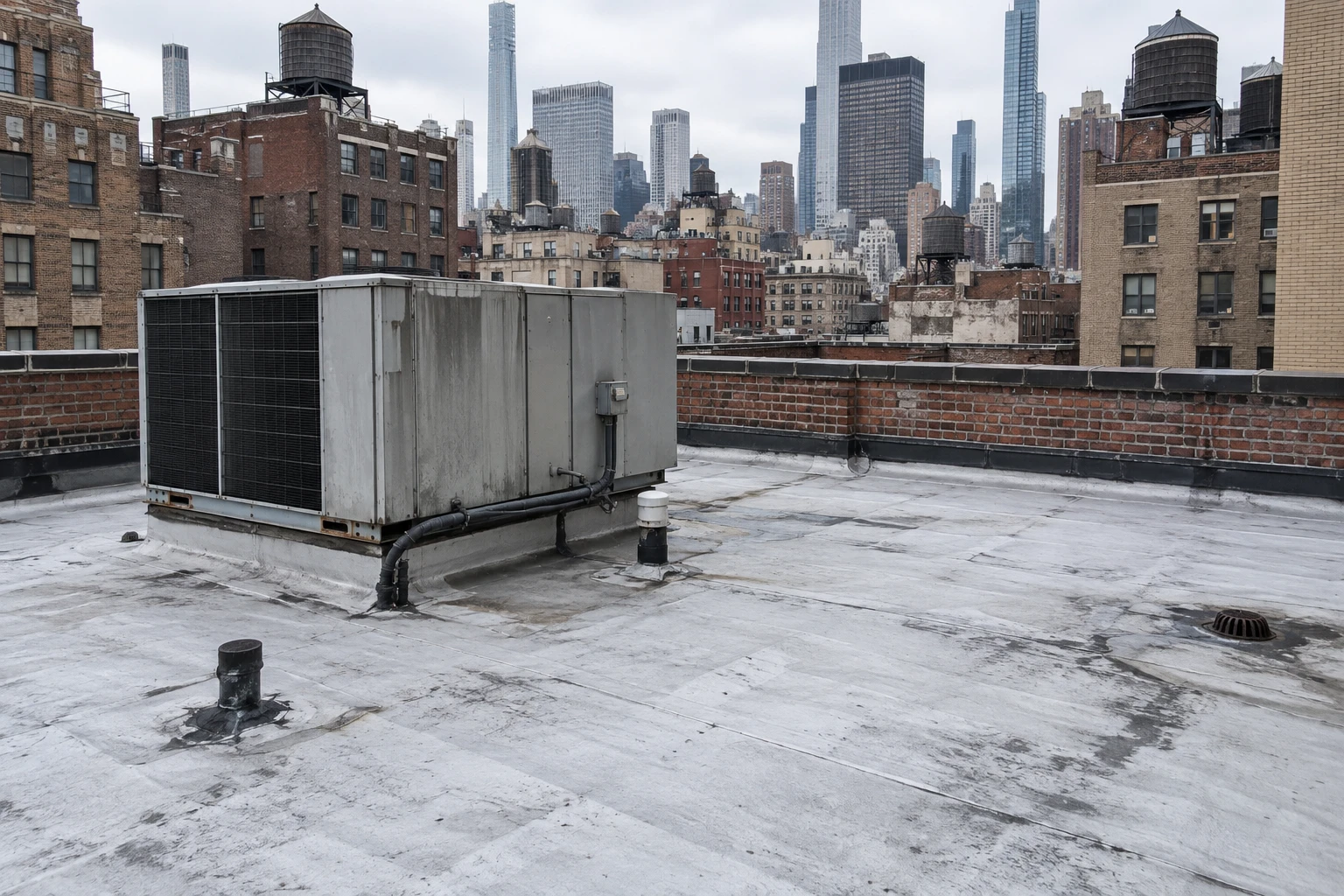
The mechanical contractor and the roofer settle curb heights, the facade crew and the roofer settle parapet height, and the plumber and the roofer settle drain locations. A rooftop equipment curb and support set after the membrane damages it, while one set before needs its own flashing detail, so the order is written down. A short weekly coordination call and a roof-area lookahead keep everyone current, and crane and hoist windows are worth fixing early.
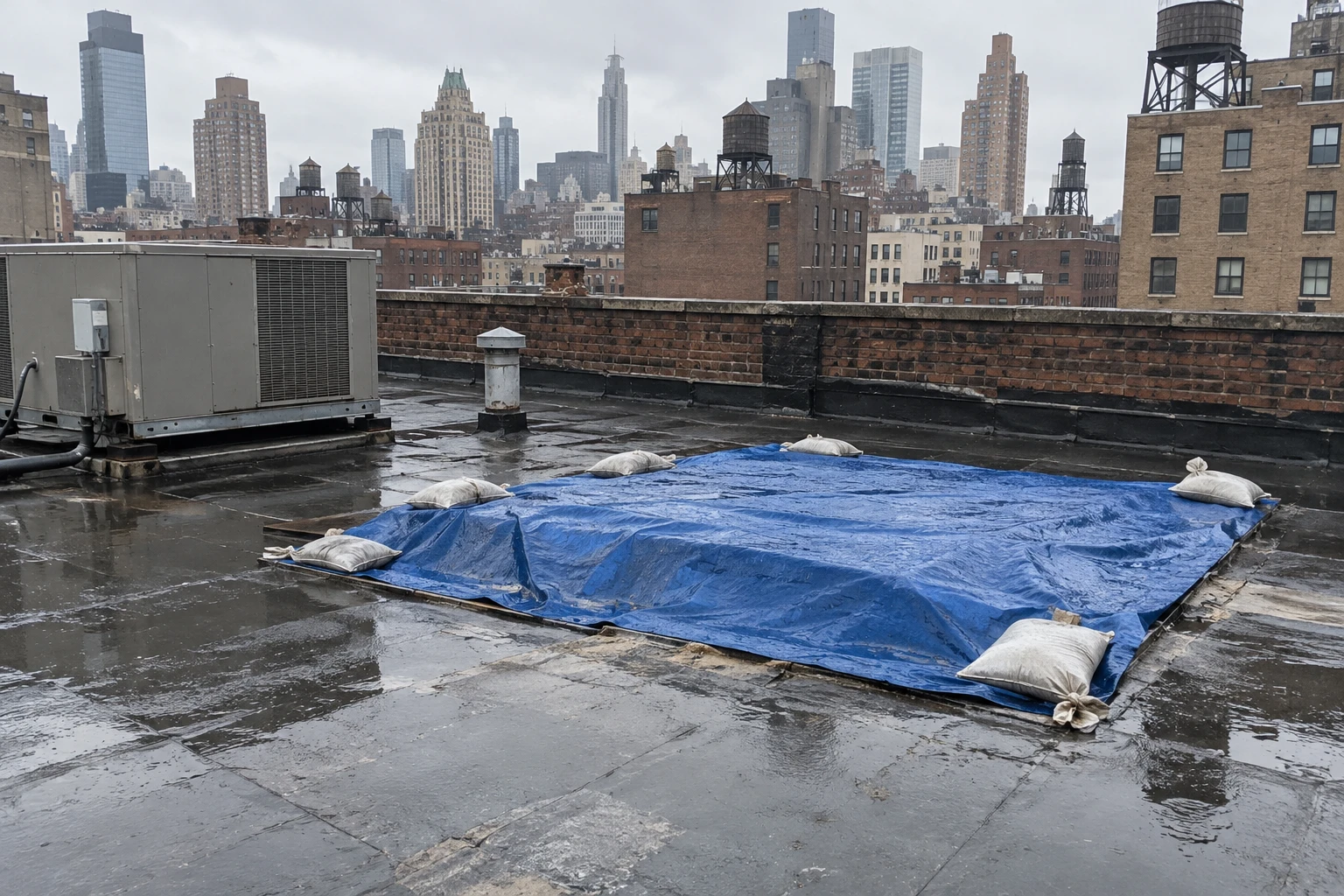
Temporary protection follows the same discipline. While a partly open roof is all that keeps the building dry, the contractor needs to know which areas are covered and which are exposed. That status goes on the plan, is updated weekly and reaches the superintendent before anything changes, so interior trades do not load finished floors under a section that is still open.
What do logistics look like for a roofing crew on a tight site?
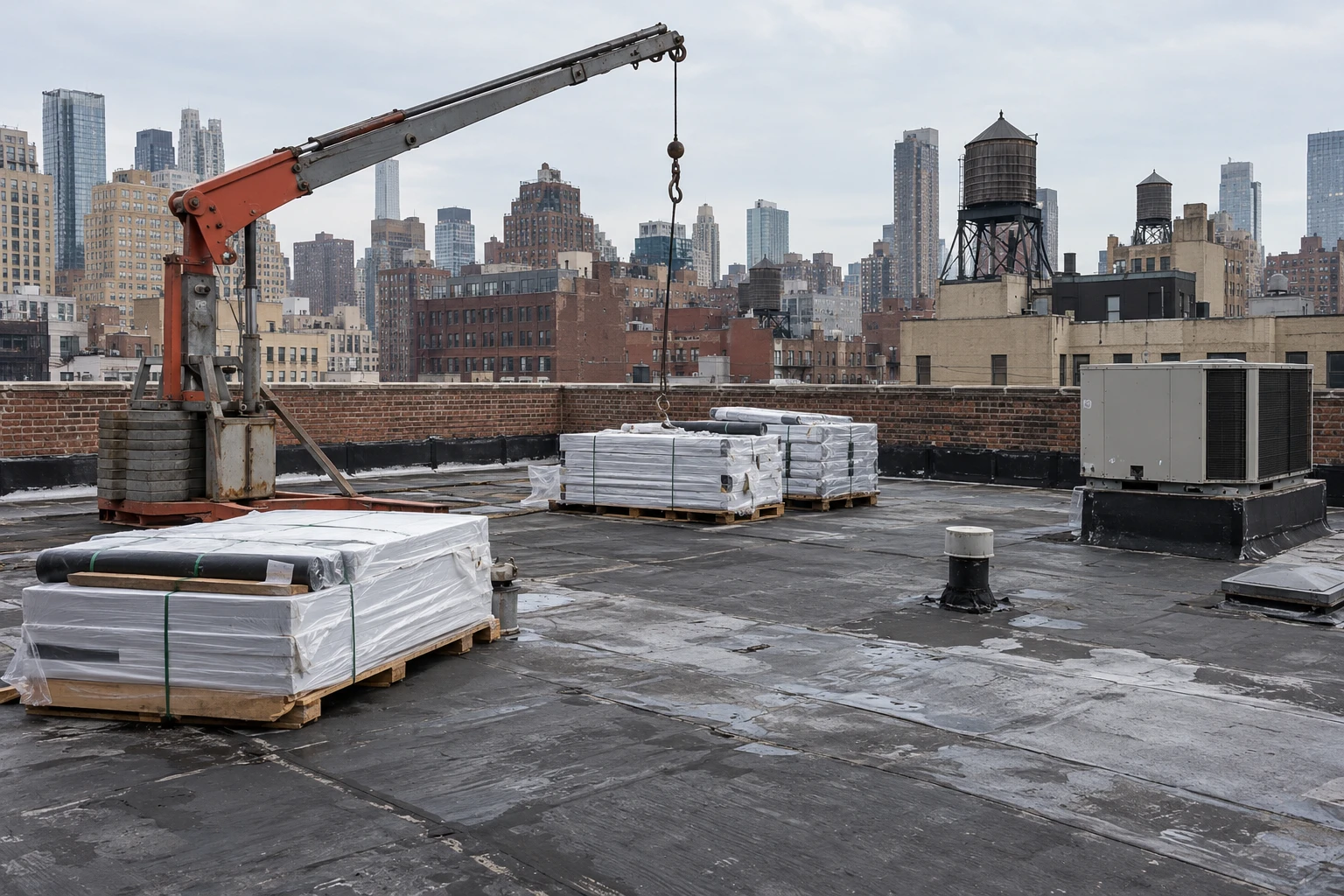
The site's logistics manager controls the delivery schedule, and a small roof limits how much material can sit on it. Membrane rolls and insulation bundles are lifted by hoist or crane in quantities the crew can install that day, and whatever is left over is covered. Sidewalk sheds and street closures need permits, usually held by the general contractor, and the roofing information that supports those permits comes from us.
Debris comes down by chute or hoist at set times, and hot work runs under a permit with a fire watch. In a landmarked district such as SoHo-Cast Iron, which holds about 500 buildings, a change visible from the street needs review, and the schedule has to absorb that lead time. Where tenants stay in the building, the occupied building reroofing plan fixes the working hours. Delivery windows and hoist capacity should be shared at kickoff.
Neighbors matter on a tight block, because noise, dust and falling-object risk reach the adjacent buildings and a complaint can stop work. Notice goes to neighbors through the general contractor, work hours are posted at the site and a daily log records activity. Guardrails, fall protection and a controlled access zone go up before work starts, the safety plan is shared with the project's safety manager and each shift opens with a pre-task meeting.
How does weather risk get priced and managed?
Roofing is the trade most exposed to weather, so the plan for it belongs in the bid. Central Park collects about 49.5 inches of precipitation a year, and on September 1, 2021 Ida set the city's hourly record at 3.15 inches. Each section is closed weathertight before the crew leaves, and a temporary dry-in kit stays on the roof.
Whether to leave a roof open ahead of a forecast storm is a call the superintendent and the foreman make together. We watch the forecast, pause when it turns and tie materials down; the strongest gust on record at Central Park was 78 mph, on December 2, 1974. Our emergency roof repair response also covers the project after hours. Weather days belong in the schedule, along with an agreement in advance on who pays for them.
What does the closeout package contain?
The package holds the as-built roof plan, the material submittals, test results, photographs of each layer before it was covered, the manufacturer's warranty paperwork and maintenance instructions. A condition rating of the finished roof goes in too, and it becomes the baseline for the owner's reserve study.
Owners rely on the package, and so do real estate investors and REITs that later buy the building. It arrives as an organized folder, and an inspection with the owner's representative comes before final payment. Warranty dates are tracked in a roof warranty management file. On projects in the Financial District, the folder is ready for turnover alongside the rest of the building's documents.
Punch lists stay short when the quality checks happen along the way. Each section gets seam probing, flashing termination checks and a drain performance review before it is covered or released, which lets the owner's representative walk the roof once rather than three times. Water tests at drains and ponding checks after the first rain are recorded. Whatever remains is listed with locations and a date, and the general contractor sees that list before the owner does.
Commercial Roofing Questions
What matters most in choosing a roofing sub for a Manhattan project?
Reliable scheduling, a worked-out access plan and complete documentation. When the bid itself states the hoist needs, the delivery sizes and the closeout package, the job has already been planned on paper.
Can you provide a design-assist survey before the bid?
Yes. Cores and a moisture map give the contractor quantities for the existing roof and surface the conditions that would turn into change orders later.
What happens when the deck turns out to be damaged?
The bid carries an allowance with unit rates, and each repair is photographed and located. Anything that exceeds the allowance becomes a documented change order.
Who coordinates with the facade and mechanical trades?
Our foreman attends the weekly coordination meeting and supplies a roof lookahead. Curb heights, parapet details and drain locations are settled in writing.
Which warranty documents come with turnover?
The manufacturer's system warranty, our workmanship terms, the material submittals and the maintenance instructions, all in the closeout folder.