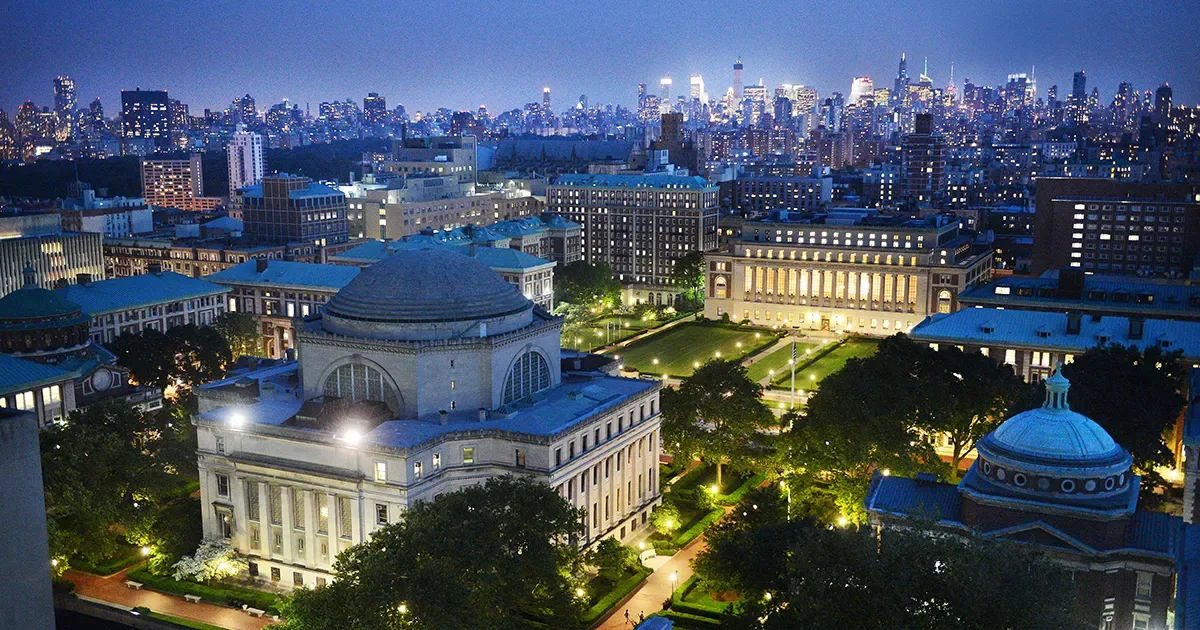
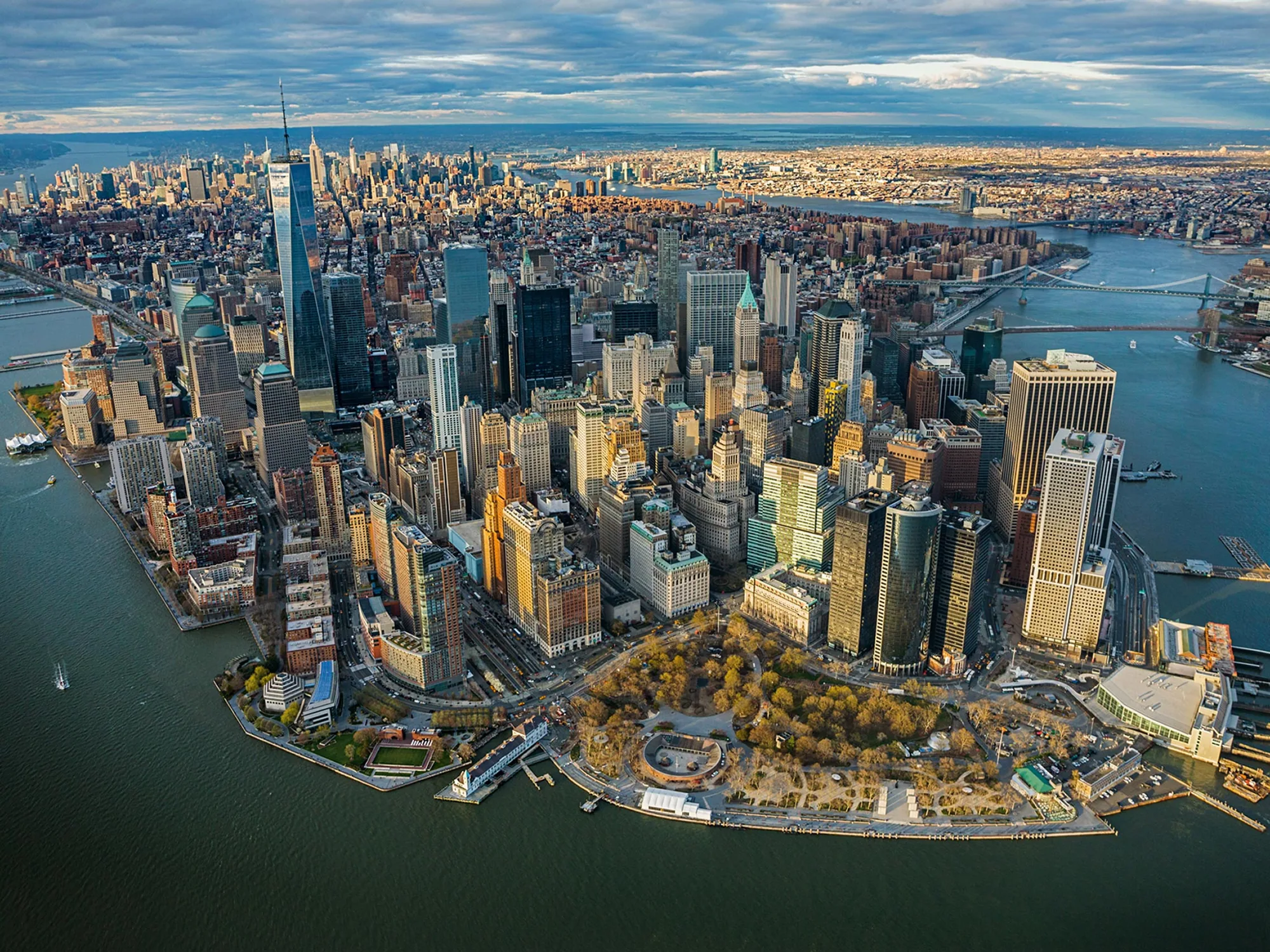
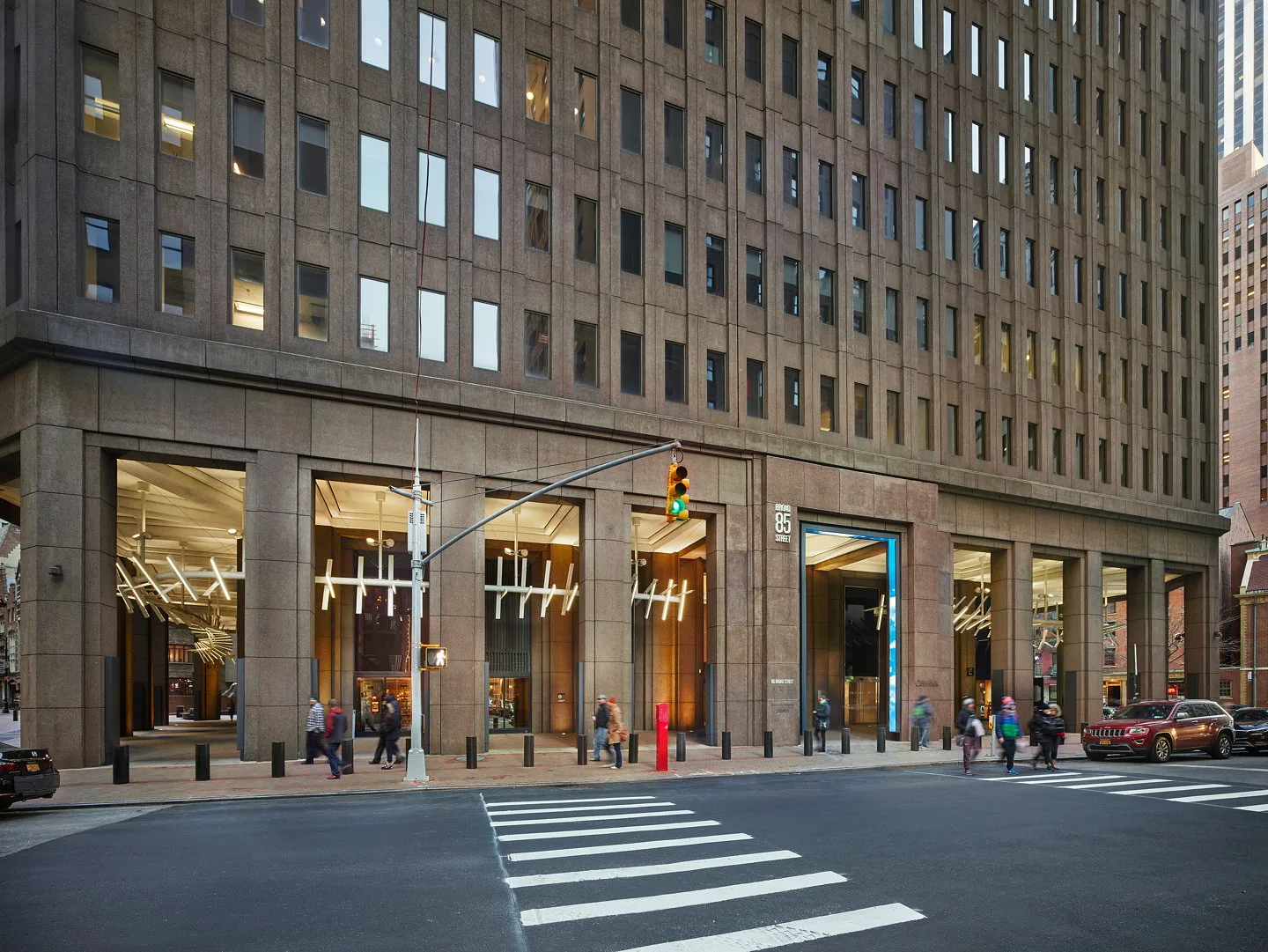
College and university roofing in Manhattan, NY: campus-wide condition ratings, landmark-aware repairs and replacements scheduled around terms and labs.
A campus roof survey produces a table before it produces a drawing: building by building, roof by roof, with a condition rating, a moisture map and an estimated remaining life, so a facilities office can see the whole inventory in one view. Universities in Manhattan, NY are not single sites. NYU's expansion plan in Greenwich Village, Columbia's neighbor Manhattanville in West Harlem and the Cornell Tech campus on Roosevelt Island each put several buildings of different ages under one owner. Each building's roof has its own age, its own use and sometimes its own regulator.
We survey, repair and replace roofs on college and university buildings and put the findings in a format the capital office can use. A recent roof report, the age of the building and any open violations give the survey its starting point; scope and ratings are set before a price is discussed.
How does a campus-wide survey work?
The method is the same on every roof so the ratings compare. An infrared scan at dusk. Cores at warm spots and control points. Ponding depth after rain. An inspection of each curb, parapet coping, skylight and drain leader. Photographs tied to a sketch. The ratings roll up into a table that ranks roofs by risk, weighted by what sits below: a laboratory, a library stack, a lecture hall or a dormitory.
A building with research space ranks its roof higher, because water over instruments costs more than water over a corridor. The table also lists the equipment on each roof, since laboratory exhaust, chillers and generators change both the membrane choice and the work plan. Roofs with exhaust are cored near the discharge as well as in the field, because heat and vapor change the membrane there first. The ratings are reviewed with the facilities director and the department managers before they are final, so a rating reflects how the space below is used. The multi-site roof program turns the table into a multi-year schedule with dates and cost ranges.
What changes when the building is landmarked or in a historic district?
More than 50 northern and western blocks make up the Greenwich Village Historic District, where renovations have to preserve the main facade and the overall look of each building. The South Village Historic District alone covers 235 buildings on 13 blocks. A university building in a district like that may need landmark review for a change that is visible from the street, such as a new rooftop unit, a bulkhead or a parapet.
We confirm the building's status first, then the roof's regulated features. Coping, cornices and brick parapets are repaired in kind. Membrane and insulation below can be modern. A document that separates original fabric from new work helps the review and the next owner. Where a parapet is landmark fabric, the membrane turns up behind it and a metal counterflashing closes the joint, so the stone is not drilled more than once. Core samples are taken from field areas away from visible edges, and the patched holes are sealed and photographed the same day. The Greenwich Village work follows that order: status, survey, scope, then price.
How do new construction and expansion affect the roof plan?
NYU's 2031 plan calls for a 1.5 million square foot expansion, and construction has begun on the first building. The Cornell Tech campus on Roosevelt Island replaced the Goldwater Memorial Hospital, which closed in 2013, and opened two years after construction began in 2015. New buildings come with new roofs, and a first-year inspection records installation defects while they can still be corrected. A baseline survey becomes the starting point for the maintenance calendar, which for a university usually runs spring and fall, with a visit after every major storm and a drain check after leaf fall. Each visit updates the rating, and the table always shows the current state of every roof.
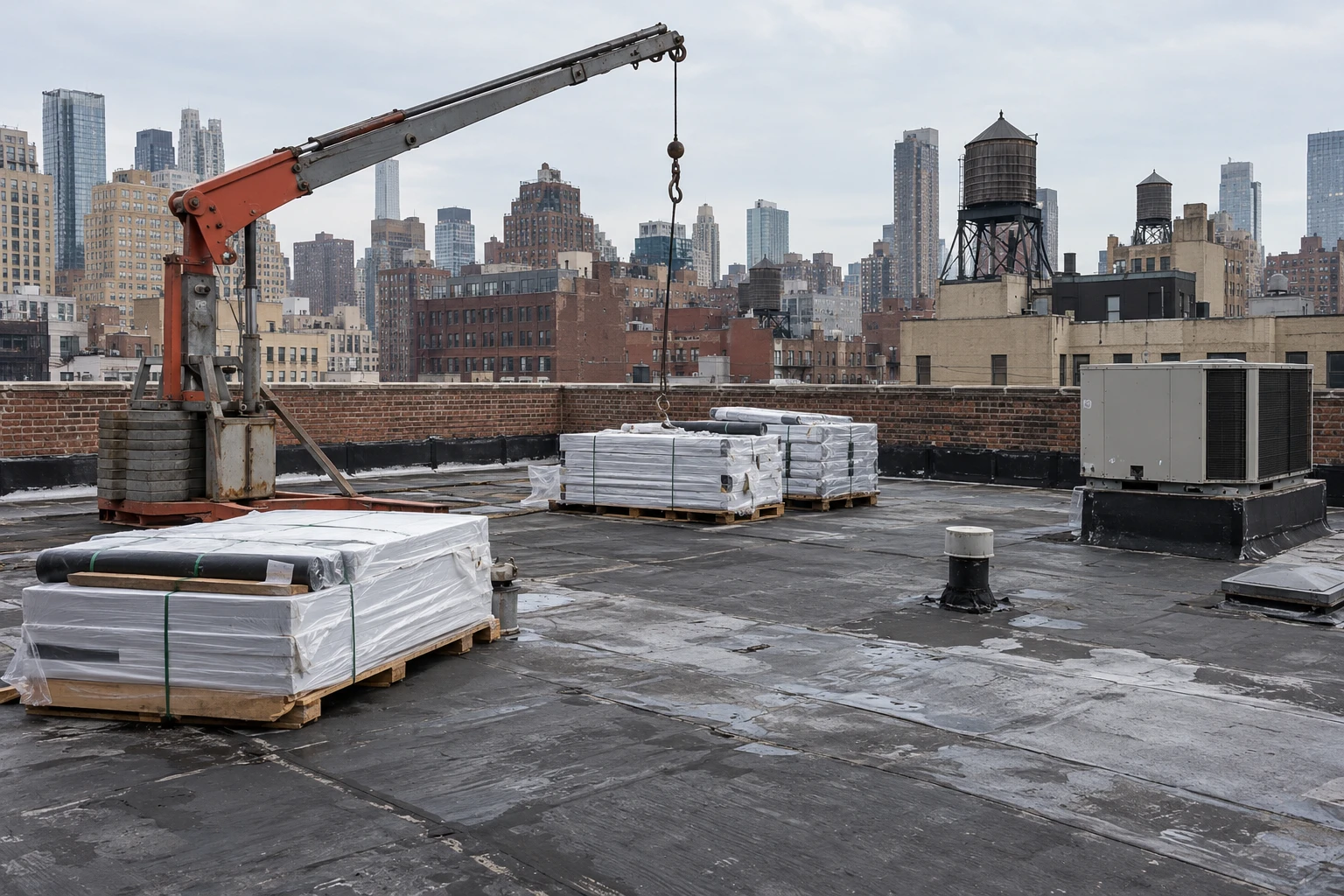
Expansion also touches existing roofs. A new building next to an old one creates a step where drifts build and a tie-in where two roofs meet. Construction traffic wears membranes, and a crane lift over an old roof can damage it. We recommend a survey before and after nearby construction, so damage is documented. For Roosevelt Island, which is about 2 miles long with a maximum width of 800 feet, wind exposure is a further check on edges and equipment.
When can roof work happen on a campus?
The academic calendar sets the windows. Summer is the main one, with winter break a shorter one. Loud and smelly steps go there. Laboratories and libraries have their own limits: vibration, fumes and dust can harm equipment and collections. We write the sequence with the department manager, name the zones, set quiet hours and place protection under the work. Where a lab has experiments that cannot be interrupted, the roof above it waits for the week the lab names as free, and the crew shifts to another zone if that date moves.
The 3.15 inches Ida dropped in an hour in 2021 and the 14.06 foot surge Sandy sent to The Battery in 2012 make the point twice. A campus with archives or equipment on lower floors lives with both: roof water from above and surge from below. The survey records drain leaders and overflow heights, and the plan includes a stop rule for rain. The occupied building reroofing approach applies throughout.
Which codes apply to a university roof replacement?
The 2022 NYC Construction Codes bring a Building Code, an Existing Building Code and an Energy Code together under the Department of Buildings. Local Laws 92 and 94 of 2019 reach every new building, enlargement and complete replacement, with solar, a green roof or both required over the sustainable roofing zone. A university with sustainability goals may welcome the requirement, yet the layout still has to work around laboratory exhaust and service routes.
Zone, equipment and structure are mapped before any design is fixed. A repair or partial recover may not trigger the rule, and we say which path applies. A school roof and a hospital roof follow similar logic, with the university's research and teaching spaces setting the priorities.
Commercial Roofing Questions
What decides the order of roof projects across a campus?
The condition rating weighted by what sits below. A roof with wet insulation over a laboratory or an archive ranks above a dry roof over storage. The ratings produce a defensible order, and the order goes into the capital plan.
Can roof work proceed near laboratories with sensitive instruments?
Yes, with protection and timing. We identify instruments sensitive to vibration, dust or fumes and schedule the noisy steps for periods when they are off. Sheeting goes under the work zone, and a named lab contact can stop a task.
Does a roof in a historic district need landmark approval for a repair?
Repairs in kind to the visible fabric often proceed more easily than changes. New rooftop equipment, bulkheads and visible alterations may need review. We confirm the building's status and the regulated features before the scope is written.
Should we inspect roofs next to a construction site?
Yes. Construction traffic, crane lifts and debris can damage a nearby roof. A survey before the work records its condition, and one after shows any change. The difference supports a claim if damage occurred.
What does a first-year survey on a new university building include?
Seam probing, flashing checks, drain tests, ponding depths and a photograph of every penetration. It is the baseline against which later inspections are compared, and it records installation defects while the installer is still responsible.