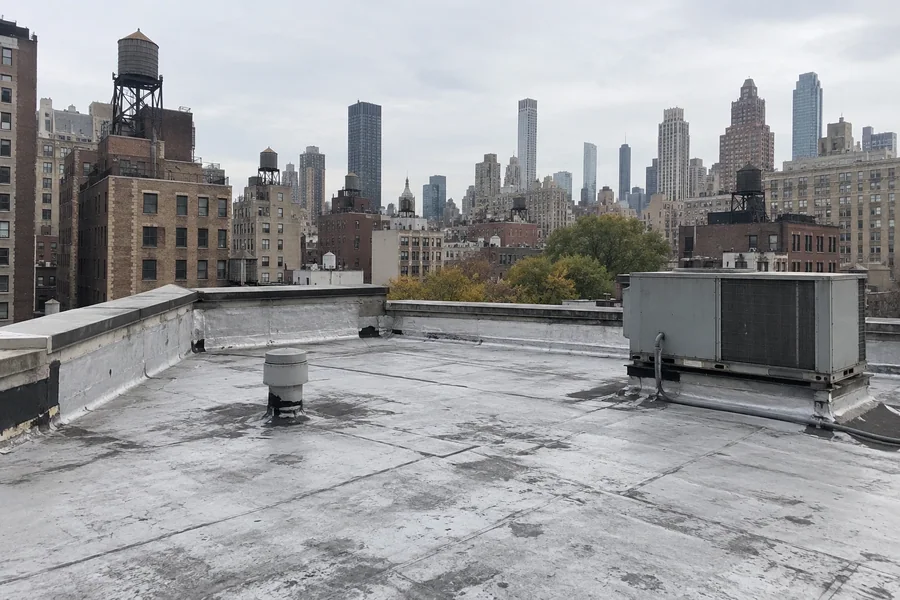
Roof surveys, flashing repairs and replacements for auto dealerships in the Manhattan, NY market, covering showrooms, service bays, canopies and parapets.
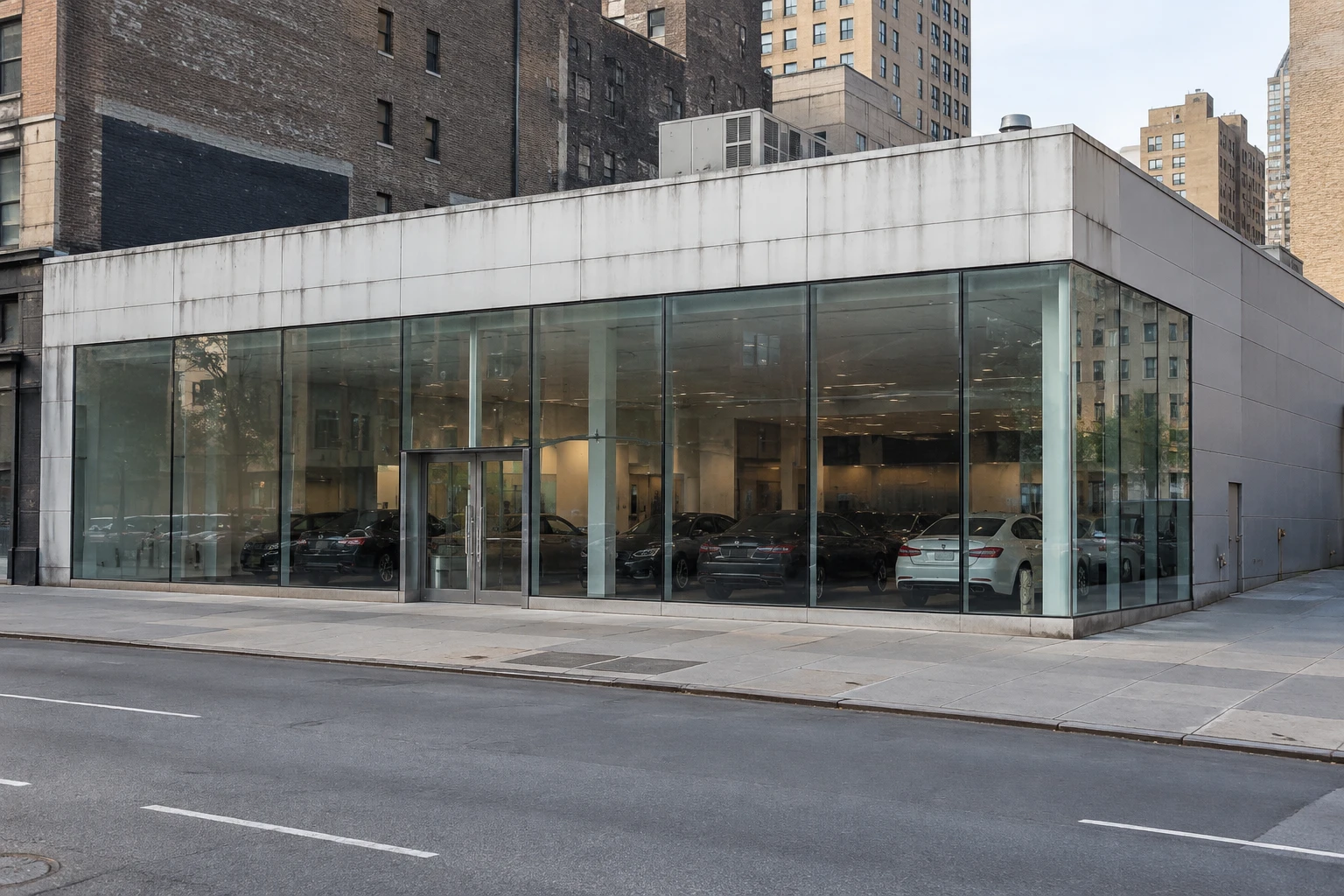
A moisture reading at the junction of a showroom glass wall and the roof edge above it can show a damp strip the width of the curtain wall, while the field of the roof a few feet away reads dry. The finding means the water is entering at the interface, not through the membrane, and that the repair belongs to the flashing and the parapet cap. For a dealership in the Manhattan, NY market, the consequence is plain: a drip onto a display vehicle or a customer lounge costs sales, not only repairs. Our survey separates the showroom, the service bays and the canopy, rates each, and gives the owner a condition rating that fits a lease or a capital plan.
What does a survey find on a dealership with three roof types?
A dealership can have three roof conditions under one owner: a showroom with glass walls and a flat or low-slope roof, a service wing with taller walls and exhaust, and a canopy or porte-cochere over the delivery area. We survey each as its own zone. Showroom roofs get an infrared scan and perimeter flashing check, service roofs get a curb and exhaust inspection, and canopies get a drainage and fastener review.
The zone ratings go into a single report. An owner sees at once that the showroom field is sound, the service wing has a wet corner at an exhaust curb and the canopy leaks at its scupper. Repairs are ranked by what the failure would cost, in inventory, in downtime and in the customer's first impression of the building.
The service wing gets a closer look at exhaust. Hot, oily air from bay ventilation reaches the roof surface near each stack, and the membrane there softens, stains and blisters sooner than the field. A stained patch downwind of a stack, measured and photographed, tells us whether a chemical-resistant sheet is needed at that spot or whether cleaning is enough.
Why do the glass edges and parapets fail first?
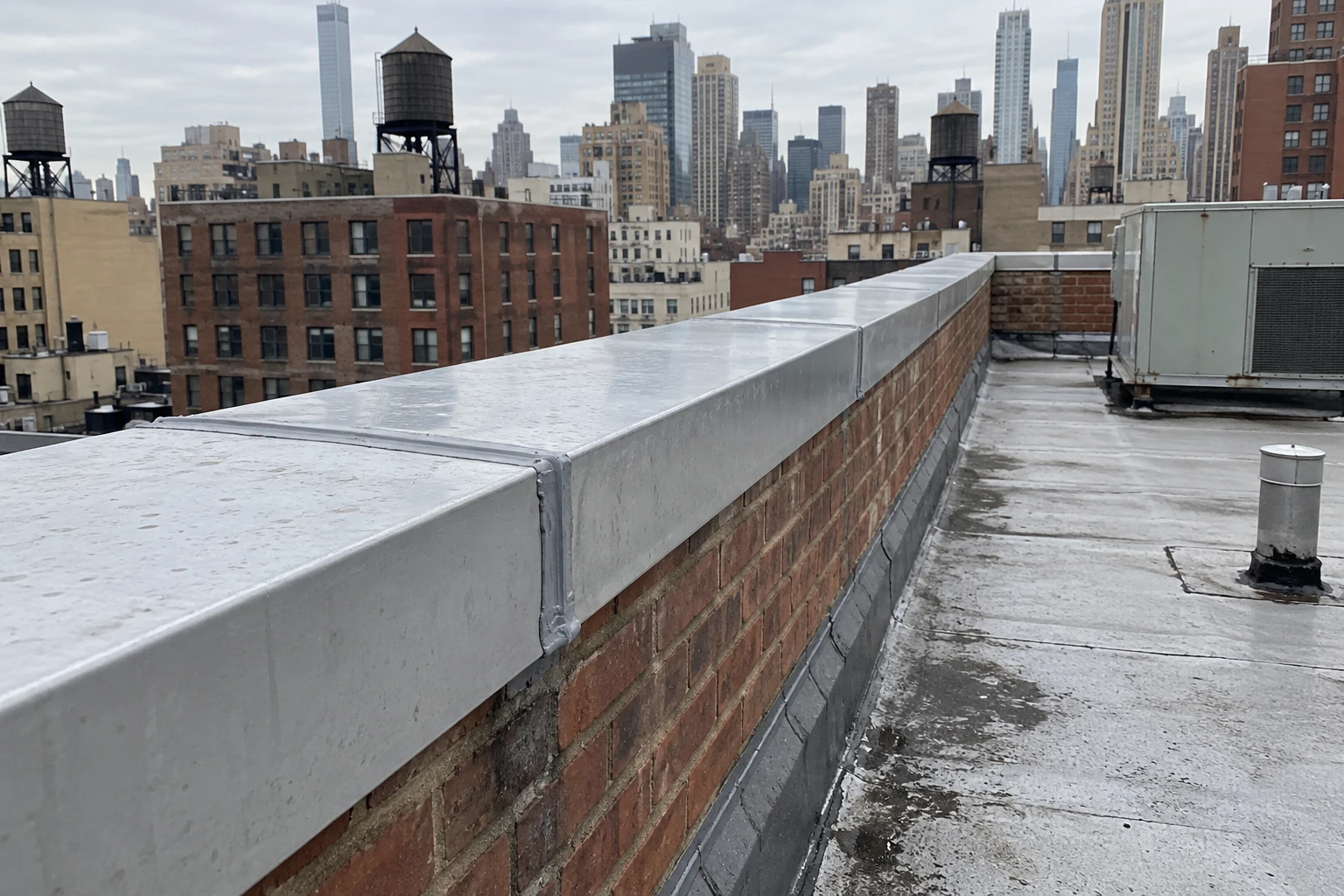
Where a roof meets a glass wall, two materials with different movement share one joint. Sealant cracks, the counterflashing opens and water finds the gap. The parapet cap above a glass wall takes wind load and thermal movement together, and a coping joint that opens an eighth of an inch becomes a water path in a heavy rain. We measure joints with a gauge and record the width in the log.
Repairs rebuild the interface, not just the sealant. That can mean a new counterflashing, a re-set cap with a continuous cleat, and a drainage plane behind the glass. Our edge metal and coping work and our skylight and penetration flashing method apply to every opening in the showroom roof.
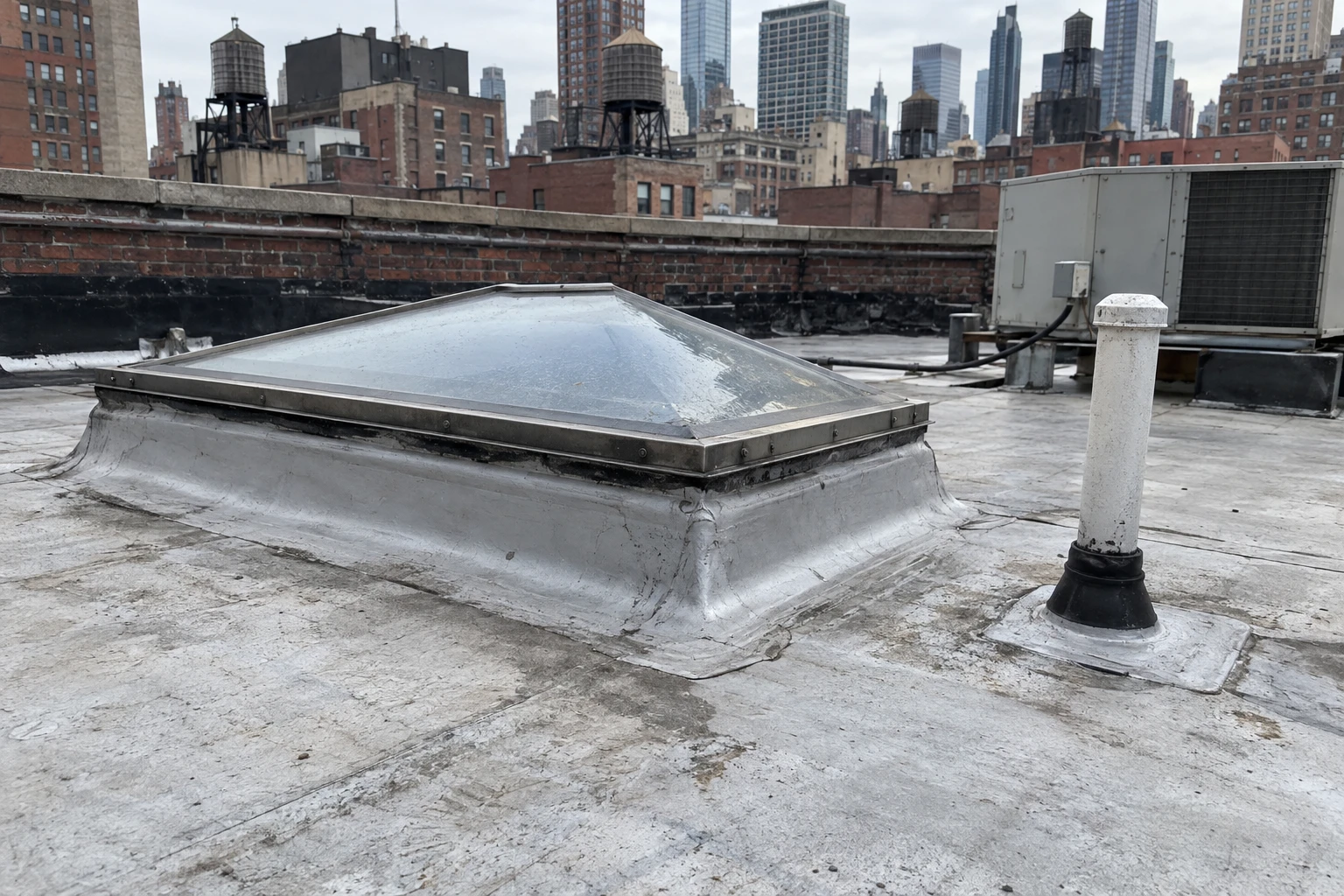
Skylights and clerestory glazing above a showroom need the same rigor. Curb height, gasket condition and the flashing at each corner are measured, and the unit is water tested before and after repairs. A skylight that leaks only in wind-driven rain points to the head flashing, and the repair follows that clue.
What do wind, rain and heat ask of a wide roof?
Wide, low buildings with tall parapets and canopies catch wind at their edges, and Central Park's 78 mph gust on December 2, 1974 shows what an edge can face. A canopy cap that lifts takes fasteners with it, and a fascia that bows allows rain behind the metal. Ida's 2021 peak of 3.15 inches in an hour is more than a canopy scupper two inches wide can pass.
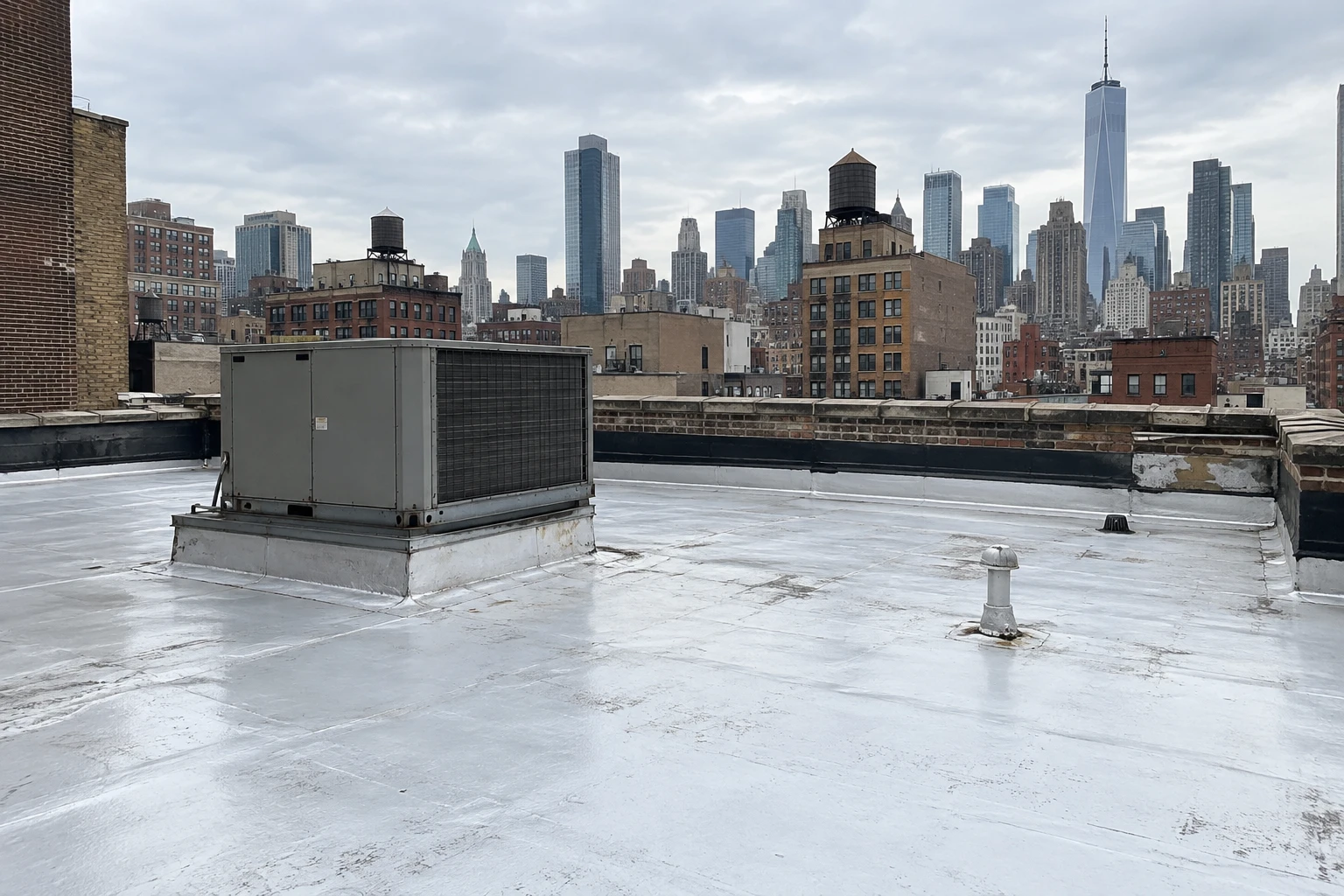
Heat matters over a showroom. Central Park has recorded 106 F, and an urban heat island raises roof surface temperature. A dark membrane over a glazed space adds to the cooling load, so a reflective cool roof surface can lower it. The survey estimates the effect and the cost so the owner can compare it with other energy projects.
Snow is the third load. Central Park averages 29.8 inches a year, and a drift against a showroom parapet or a canopy wall can weigh heavily on a roof that was built light. We record the drift locations, check drains before each winter and measure ponding depth after each storm.
Which retail corridors shape a dealership roof plan?
A dealership roof plan starts with the street it faces. In North Bergen, Tonnelle Avenue is one of the township's main retail districts, and U.S. Route 1/9 runs along its western edge, so roof work near them must handle truck traffic, dense signage and narrow shoulders. In North Bergen and Union City alike, work near public ways needs overhead protection and delivery windows.
Retail owners will recognize the issues from shopping center roofing and big-box retail roofing: customers keep coming during the work, tenants and neighbors watch the site, and signage and lighting sit on the roof edge. We plan the hoisting plan and the debris chute around the lot's circulation.
Lighting and electrical work add trades to the roof. Sign contractors, electricians and glass installers each touch the roof edge, and we keep a log of who was on the roof and what they changed, so a later leak is matched to the right visit.
How are repair, recover and replacement compared?
A showroom roof with one sound layer and localized wet areas may accept targeted repairs and a coating on the field. A service wing with saturated insulation near an exhaust curb needs the wet section cut out and rebuilt. A tired canopy may be cheaper to replace than to patch. Each option comes with its own cost range and service-life range from the survey.
Local Laws 92 and 94 of 2019 oblige a full replacement to dedicate its sustainable roofing zone to solar, a green roof or both, and the report prices a full replacement with and without that layout. The owner then chooses with the lease, the manufacturer's incentives and the next model-year schedule in mind, and the schedule avoids the weeks when the lot is busiest.
Timing matters in a business with seasonal peaks. A roof replacement belongs in the dry months and outside the busiest sales weeks, and the survey shows which roof zones could be done first without disrupting the showroom floor.
Commercial Roofing Questions
A leak drips on a showroom vehicle. What is the right immediate response?
Move the vehicle if it is safe, protect the area with plastic and photograph the stain and the ceiling. Call with the address and the location of the drip. We trace the entry point and dry in the opening the same day where weather allows.
How does a dealership keep selling during roof work?
The roof is phased in sections, noisy tasks fall outside peak sales hours and the lot and showroom entrances stay clear. Each day closes with a note on what is open and what is covered.
How do we protect the showroom glass during the work?
Temporary protection goes over glass and trim below the work area, and a monitor watches for dropped fasteners. Sealant is applied only in dry weather within the product's temperature range.
What records does the owner need for the manufacturer or lender?
The survey, the rating sketch, product data and warranty, and a dated photograph set of each repair. These support a lender's request and a dealer-agreement review, if one applies.
Does signage on the roof change the repair?
Yes. Sign supports and conduit are penetrations, and their flashing is rated as its own zone. We repair them with the roof, and we coordinate with the sign contractor so the work is not undone.