Roof surveys, specifications and repairs for Manhattan, NY city, state and authority buildings, with unit quantities and the records procurement requires.
Square feet of wet insulation, linear feet of failed flashing and a count of drain leaders are the three numbers that make a public roof bid comparable. When the survey supplies them, every bidder prices the same job and the agency can read the bids without argument. Public buildings in Manhattan are old, shared and heavily used, and their roofs sit above services that people depend on, so the record has to stand up to an auditor as well as to a leak. Collect the last roof report and the original drawings for each building before the survey, since specifications start from them.
Surveys, specifications, repairs and replacements on public buildings are documented step by step for procurement and audit.
What public buildings share the same roof questions?
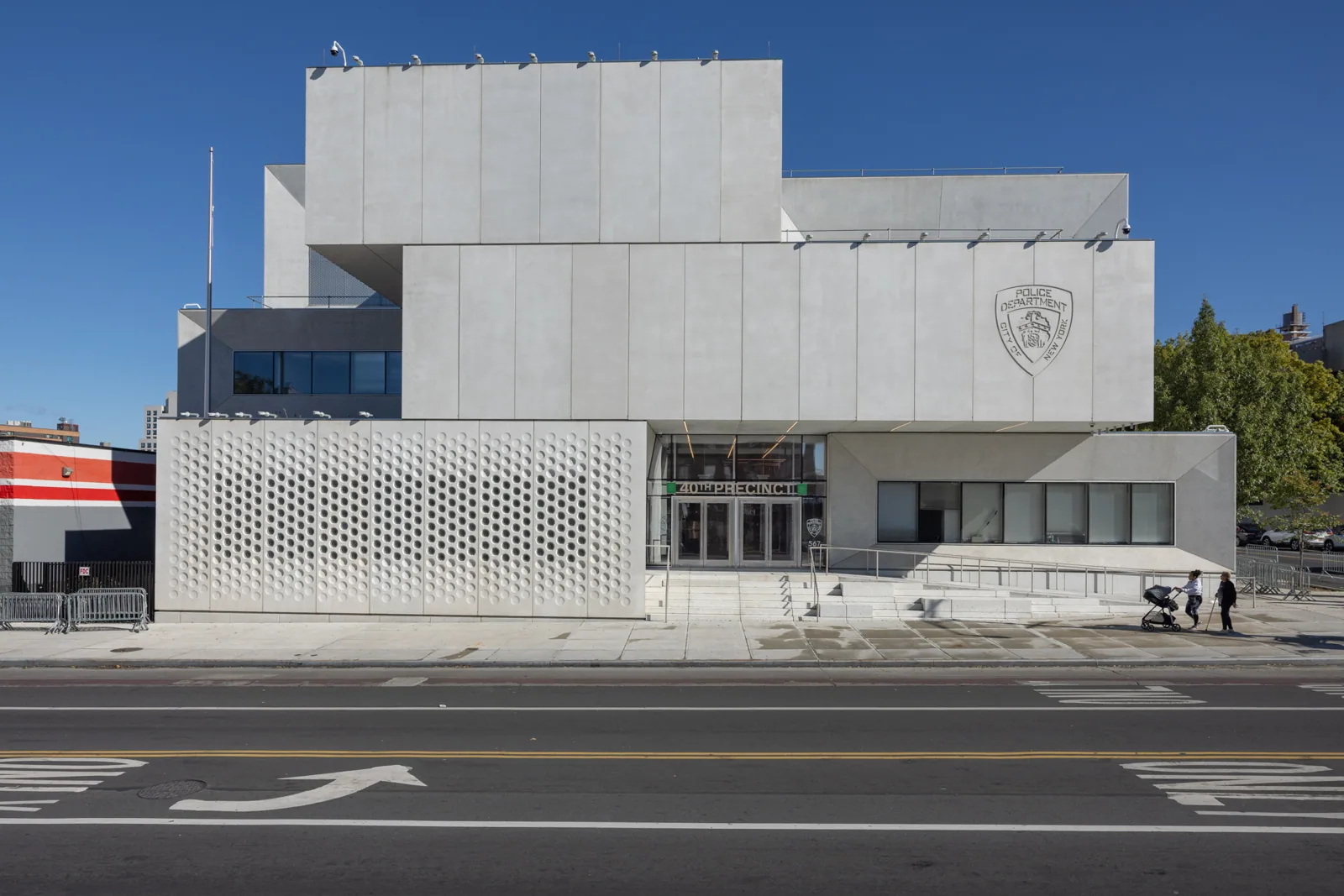
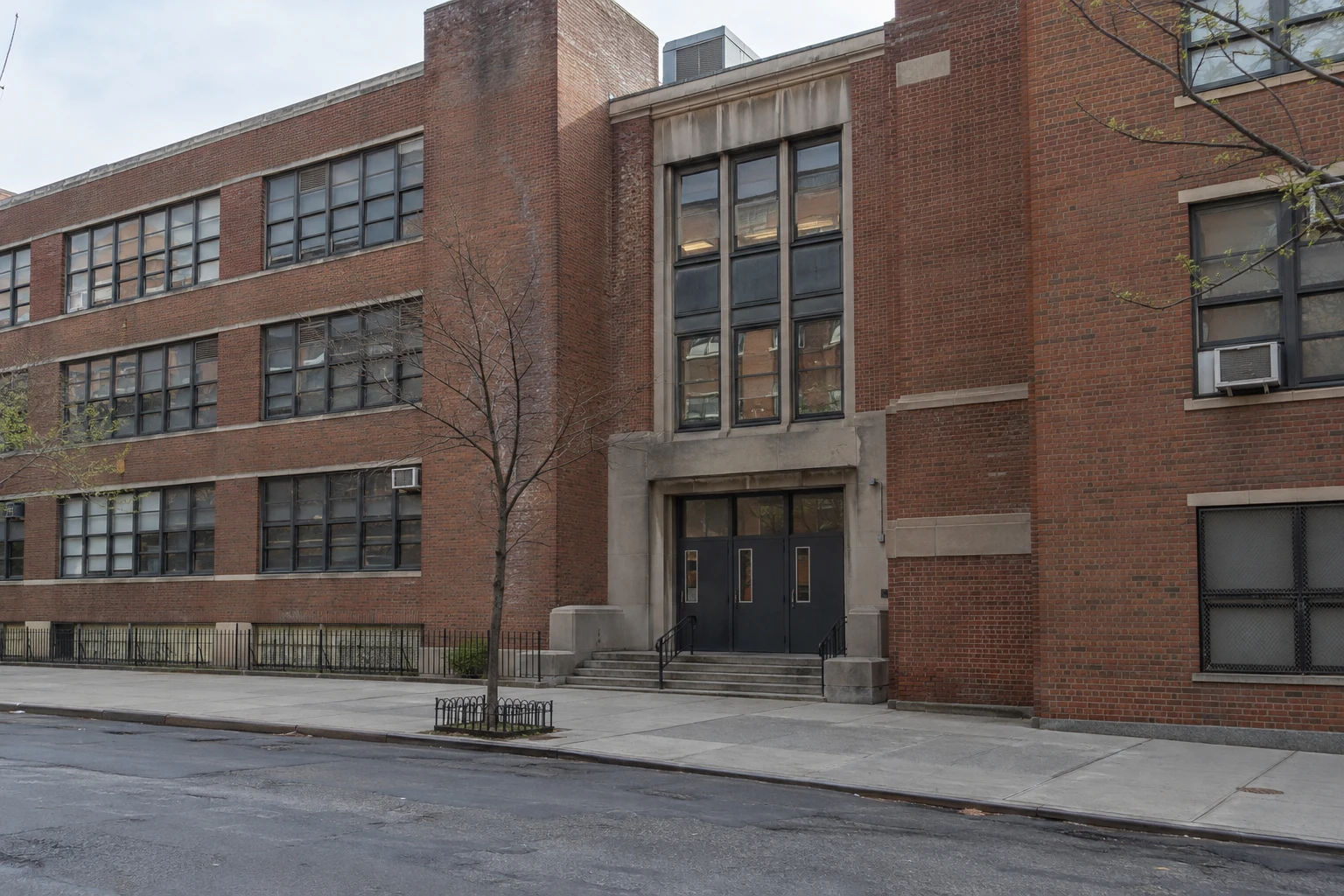
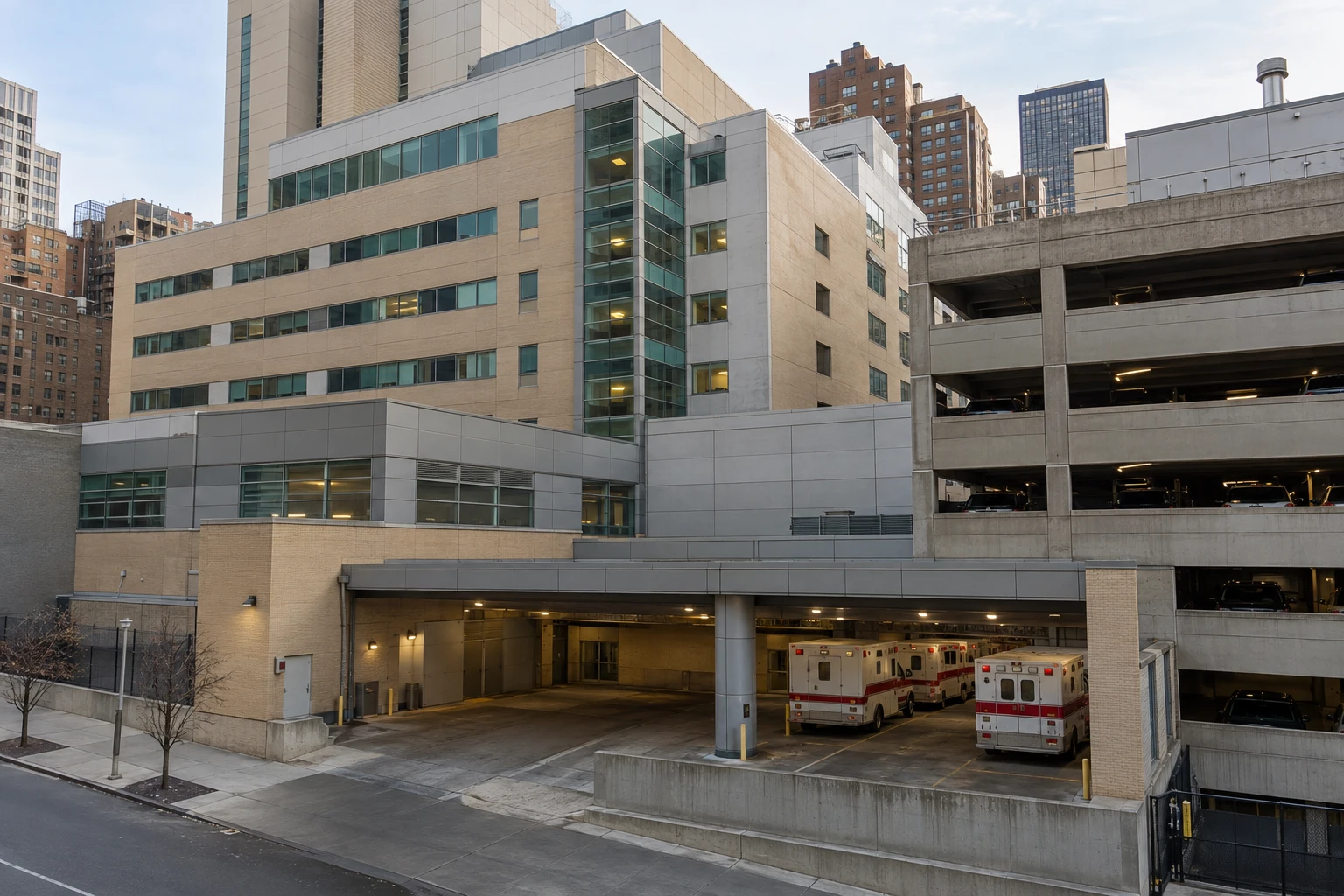
Public ownership in Manhattan spans housing developments, transit and bus facilities, schools, clinics, courthouses, libraries, firehouses and administration buildings. East Harlem holds 24 New York City Housing Authority developments, home as of 2013 to more than a quarter of its residents. On an average weekday the Port Authority Bus Terminal moves roughly 225,000 people through about 8,000 buses, with a replacement of roughly 10 billion dollars planned, and the Lincoln Tunnel's daily traffic in 2016 was roughly 112,995 vehicles.
Those figures describe scale and use, not a roof inventory. The roof questions are the same everywhere: what the roof is made of, how wet it is and what the next ten years cost. One survey answers all three for each building and rates them on one scale. Provide the asset list with use classes at the start.
Housing roofs deserve a closer word. A development with several buildings may have many similar roofs, so one survey method and one repair standard can cover them, with a core log from a representative roof informing the rest. Tall residential towers add wind exposure and difficult access, while low blocks add many parapets and bulkheads. Because the scale treats each type alike, a housing office can compare a tower and a low block fairly and send the worst to the front of the capital queue.
How does a survey support a public bid?
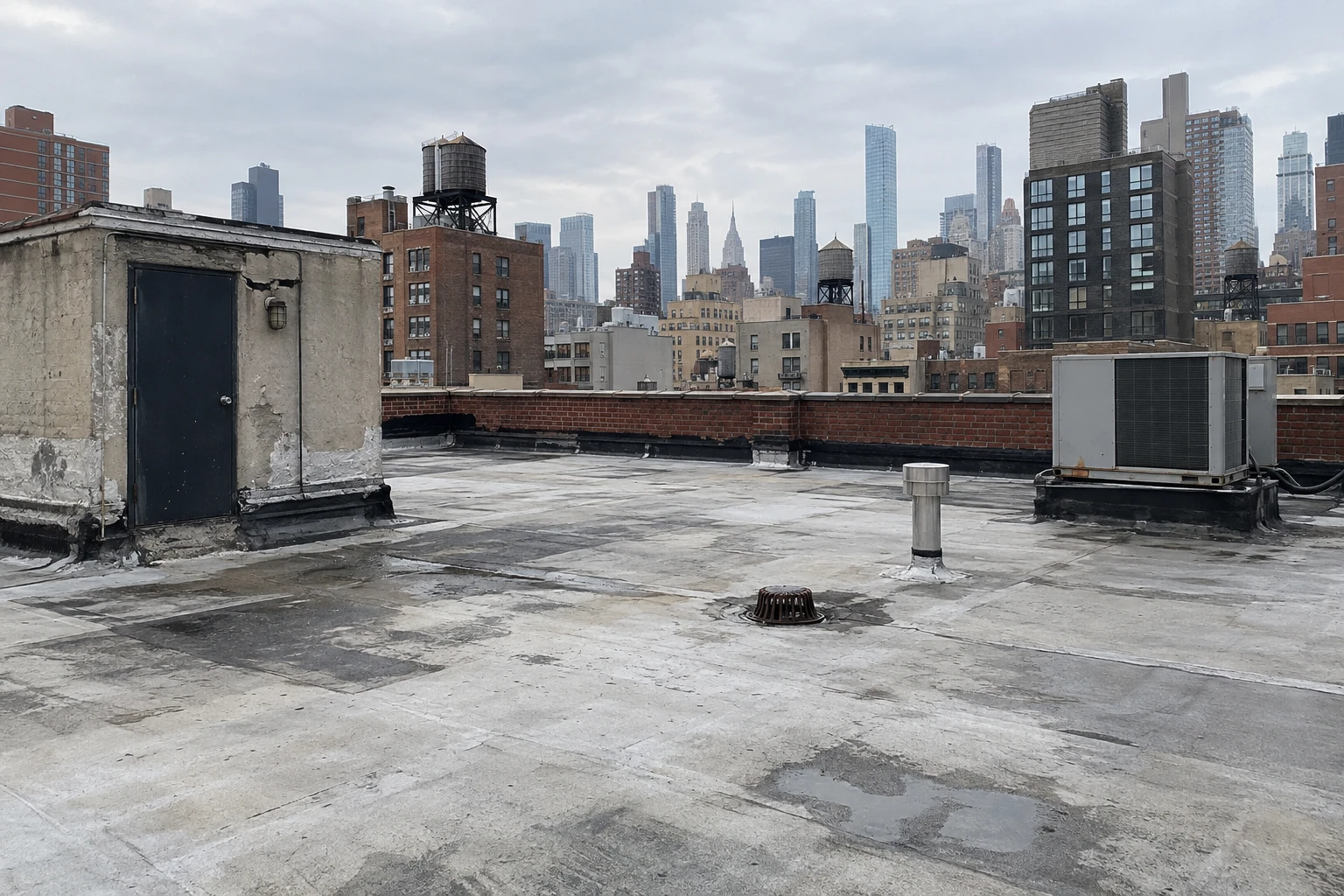
Bidders can price a scope that names its quantities. The survey puts defect areas on a roof plan and adds a core log, a moisture map and quantities by category, and a specification then names the system, the thickness, the attachment, the flashing details and the testing. Options such as tapered insulation or a cover board can be listed as alternates.
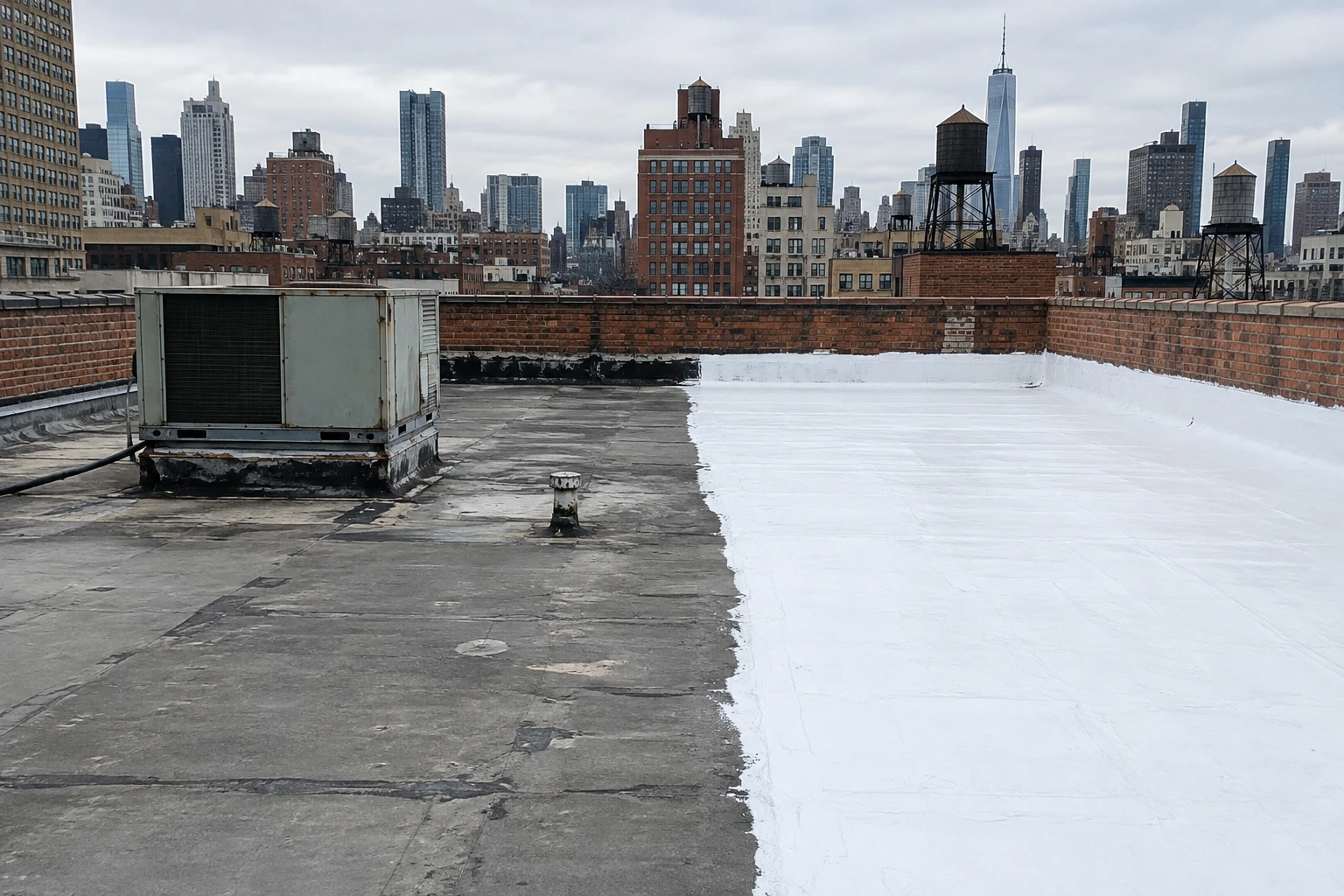
Photographs and measurements back every line, which pays off when a change order comes up during construction, because the original condition is documented. A full replacement in New York City carries Local Laws 92 and 94 of 2019, so the specification states how the sustainable roofing zone will carry solar, a green roof or both. Alternates let the bid show the price of each choice, and where only restoration is needed, the same survey can support a specification for roof coating restoration.
How is a public building kept open while the roof is worked?
Many public buildings cannot close. Housing stays occupied, clinics keep hours and transit facilities run through the night. Work proceeds in sections, entrances are protected, hoists and debris routes stay away from public paths and security is coordinated for access. Hot work follows a permit, and daily plans go to the agency on request.
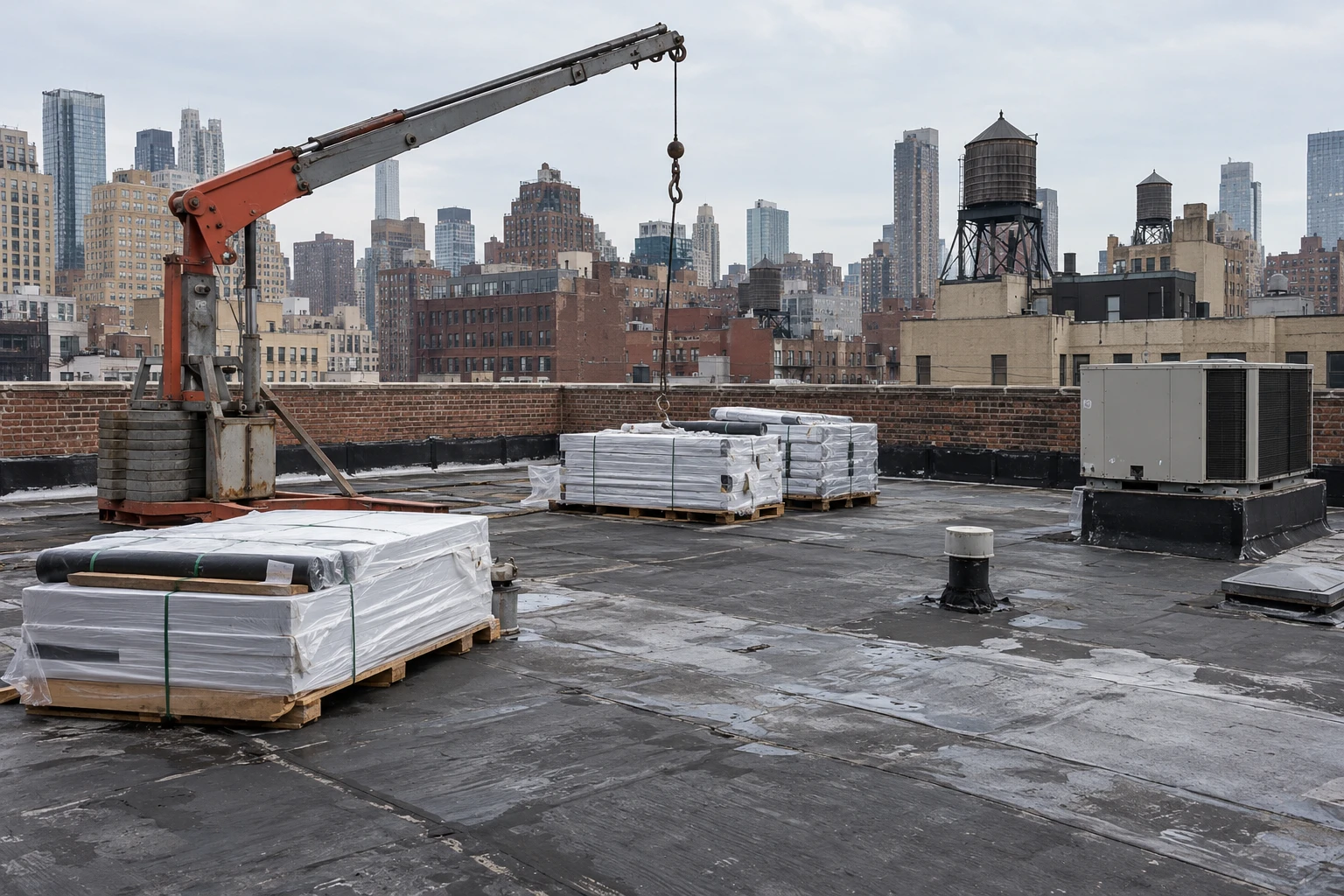
Schedule and barriers manage noise and dust, and buildings with night operations move the quiet hours. A landmark designation may require review of any visible change, which adds lead time. The method for occupied building reroofing exists for exactly this reason. The access rules and the security contact are best shared at the beginning.
Security shapes the day. Many public sites require background checks, escorts and tool inventories, and some bar photography. Crew lists go in early, escort rules are followed and the permitted photographs are agreed in advance. Where photographs are restricted, measured sketches and written logs keep the file complete without breaking site rules, and the facility manager approves the method before the first visit.
What do storms mean for public infrastructure roofs?
Sandy's flooding on October 29, 2012 covered about 17 percent of New York City, closed every road tunnel into Manhattan except the Lincoln Tunnel and cut power south of 39th Street. Ida's September 1, 2021 storm brought a one-hour record of 3.15 inches and a flash flood emergency, the first the Weather Service had issued for New York City. Public buildings that must stay in service after a storm need roofs and drains that perform.
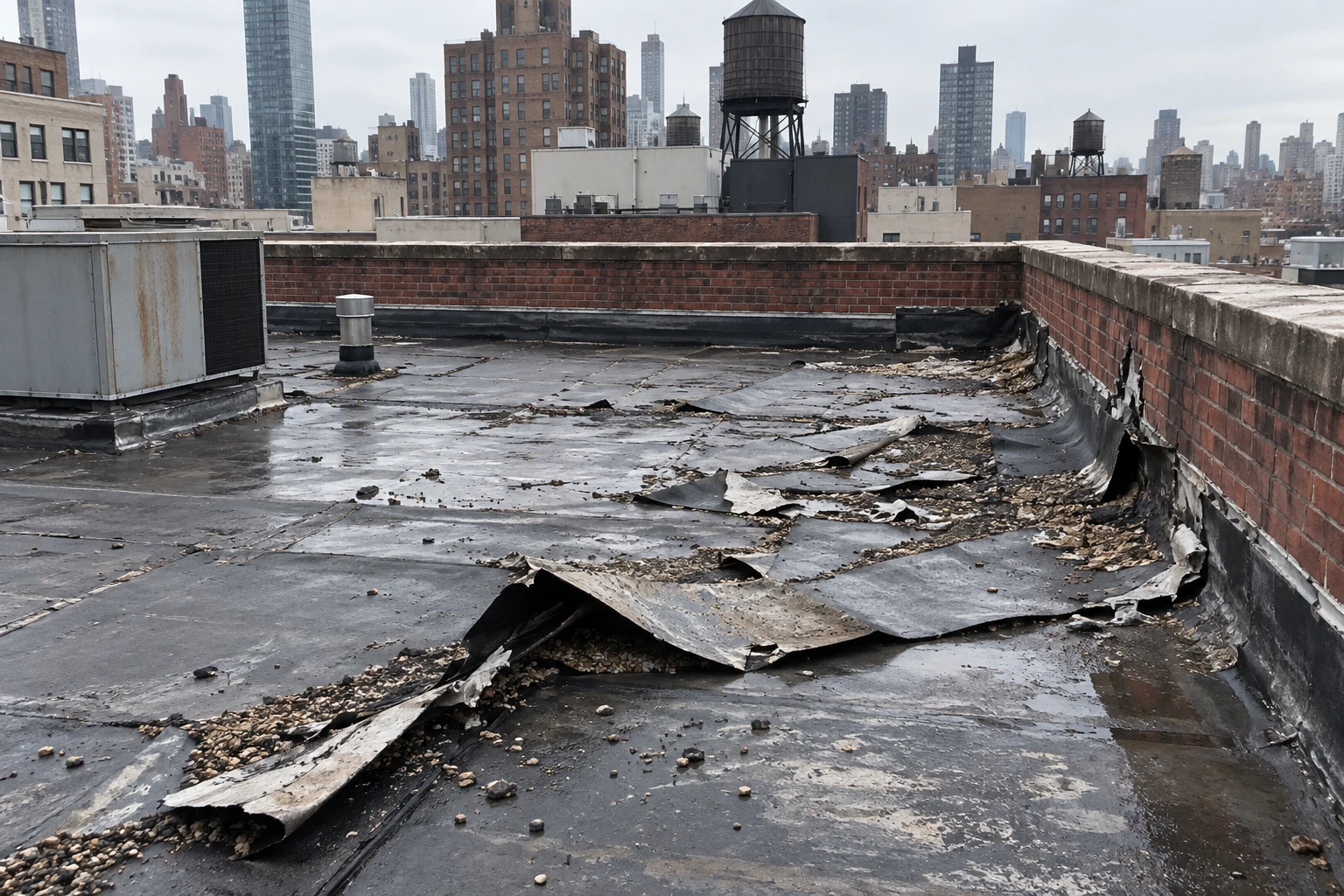
Drain capacity, overflow paths and flashings are checked ahead of the season, and a repair plan is kept ready. After an event, the affected roofs are surveyed, damage is documented for the agency's insurer or relief program and temporary repairs go in. A hurricane damage roof repair plan on file shortens that sequence, and the rainfall and the condition of each roof belong in the record after every major event.
Funding that follows a storm comes with a demand for proof: the roof's condition beforehand, the damage the event did and the work that put it right. The dated survey, photographs and cost records supply it, and without them money can be delayed or reduced. Damage documentation is prepared in the form a relief program or insurer requests, with storm damage separated from long-standing wear so the claim stays accurate.
What records should an agency keep for each roof?
Records serve three audiences: auditors, the next administration and any future bond or grant reviewer. A complete file contains the survey and quantities, the bid and contract, the submittals, inspection reports from construction, closeout photographs, the warranty and the maintenance log, and a roof without one is an unknown liability.
The set is delivered in an organized form. Ranking by condition and funding need happens in a portfolio view drawn from roof asset management. Agencies that work with school districts and with healthcare systems on shared campuses can use the same scale. For buildings in East Harlem and elsewhere, the file travels with the asset. Records already held should be sent however incomplete. Agency buildings on Roosevelt Island and elsewhere on the island follow the same procurement-ready format. Specifications written from a measured survey also hold up better in a bid review, because every quantity traces to a photograph and a roof area.
Commercial Roofing Questions
What decides whether a roof is repaired in-house or put out to bid?
Work size, funding source and the agency's thresholds. A small repair can use a term contract, while replacement is bid against a specification written from the survey.
Can the survey be used as the basis for a design?
Yes. It supplies the existing conditions a design professional needs, which are the layers, the moisture, the drains and the details. The designer adds the structural and code review.
How are prevailing wage and reporting handled?
The contract's labor and reporting terms govern, and the records the agency requires are supplied. Those terms should be named in the bid documents so the price reflects them.
What happens when an emergency leak affects a public service?
Calls to the emergency line are answered at any hour. Crews dry in the roof, shield the space beneath it and put the cause in a report ready for the agency's file.
Which warranty terms should the specification require?
The membrane system's standard warranty plus a workmanship term, tied to the installed assembly. The specification should state the inspection schedule and the owner's maintenance duties.