Roof surveys, summer replacement scheduling and capital plans for Manhattan, NY school districts and school operators, with documentation for procurement.
A school roof has a calendar before it has a condition. The condition rating names the roof closest to failure, and the calendar decides when anyone can fix it: the weeks between the last day of June and the first day of September. A survey that finds wet insulation in March produces a budget request, a procurement cycle and a design, and all three must finish before the summer window opens, or the leak rides into another winter. Request the survey in the autumn so the summer scope is approved by spring, and keep the report with the capital request.
Roofs on school buildings are surveyed, rated, repaired and replaced in a sequence fitted to the academic year.
How does the school calendar set the roofing schedule?
Summer break is the one stretch when a roof can be opened without students beneath it, and every school building in the district wants the same weeks. Scope, design and procurement therefore run in the months before: a survey in the autumn, design and cost range by winter, approval and bid in spring, installation in July and August.
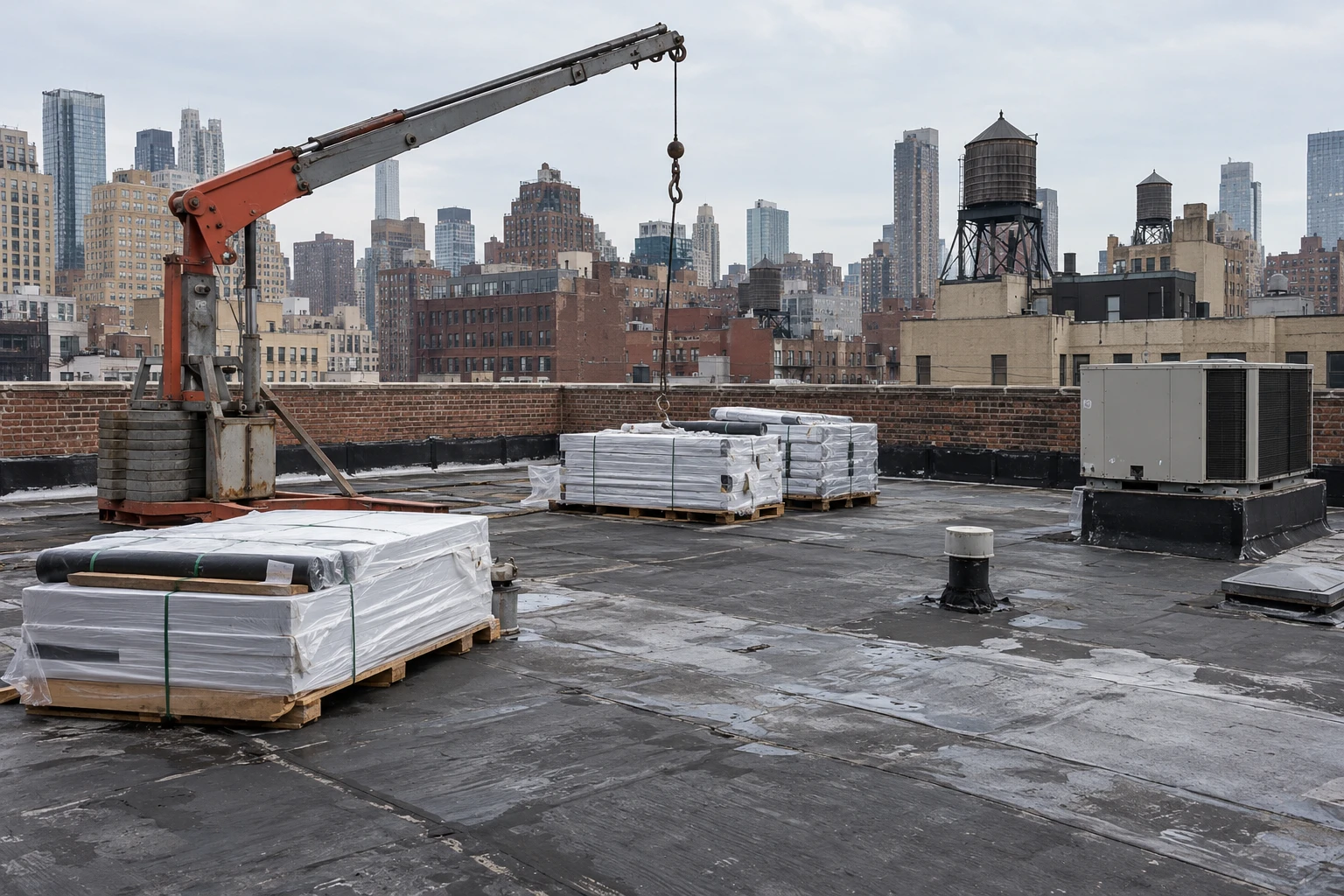
Weather limits the window too. A year in Central Park brings about 49.5 inches of precipitation, and a rainy stretch in July can cost a week. Plans use sections that can be closed each day, schedules keep room for weather, and material is staged to start the morning after the last class. Work that cannot wait for summer stays small, at the edge of the building and away from entrances and play areas. The dates when the building is empty belong on the first plan.
How are students and staff protected during roof work?
Protection starts at the perimeter. The work zone and the material route are fenced, hoists and chutes stay clear of entrances, and debris containers sit where children do not pass. Hot work follows a permit and a fire watch, cold-applied or mechanically attached systems are chosen where fumes could reach classrooms, and the air intakes are located and protected.
Near occupied rooms, noise limits apply. Fastening and demolition run before or after class hours, or on testing and assembly days when the affected rooms are empty, and each day ends with a sweep of the grounds and a check for loose fasteners. The principal and the facilities office see the plan before mobilization. The occupied building reroofing method serves a school that keeps classes running, and the bell schedule and special event dates should come with the first request.
Communication matters as much as the roof. Parents and staff ask what the noise is and when it will stop, so a one-page notice carries the dates, hours and a contact. The principal posts it and the foreman reports each morning on what the day brings, which keeps the crew on the roof rather than answering questions at the door.
What kinds of school buildings carry the most roof risk?
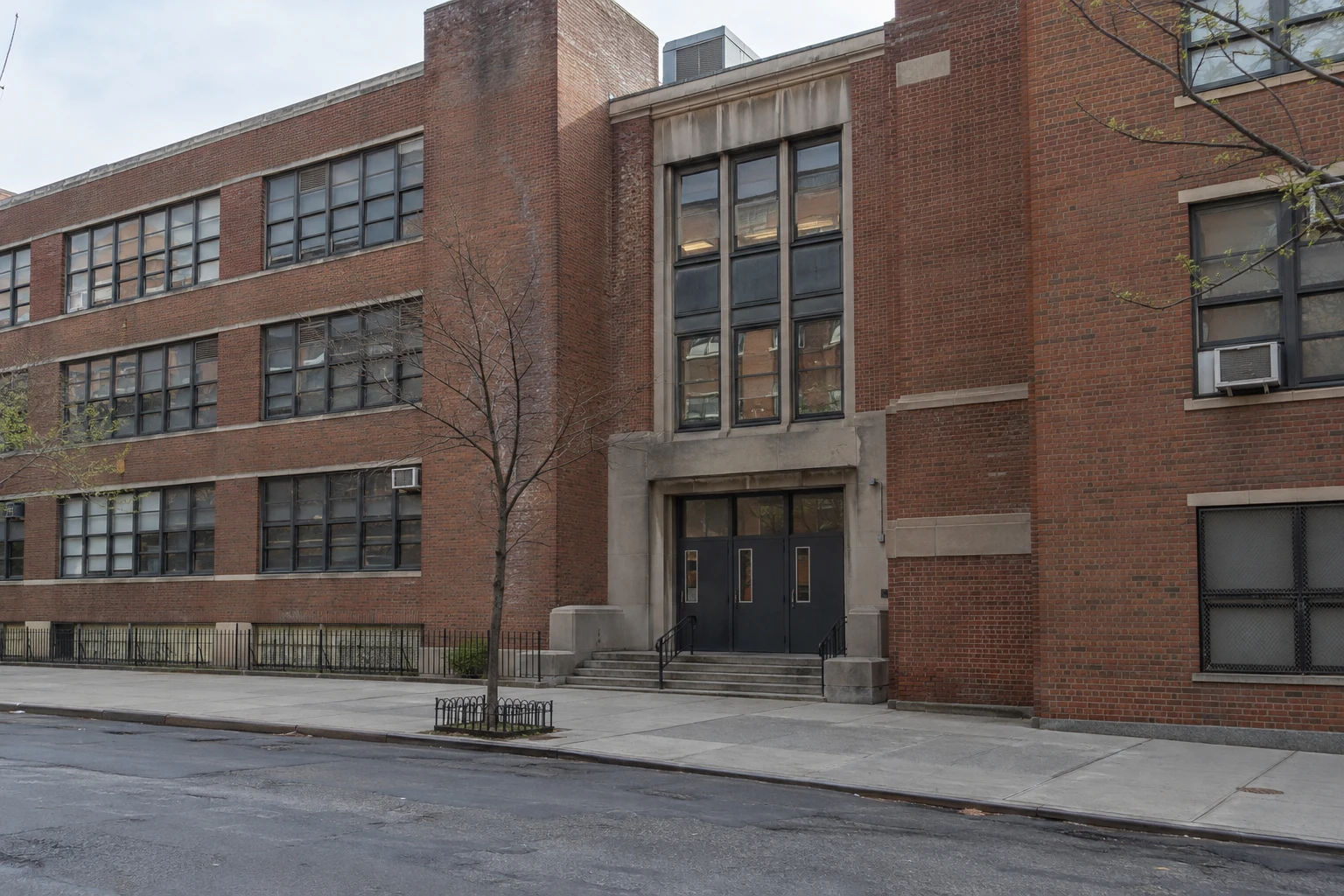
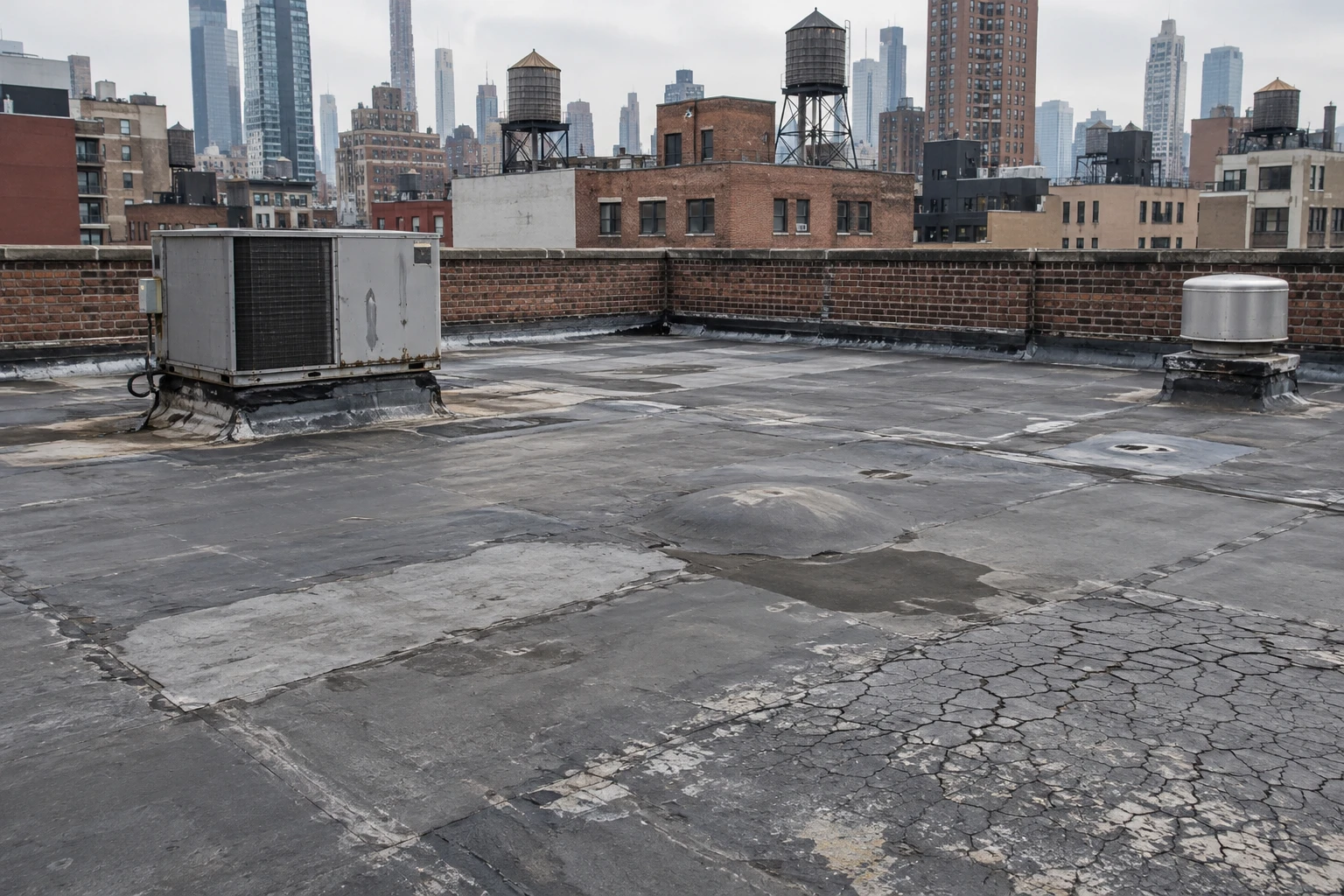
Older multistory school buildings can combine parapets, bulkheads, chimneys and many penetrations on flat roofs with a long repair history, while newer buildings may have large low-slope roofs with rooftop mechanical units. Gymnasiums and auditoriums span farther than classroom wings, and kitchens add exhaust that affects the membrane. Long spans mean long runs to a drain, so ponding depth is measured at the low points after rain and the drain leaders are flushed and timed.
SoHo-Cast Iron, whose 500 or so buildings sit in a landmark district, and Greenwich Village both restrict changes visible from the street, so a school roof there may need review for work that changes the parapet or cornice. Each building is surveyed, its system type recorded and its roof rated on the common scale, which lets a district with many buildings rank them. The survey can flag the buildings in landmark districts.
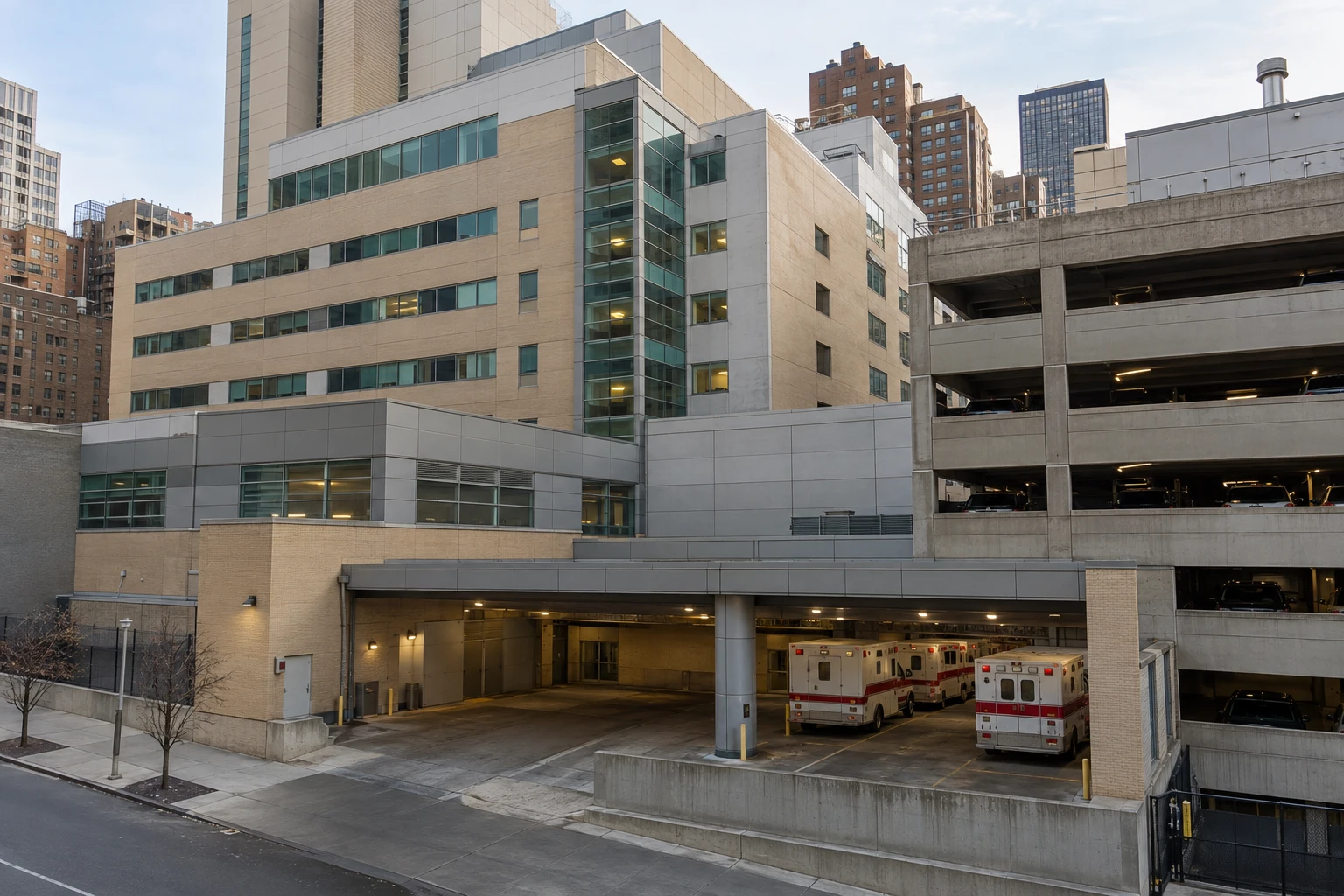
Medical rooms inside schools, such as a nurse's suite or a clinic run with a healthcare systems partner, add their own limits during roof work, and kitchens add grease exhaust that wears the membrane near the vent. Boiler stacks and rooftop units concentrate heat and traffic in small areas, so these go on the roof plan with walkway pads and protection where staff cross.
How should a district price and procure a roof project?
Public procurement needs a clear scope, a unit-based estimate and documentation that holds up to review. The survey supplies quantities, such as square feet of wet insulation, linear feet of flashing and the count of drains, along with cost drivers in place of a lump estimate, so bid packages compare like with like.
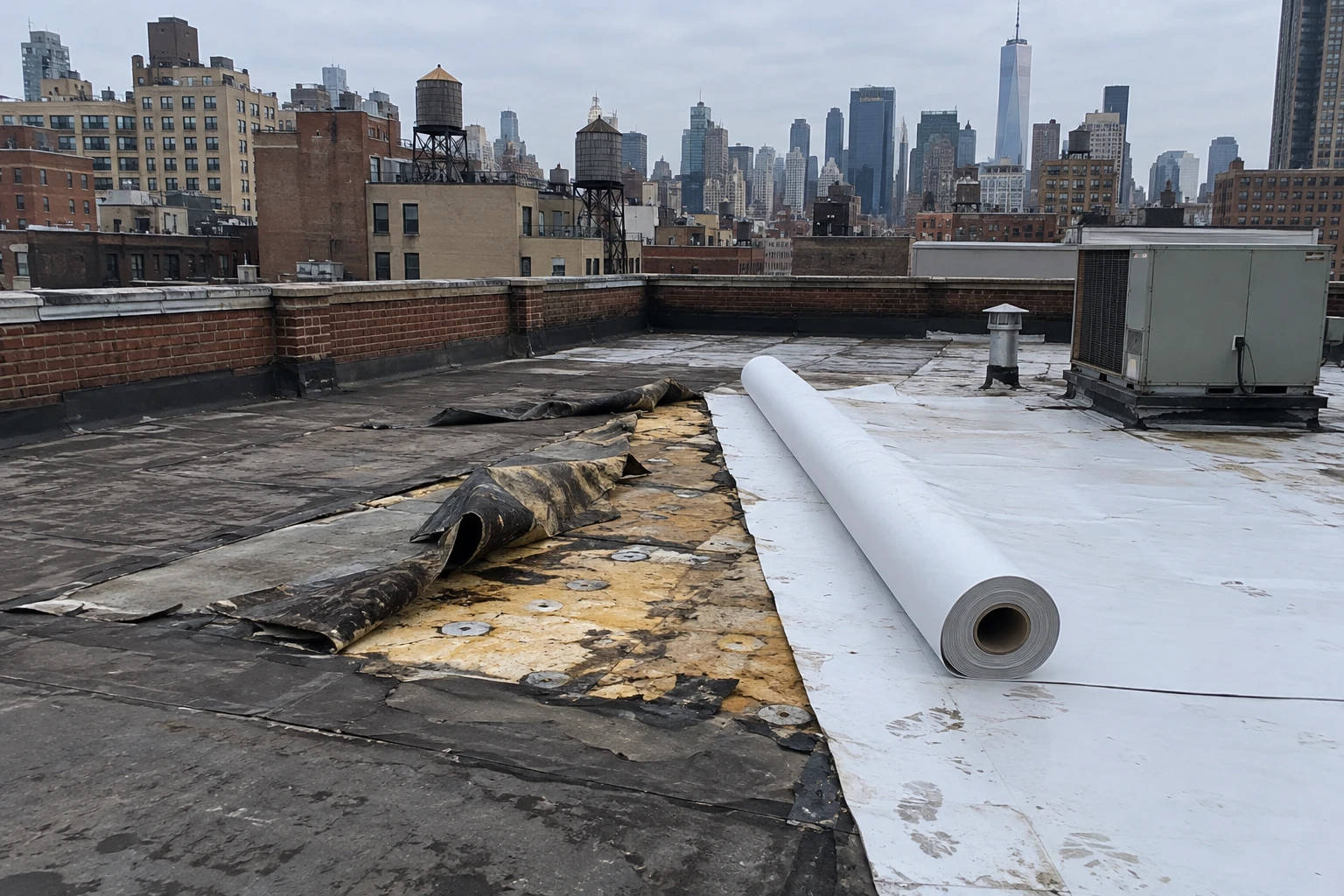
When a roof is fully replaced in New York City, Local Laws 92 and 94 of 2019 bring a sustainable roofing zone to any full replacement, one that solar, a green roof or both must occupy, so the estimate has to carry that scope. A commercial roof replacement package states it plainly. For districts that coordinate with public agencies on funding and approvals, drawings and specifications follow the agency's format. The roof is best kept as its own budget line, so a general capital cut does not trim it.
Warranty terms deserve attention in a public contract. The specification has to identify the membrane system and its minimum thickness, how it is attached and when it will be inspected, and it should call for a closeout file; otherwise the district may own a roof that nobody can repair to match. Written well, the scope tells a future facilities director what is under the surface, fastener pattern included.
What records help a district over many years?
A district outlasts any one administrator, so records matter. The file for each school collects the survey, core log, drawings, warranty paperwork and maintenance history, and condition reports are updated after every survey. Each rating carries a date, so a rating from three years back is flagged as old rather than trusted, and the district sees at a glance which roofs are due for another walk before the next summer. A roof condition report for each building lets the district rank its needs.
Districts with many buildings can run a multi-site roof program, with a maintenance calendar and a replacement order stretching across years. The same file helps when a school sits in Harlem or another neighborhood where building ages vary widely. The file should pass to the next facilities director, with a copy in the district archive.
Commercial Roofing Questions
What decides whether a school roof is replaced this summer or deferred?
The moisture map and the consequence of failure. A roof with widespread wet insulation over classrooms goes first, while a localized problem can be repaired and rechecked, and the survey's ranking makes the order visible to the board.
What roof work is acceptable while students are in the building?
Small repairs along the building edge or above rooms with no students in them, and only outside class hours. Anything larger waits for the break, and school-year work is planned around entrances, recess and dismissal.
Who answers when a leak starts in the middle of a storm?
The emergency line is staffed day and night. The area is dried in, the room below is protected with the facilities team and the cause is documented, with permanent repair following when conditions allow.
What if the summer window is too short for the whole roof?
The work is phased, with the worst sections in the first summer and the rest in the next, each section weathertight when the break ends. The plan states the sequence.
What does the district receive at the end?
Photographs, the core log, material data, warranty paperwork and a condition rating for the finished roof, which support audits, claims and the next capital plan.