Roof surveys, repairs and replacements for gyms, rec centers and fitness facilities in Manhattan, NY, covering humid air, rooftop plant and podium decks.
A moisture profile through the roof over a pool hall or a locker room can show insulation that is wet from below, not from above: the top of the assembly reads dry, the underside is saturated, and the membrane has never leaked. The reading means warm, humid interior air is reaching cold insulation and condensing, and that a patch on the membrane would fix nothing. For a gym, rec center or fitness facility in Manhattan, NY, the roof has to resist rain from above and humidity from below at once. Our survey separates the two, rates each zone and gives the operator a condition rating that fits a reserve study and a lease.
How does the survey tell a leak from condensation?
We read the roof from both sides. An infrared scan shows warm and cold bands, core cuts show where the water sits in the assembly, and a look at the underside of the deck from the ceiling space shows frost, rust or staining. Water in the upper layers points to a leak. Water in the lower layers, with a dry top, points to vapor.
Zones follow the building's uses: pool or wet areas, locker rooms, studios, courts, offices and mechanical rooms. Each zone gets its own rating. The operator learns that the court roof is sound, the locker room roof has a vapor problem and a curb above the studio has failed flashing, and the repair list follows.
Mechanical rooms get a separate rating because water, steam and electrical gear share the space. A pool dehumidifier or a boiler stack is a penetration with heat, and the flashing at each is rated for temperature and movement. We also record the age of each unit, since a replacement lift is the moment a roof detail is most likely to be damaged.
What does humid interior air do to a roof assembly?
Pools, showers and heavy exertion load the air with water vapor. If the air barrier or vapor retarder in the roof is cracked or missing, vapor rises into the insulation and condenses on the cold surface above. Over a winter, enough water can collect to soak a section of insulation, which loses thermal value and weighs more.
Repairs address the path. We seal penetrations, replace damaged retarder, add insulation above the deck where the code and the structure allow and check that exhaust fans move air out of the building and not into the ceiling. The NYC Department of Buildings publishes the 2022 NYC Construction Codes, which include an Energy Code, and a replacement is reviewed against it.
Ventilation completes the fix. Exhaust must discharge outside, and make-up air must not pull cold, wet air through the roof assembly. We check that ducts are sealed where they pass through the deck, because a leaking duct dumps humid air into the insulation as effectively as a missing retarder.
Records close the loop. We keep the cores, the infrared maps and the underside photographs together, with the date, so the next survey can show whether the moisture is growing, steady or shrinking after a repair.
How do rooftop plant and noise change the work?
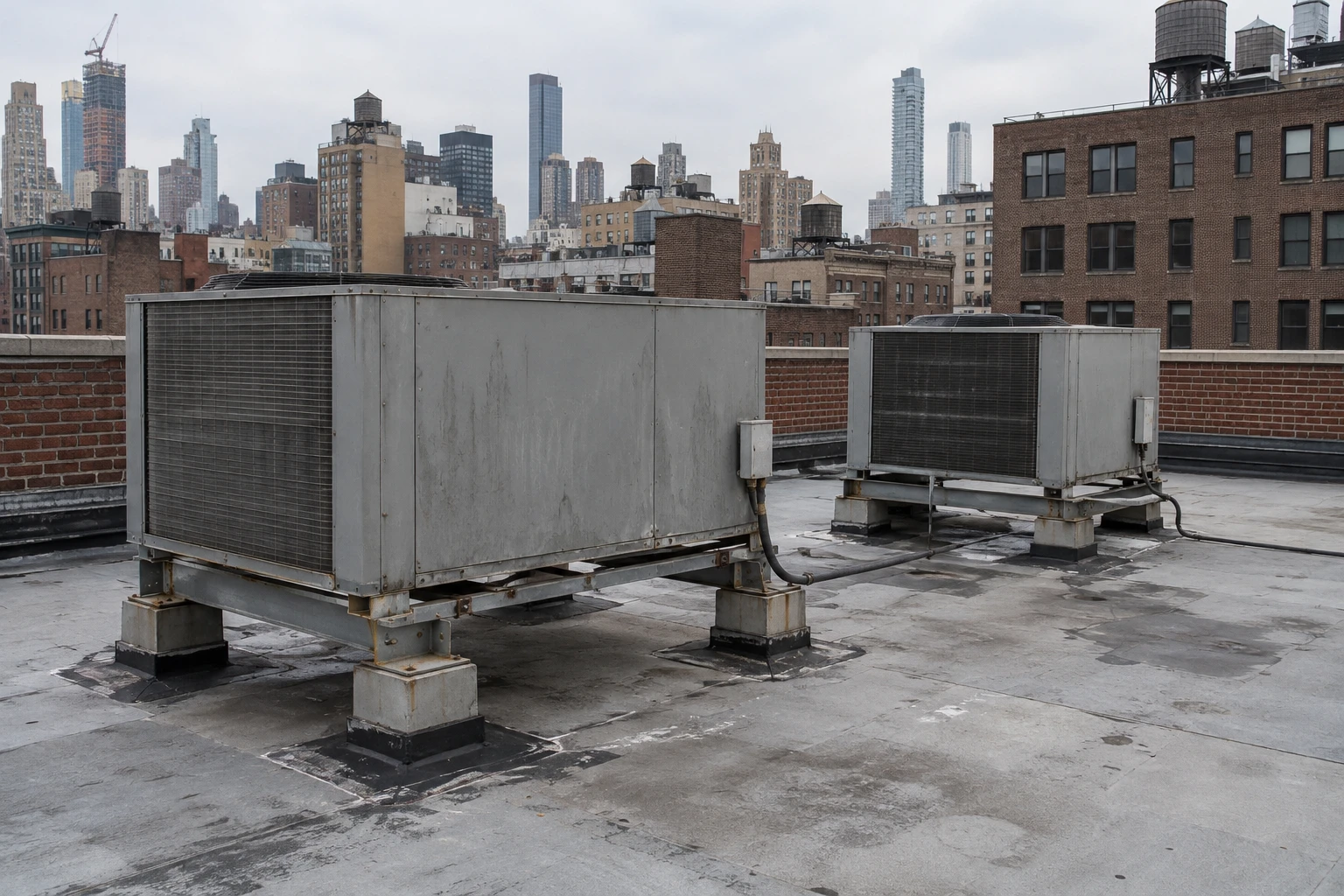
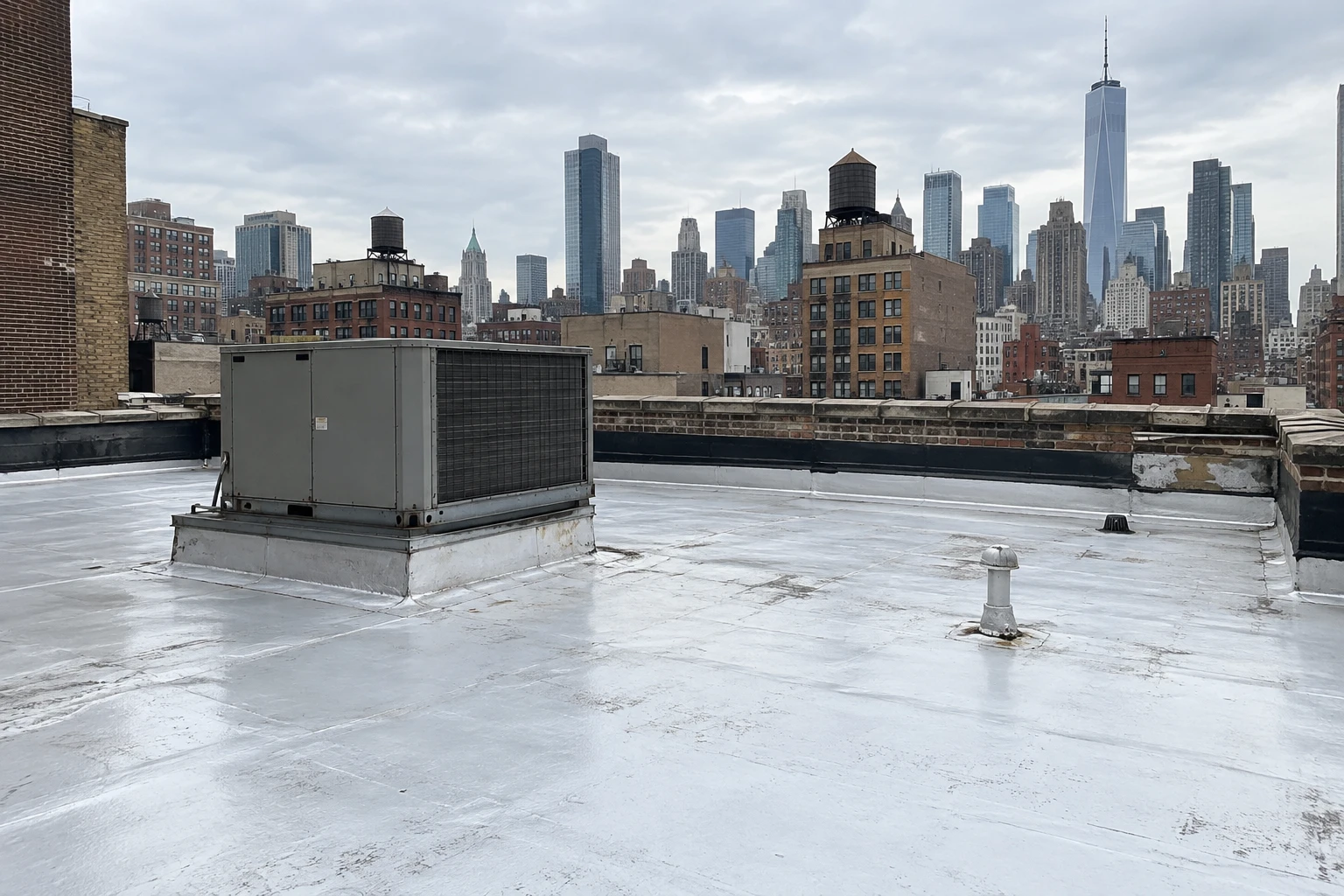
Fitness buildings carry large air handlers, exhaust fans and sometimes pool dehumidification equipment. Each is heavy, hot and noisy, and each sits on a curb. Curb flashing, equipment supports and pipe runs take most of the water on the roof. Our guidance on rooftop equipment curbs and supports covers the load path and the flashing, and we log every unit.
Noise and class schedules shape the work. We agree on quiet hours with the operator, schedule the loudest tasks outside peak class times and keep roof traffic away from studios and courts during sessions. Air intakes near the work get filters or temporary shutoffs, and a daily note says which section is open, which room sits below it and when it will close.
Hoisting needs a plan on a tight block. Materials reach the roof by crane or hoist, and street closures, permits and delivery windows go on the schedule. Staging space inside a gym is rare, so we stage on the roof in small loads and remove debris daily.
What changes when the roof is also a terrace or a podium deck?
Midtown mixes office towers, hotels, apartment towers and theaters, so roof work there ranges from tower setbacks and mechanical roofs to low-slope podium decks. A gym on a podium level may have a roof deck, a running track or an outdoor studio on top of the waterproofing. Pavers, pedestals and planters add weight and hide the membrane.
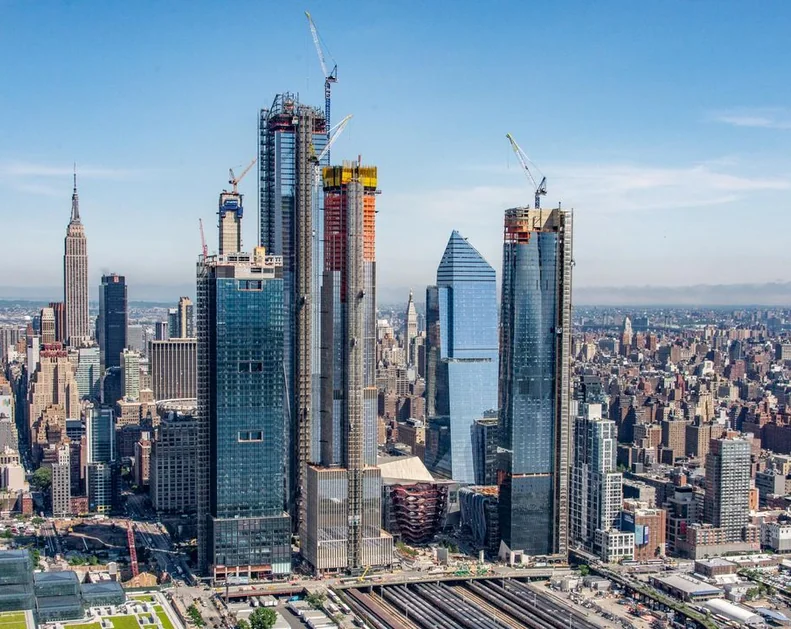
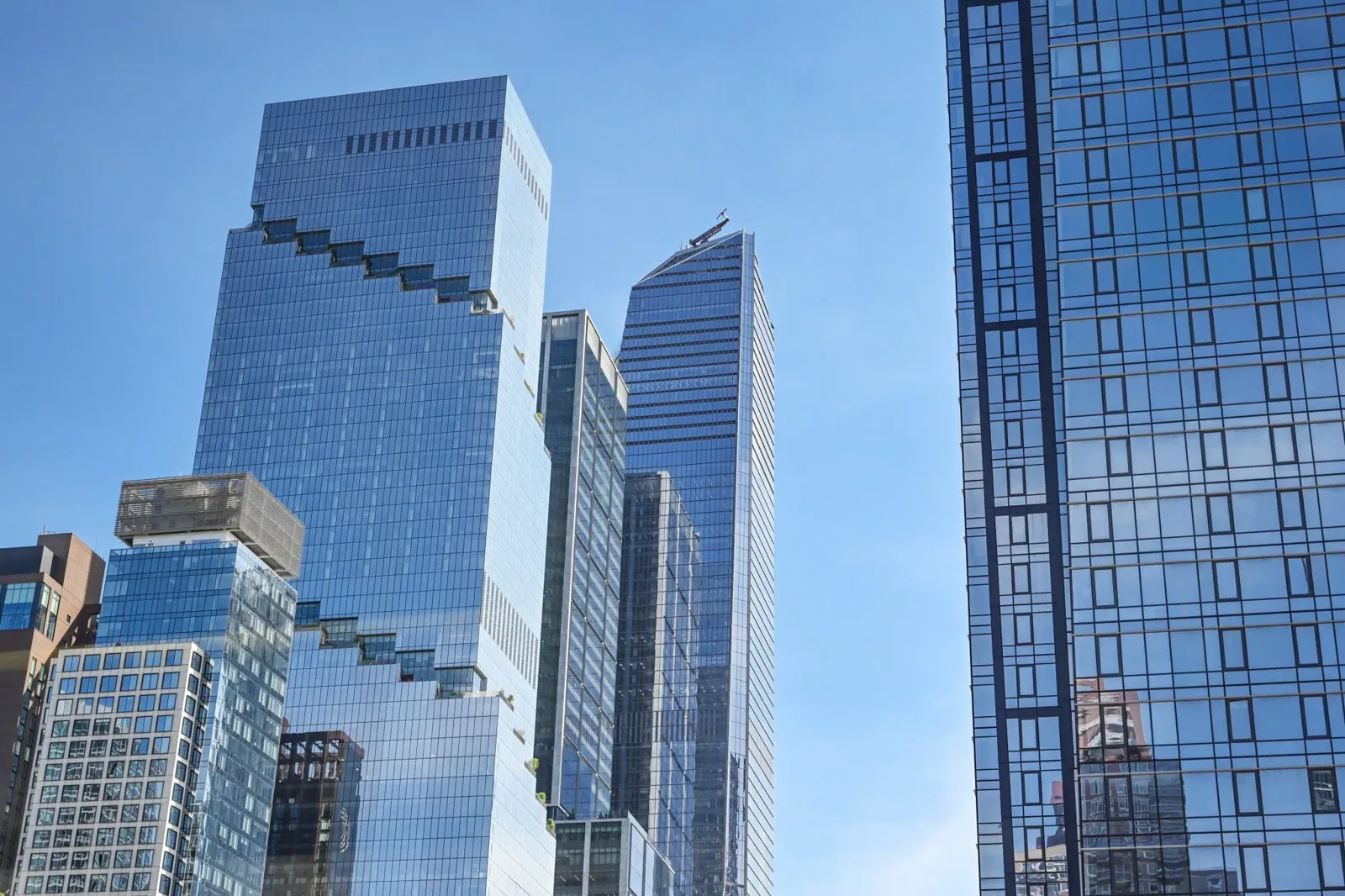
At Hudson Yards, a platform over the West Side Rail Yard supports a 28 acre mixed-use development, and platform and podium roofs there are layered systems with drainage that must be kept clear. Surveying a deck means lifting pavers at sample points, inspecting the membrane below and measuring drainage. The same method applies on the larger podium roofs of Midtown and Hudson Yards, and on the amenity decks of an office building or a hotel.
Slip resistance and drainage follow from the use. A deck that hosts barefoot classes needs surfaces that drain quickly and do not hold water, and pedestals must be level so a pooled corner does not freeze in winter. Central Park averages 29.8 inches of snow a year, and a deck that is cleared with metal shovels will be damaged, so we mark the deck for plastic tools only.
What do heat and extreme rain ask of a fitness roof?
A recorded 106 F in Central Park, plus an urban heat island, pushes roof surface temperatures higher still. A dark membrane over a studio adds to the cooling load on the hottest days, so a reflective cool roof surface can help. A deck drain has to pass an hour like Ida's 3.15 inches in 2021 without backing up under the pavers.
We test leaders by flow, record ponding depth after storms and mark drains on the deck plan so the operator's staff can keep them clear. A replacement inside the city is also subject to Local Laws 92 and 94 of 2019, which require that the sustainable roofing zone be fully covered by solar, a green roof or both. The report prices the layout with and without the zone, and shows how it fits with a roof terrace.
Power and resilience complete the picture. Sandy's surge reached 14.06 feet at The Battery on October 29, 2012, and everywhere in Lower Manhattan south of 39th Street lost power. A fitness building that put its generator or chiller on the roof after that storm needs the platform drained and flashed to a higher standard, and we rate it as a separate zone.
Commercial Roofing Questions
Rainwater is not entering, but ceiling tiles are damp. What causes that?
Condensation is a likely cause when the top of the roof is dry. Warm humid air reaches a cold surface and drips. A moisture survey with an infrared scan and core cuts separates it from a leak.
What happens in the studios below while the roof is open?
Loud tasks run outside peak class times, the roof is closed overnight and temporary covers protect the studios and courts below. The manager receives a daily note.
What happens to pavers and planters on a deck during repairs?
They are lifted in sections, stacked safely and reset after the membrane is repaired. Each paver position is mapped, so the deck returns to its layout.
Does a pool or spa change the roof system?
It changes the vapor design, so the retarder, insulation and ventilation matter more. We assess them in the survey and recommend a system that suits the humidity load.
How should we plan for roof work in a lease?
Send the lease clauses on roof responsibility with the first call. We document condition and cost for each option so owner and tenant can agree who pays for what.