Roof surveys, drainage fixes and replacements for self-storage buildings in the Manhattan, NY market, written to protect tenant goods and the asset's rating.
Across a storage roof at night, an infrared scan can show a warm band that runs the length of a drain leader and widens at a low corner, and a core cut at the center of that band can come back with an inch of water in the insulation. The reading matters more on a self-storage building than on most, because the damage lands on a tenant's property and on the operator's claims record. For an operator in the Manhattan, NY market, a wet roof is a liability that arrives in a cardboard box one unit at a time. Our survey finds where the water sits, rates each area and gives the owner a condition rating that fits both an insurer's file and a reserve study.
What does a survey of a storage roof measure?
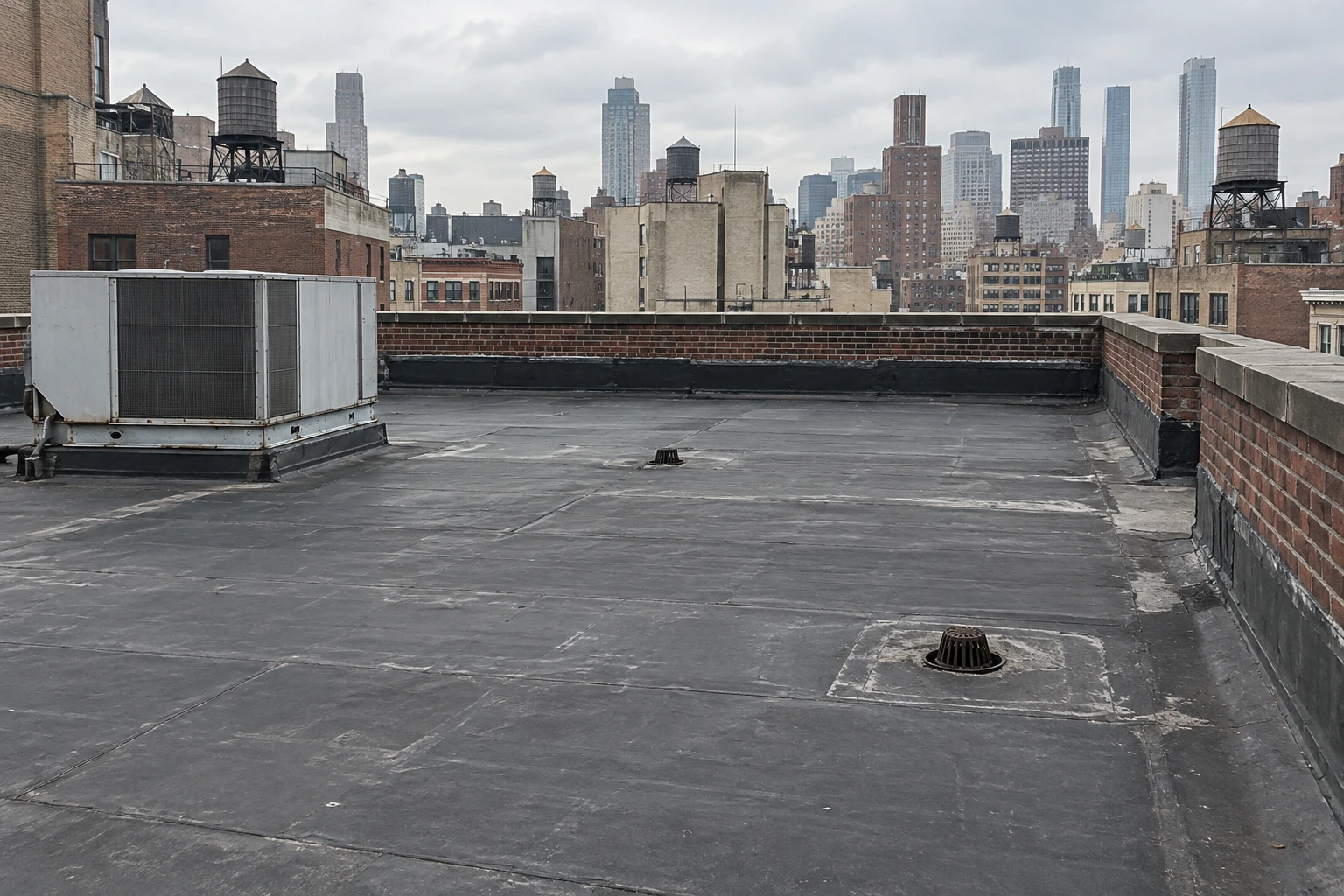
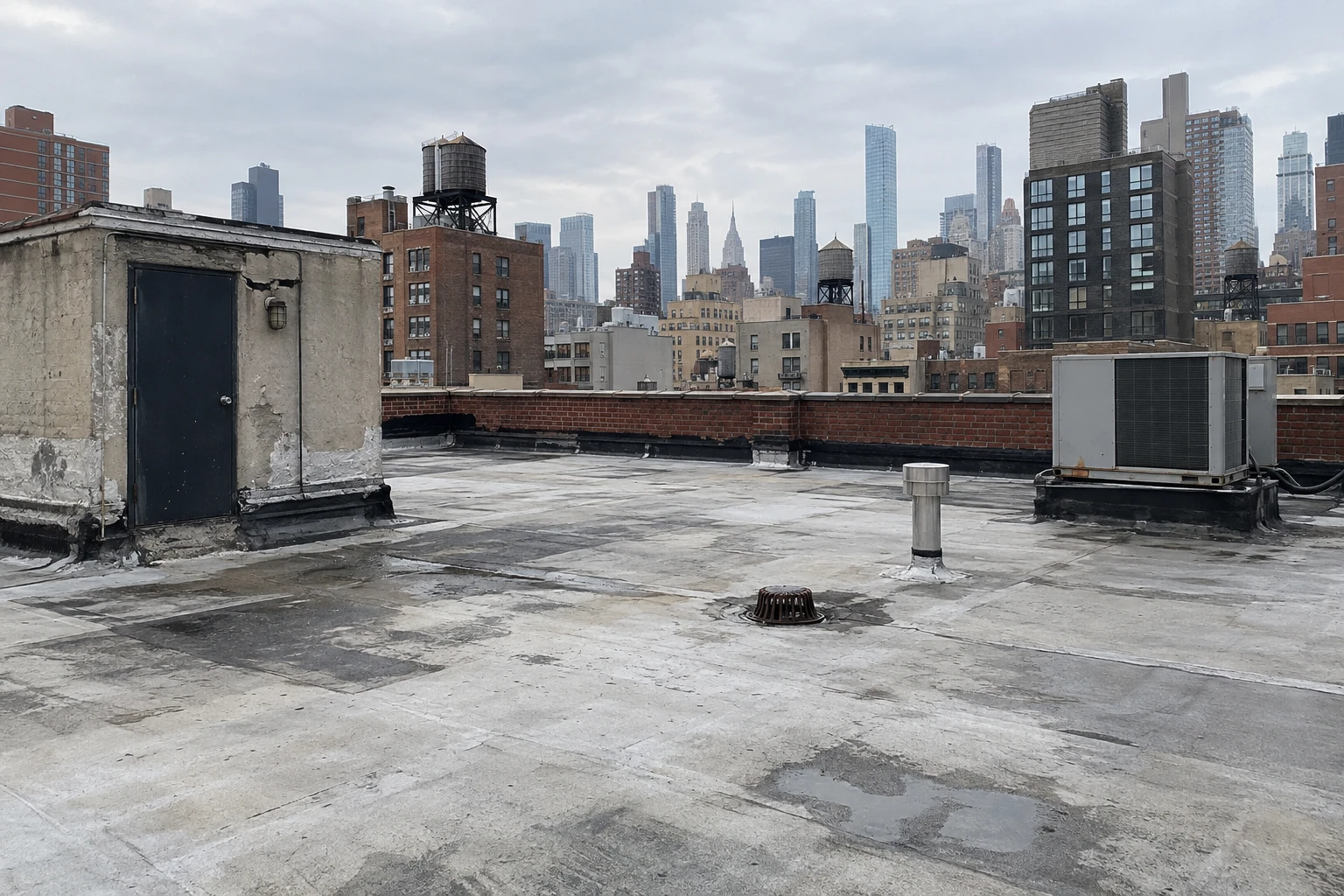
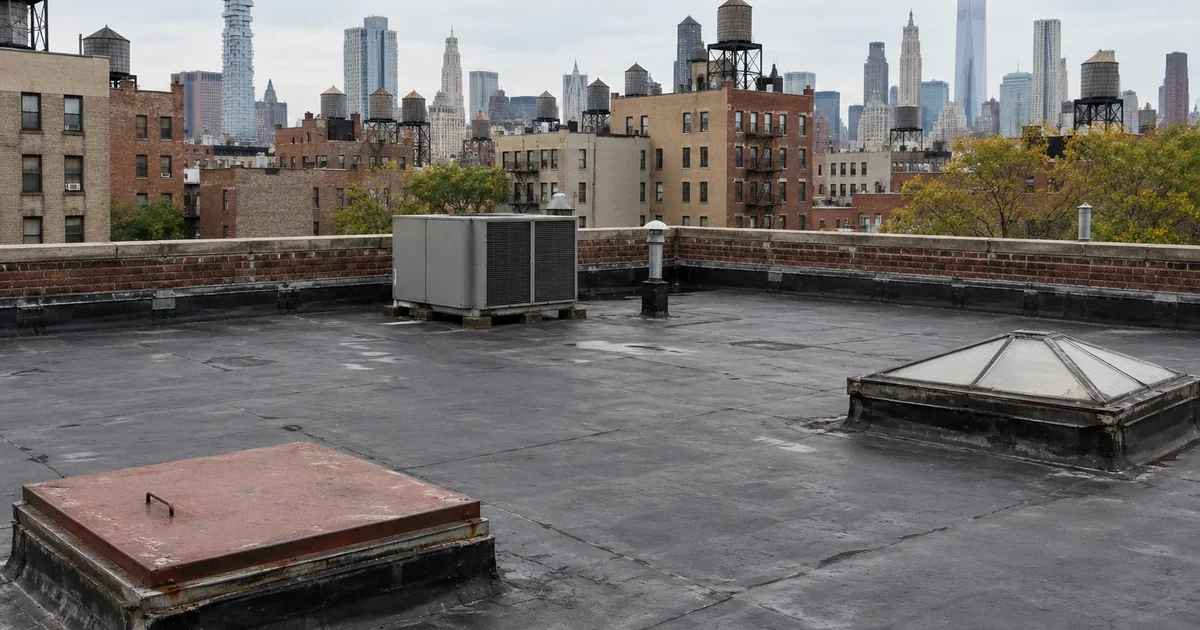
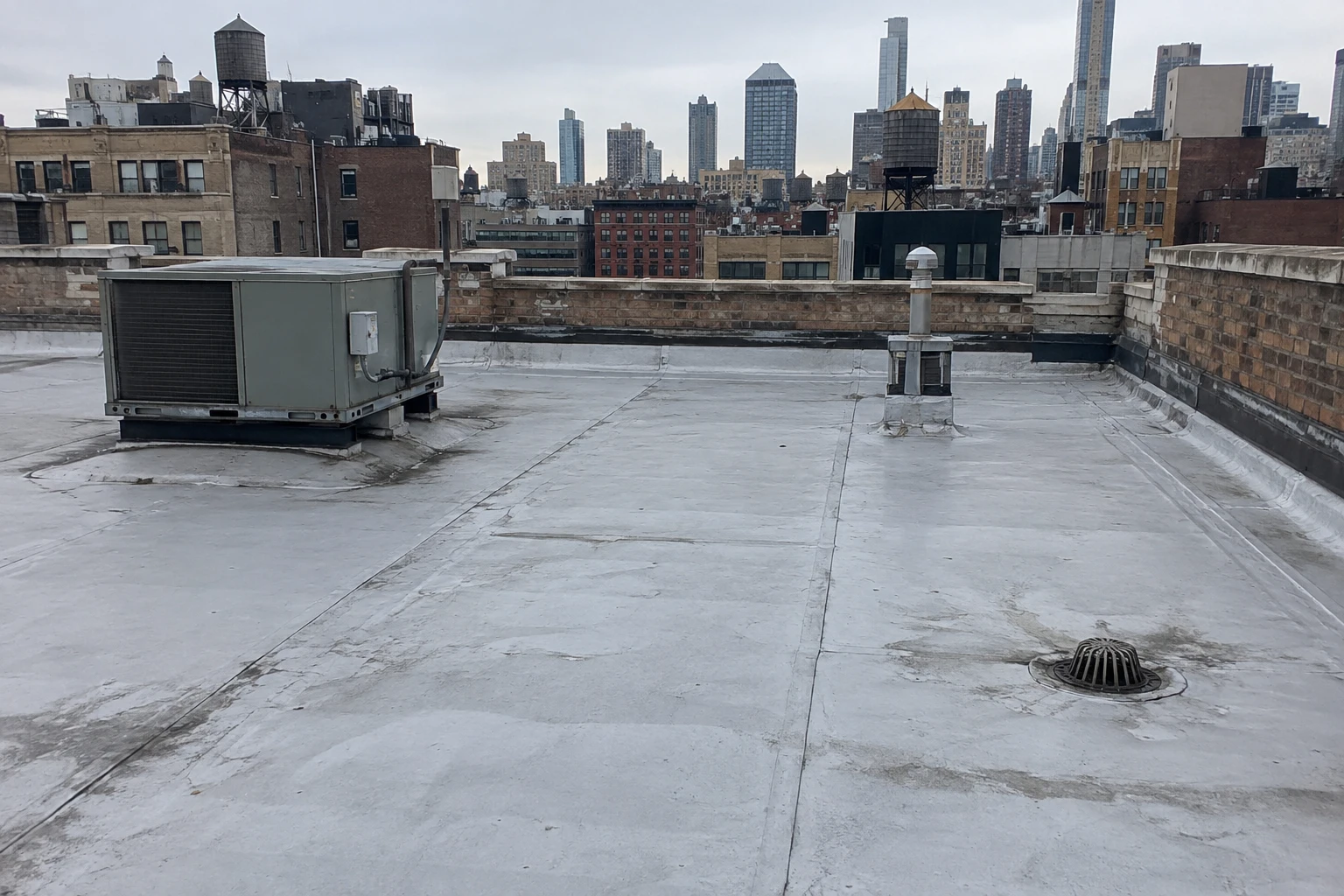
A storage building has a simple plan and a long list of repeated details. We map every drain leader, scupper, rooftop unit, vent and skylight, then scan the field for wet insulation. Cores are cut at the warm spots and at dry control points. Ponding depth is measured after rain, and seams are probed along their full length.
The rating comes by zone, usually one per bay or per drainage area, so the report can say that the north bay is sound and the south bay is not. A commercial roof inspection for a storage operator also records which units sit under each zone, because the operator needs to know whose goods are at risk if a zone fails before the repair.
Access is part of the record. We note the roof hatch or stair, the distance from the hatch to each zone and anything that limits a ladder or a lift. On a gated site the service yard may be narrow, and the staging plan depends on those measurements.
How are tenant goods protected when the roof leaks?
The first protection is knowing where water will go. A roof leak over an interior corridor lands on floors and hallway walls, and a leak over a unit lands on boxes. We trace the entry point before anyone touches the roof, so the response is a targeted repair and not a wide patch. Dry-in follows the same day, with a tarp tied to structure and drains opened.
The operator then needs a record of what happened. We photograph the entry point, the wet insulation and the interior damage, and we write the time and the weather into the log. If a tenant files a claim, the record separates a roof failure from other causes. Operators with several buildings can compare these records across sites, which is where a roof asset management file earns its place.
Climate-controlled and non-conditioned zones behave differently. A conditioned corridor shows a roof leak as a stain within hours, while an unconditioned unit can stay damp unnoticed for weeks. We ask which zones are heated or cooled, and the survey checks the vapor path above them, because warm interior air reaching cold insulation produces condensation that mimics a leak.
Why does drainage decide so much on a low-slope storage roof?
Where a storage roof is simple and wide, its performance rides on the drains, much as it does on a warehouse roof or a distribution center roof. A leader that cannot pass an hour like Ida's 3.15 inches in 2021 lets water stand against parapets and flashing. Standing water over half an inch that persists beyond two dry days is flagged, because it ages the membrane and loads the deck.
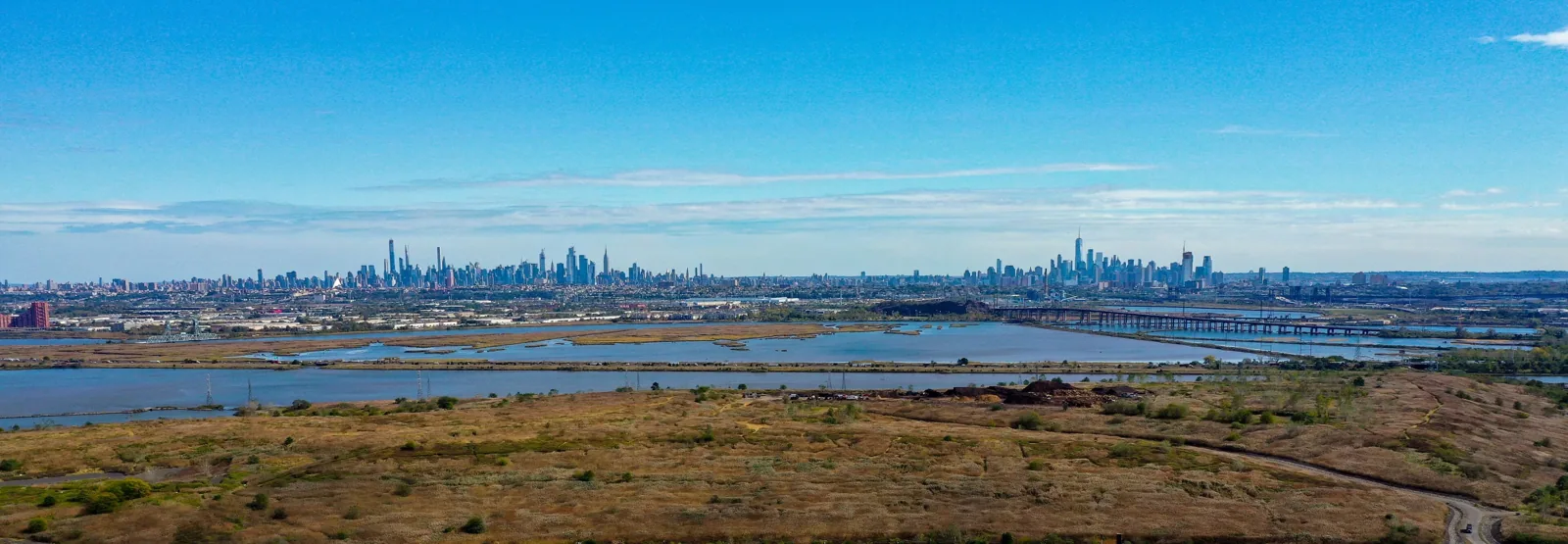
Low-lying areas across the river show the stakes. At 7 feet of elevation, with 10.96 percent of its area under water, Secaucus makes drainage a roof question in a way high ground does not. We test leaders by flow, size secondary drains where the parapet is tall and record the ponding map each spring.
Sandy in 2012 flooded about 17 percent of New York City, and Hoboken saw seawater across half the city. For roofs, the lesson is not the surge, which reached basements, but the power and mechanical losses afterward: equipment on a roof must sit on drained platforms with flashed conduit.
Which option fits: repair, coating, recover or replacement?
A roof with dry insulation and an aging surface may suit a coating that restores reflectivity and seals seams. A roof with one sound layer and a few wet areas may accept a recover after the wet sections are cut out. A roof with saturated insulation across a bay needs replacement.
The survey gives the numbers behind the choice: the percentage of area that is wet, the remaining life of the membrane and the cost of each path over the next ten years. The sustainable roofing zone that Local Laws 92 and 94 of 2019 attach to a full replacement has to carry solar, a green roof or both, and a wide storage roof may suit the layout, so the report prices a replacement both with and without it.
Warranty status enters the comparison. A repair on a covered roof follows the manufacturer's published details, and we note the notice window and the approved methods in the proposal so a repair does not weaken coverage.
How does a dense site change staging and schedule?
Dense places leave little room to stage materials. Union City is the second densest municipality in New Jersey, at 53,293.7 residents per square mile in 2020, and a storage building on a tight lot may have no yard for a dumpster or a crane. We plan hoisting, debris handling and deliveries in advance, and we phase the roof so loads reach the deck in small lifts.
The work also runs around the operator's hours. Gate access, truck traffic and tenant visits all constrain the day, and the schedule marks which sections can be opened in which hours. Roof work is closed at the end of every shift, and a daily note tells the manager what is open, what is covered and what the weather did.
Overhead protection matters on a narrow lot. We install covered walkways and barriers over sidewalks and gates when a lift or a chute works near a public way, and we review the plan with the site manager before the first delivery. Unit doors, loading aisles and the corridor ceilings below tell the survey which roof areas matter most to tenants, and those areas are ranked first.
Commercial Roofing Questions
How do we separate a roof leak from a pipe or condensation problem?
Look at timing. A roof leak follows rain or melt, a pipe leak does not, and condensation tracks temperature swings. A moisture meter and an infrared scan map the pattern, and a core cut confirms wet insulation.
What should the operator keep on file for each building?
The survey, the rating sketch, the core locations, product data, the warranty and every repair invoice. Add a log of leak calls with the unit numbers affected.
Does the roof affect the building's insurance?
Insurers ask about roof age and condition. A dated rating and a repair history answer the question and can help in a claim. Check your policy for any roof-specific terms.
Do tenants lose access during a replacement?
Not as a rule. The roof is opened in sections that close the same day, and units under an open section are noted so tenants can be advised if needed.
Can solar be added to a storage roof?
Often, if the roof is sound and the structure can carry the load. The survey checks remaining life, and we prefer to replace a tired membrane before an array goes on.